You spent an hour creating the perfect post. The caption is polished. The design looks great. Instead of setting an alarm for 7 AM tomorrow, you schedule it using your favorite social media tool.
The next morning, a thought jumps in:
‘Does scheduling posts hurt reach?’
No. Scheduling posts does not reduce your organic reach. But the myth has been around for years, and many creators still believe platforms penalize third-party scheduling tools.
In this guide, we’ll explain where that belief came from, what social media platforms actually say, and what really affects organic reach in 2026.
Big Spoiler: Does Scheduling Posts Hurt Reach?
No. Scheduling posts through an approved social media scheduling tool does not reduce your organic reach or engagement by itself.
Instagram Head Adam Mosseri has even confirmed that scheduled posts do not receive lower reach. And while other platforms don’t publicly state this as directly, they all provide official scheduling options and publishing APIs, which shows that scheduled content is a supported part of their ecosystem.
The real factors affecting reach are what happens around the post:
- Content quality, timing, engagement, and relevance to your audience.
What “Does Scheduling Posts Hurt Reach?” Actually Mean?
Before answering the question ‘Does scheduling posts hurt reach’ properly, it’s worth understanding what people are actually asking.
Many creators notice that one scheduled Instagram post gets fewer likes than another they published manually. They assume the scheduling tool caused the difference.
But social media performance isn’t about that. A post can receive lower reach because:
- It went live when your audience wasn’t online,
- The hook wasn’t strong enough,
- People didn’t interact with it quickly,
- Or your audience simply wasn’t interested.
None of these have anything to do with scheduling. That’s why it’s important to separate how a post is published from how people respond to it.
Reach, Impressions, and Engagement Are Not the Same Thing
One of the reasons this debate about scheduling multiple posts hurts reach is that people mix up three different metrics.
| Metric | What It Means | Example |
|---|---|---|
| Reach | The number of unique people who saw your content. | 5,000 different users viewed your Reel = 5,000 reach. |
| Impressions | The total number of times your content was displayed, including repeat views. | One person views your post 3 times = 3 impressions, but only 1 person reached. |
| Engagement | The actions people take after seeing your content. | Likes, comments, shares, saves, clicks, and watch time. |

1. Reach
Reach is the number of unique people who saw your post. If 5,000 different users see your Reel, your reach is 5,000.
2. Impressions
Impressions count every time your content appears on someone’s screen.
If one person sees your post three times, that’s three impressions, but only one person reached. A scheduled social media post might have fewer impressions but identical reach.
Those are completely different outcomes.
3. Engagement
Engagement measures how people interact with your content.
- Likes. Comments. Shares. Saves. Clicks. Watch time.
Different platforms calculate engagement differently, but they all use audience interactions as important ranking signals. This distinction matters because someone might think: ‘Does scheduling posts hurt reach?’
So, Do Scheduled Posts Perform Worse?
No. There is no credible evidence that scheduling posts directly reduces reach or performance.
Social media algorithms prioritize engagement signals. Their algorithms focus on factors such as watch time, comments, shares, saves, clicks, and overall audience interaction.
Notice what’s missing from that list.
Meta openly supports scheduled publishing through Meta Business Suite and its developer APIs. Businesses are encouraged to plan content in advance, and approved scheduling tools use those same publishing systems.
In other words, if scheduling inherently hurt reach, it would undermine the very tools the platforms provide for businesses and creators.
That wouldn’t make much sense.
What the Evidence Actually Shows
One reason this myth persists is that very few people have tested it properly.
Most comparisons are unreliable. Someone manually posts one Reel on Monday. They schedule another on Friday. The Friday post performs worse.
Conclusion? ‘Scheduling hurts reach.’
But dozens of other variables changed too. Different audience, topic, time, and creativity. Controlled experiments tell a different story.
Now,
|
8.19% Scheduled posts Instagram engagement rate |
6.44% Manually published Instagram posts engagement rate |
No Evidence The experiment suggests that scheduling posts does not negatively affect engagement. |
Data taken from Hootsuite blog
More importantly, current platform documentation never states that posts published through approved scheduling APIs receive lower distribution.
Instead, platforms consistently focus on content quality, audience satisfaction, relevance, and engagement signals.
That’s where creators should focus their attention. Not on whether a post was scheduled five minutes or five days in advance.
If Scheduling Doesn’t Hurt Reach, Why Do Scheduled Posts Sometimes Perform Worse?
If social media algorithms don’t penalize scheduled posts, why do some marketers still notice lower reach after they start scheduling content?
Because scheduling isn’t the cause.
If you publish social media posts manually, you’re naturally involved in the process. You check notifications, reply to comments, and pay attention to what’s happening on the platform.
When you schedule weeks of content in advance, it’s easy to assume the job is done. That’s where performance starts slipping.
Here are the situations where scheduling can indirectly reduce your results.
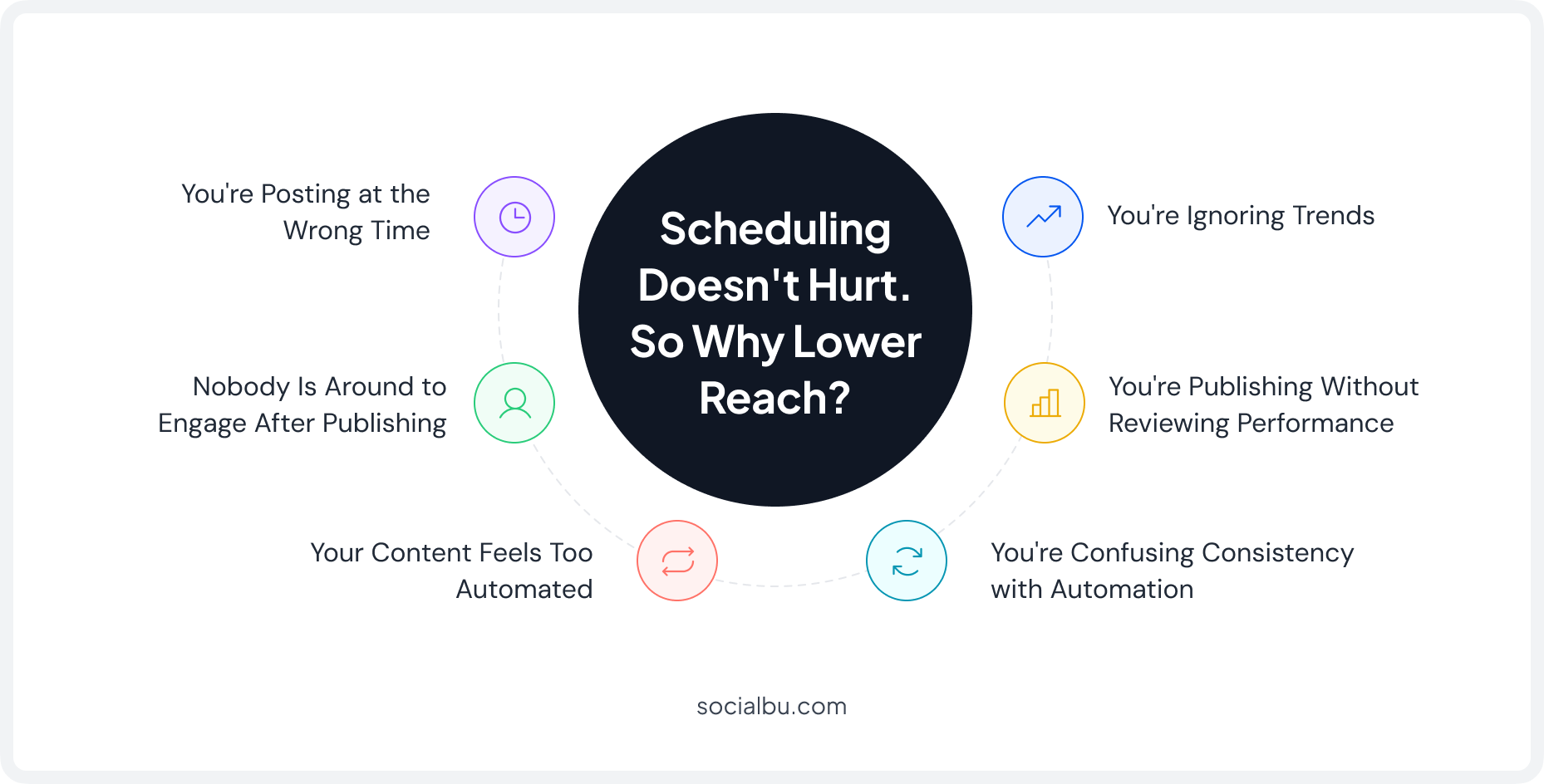
1. You’re Posting at the Wrong Time
A common mistake is creating an entire month’s worth of content and assigning random publishing times. Without even looking at when your audience is actually online.
Algorithms don’t reward scheduled posts. They reward posts that generate early engagement.
If your audience sees your content while they’re active, they’re more likely to like, comment, save, or share it. Those early interactions help the algorithm.
The scheduling tool didn’t reduce your reach. The timing did.
This is exactly why posting time matters much more than publishing method.
2. Nobody Is Around to Engage After Publishing
Scheduling should automate publishing. Not conversations.
One of the strongest ranking signals across nearly every social platform is engagement shortly after a post goes live. Someone leaves a thoughtful comment.
You reply. Another person joins the discussion. The conversation grows. The platform sees people spending more time on your content. That’s a positive signal.
Now imagine you scheduled today’s post last Friday. It goes live. You are in a meeting. Comments sit unanswered. The discussion never happens.
Now the algorithm isn’t affecting the reach because it was scheduled. It’s responding to lower audience activity around that post.
Scheduling saves time. It shouldn’t replace showing up.
3. Your Content Feels Too Automated
One advantage of scheduling is that you can plan weeks of content in advance. The downside?
Your content can start feeling repetitive. The same promotional message. The same format. The same CTA. The same design.
Eventually, your audience notices.
Again, the issue isn’t scheduling. It’s publishing content that doesn’t feel fresh anymore.
4. You’re Ignoring Trends
Some content works because it’s timely.
- A trending meme. Breaking industry news. A platform update. A cultural moment.
If every post is locked into a schedule two or three weeks ahead. You miss opportunities to join conversations while they’re still relevant.
This doesn’t mean you should stop scheduling. It means your social media content strategy should include flexibility.
5. You’re Publishing Without Reviewing Performance
Scheduling makes it easy to queue dozens of posts. Sometimes too easy.
Many marketers spend hours planning content but very little time reviewing analytics afterward.
31%
of marketers say understanding which marketing strategies are most effective is a major benefit of using data.
30%
say data helps increase marketing ROI.
29%
identified using data to inform marketing strategy as one of the biggest changes in the industry.
💡 The takeaway: Successful marketing teams are replacing guesswork with data-driven decisions.
If a particular post format consistently underperforms, scheduling more of the same content won’t improve results.
Instead, treat scheduling as part of an ongoing feedback loop:
- Publish → Analyze performance → Identify what works → Adjust your content strategy.
6. You’re Confusing Consistency with Automation
Consistency is one of the biggest benefits of scheduling. Automation isn’t. They’re related, but they’re not the same thing.
Scheduling posts helps you maintain a reliable publishing schedule. Automation becomes a problem when every interaction is removed from the process.
- Your audience still expects human responses. Questions deserve answers. Comments deserve replies. Messages deserve attention.
Scheduling should remove repetitive work, not human connection.
Does Scheduling Posts Affect Reach on Every Social Media Platform?
This is where most articles stop.
They simply say, ‘No, scheduling doesn’t hurt reach,’ and move on.
But the reality is a little more subtle.
Most Used Social Media Platforms by Marketers Worldwide (2026)
86%
82%
72%
These adoption rates show why marketers often need tools that help them plan, schedule, and manage content across multiple social media platforms.
Every social platform has its own ranking system, publishing tools, and developer APIs. While none of the major platforms officially state that scheduled posts receive less distribution. The way scheduling works behind the scenes isn’t identical everywhere.
According to Statista, Facebook was used by 86% of marketers worldwide in 2026, followed by Instagram (82%) and LinkedIn (72%), showing how marketers often need to manage multiple channels at the same time.
Let’s look at each platform separately.
Does Scheduling Posts on Instagram Affect Reach?
This is easily the most searched version of the question.
People ask:
- Does Instagram penalize scheduled posts?
- Do scheduled Instagram posts get less engagement?
- Do scheduled posts get fewer views on Instagram?
Whenever this topic comes up, someone eventually quotes Instagram Head Adam Mosseri.
Over the years, Mosseri has repeatedly explained that Instagram’s ranking systems focus on how people interact with content. Not whether it was uploaded manually or through an approved publishing tool.
Mosseri has also discussed this topic through Instagram updates covered by The Instagram Stories – Social Media News podcast, where his statement was summarized: scheduled posts do not receive less distribution and are treated the same as other posts.
His public updates consistently point to factors such as:
- watch time, shares, saves, comments, user interest, and relationship signals.
Scheduling isn’t listed among them.
Use an Instgaram Engagement Rate Calculator to understand what’s working and what’s not for your content.
📊 SocialBu Data
The data from SocialBu supports this. Instagram is the platform with the highest number of active schedulers on the tool. More than 1,160 unique creators published Instagram content through SocialBu in the past 90 days.
1,160+
Creators scheduling Instagram content in the last 90 days
Weekly Instagram post volume through SocialBu increased by around 25% over the quarter, rising from roughly 5,700 posts per week in April to more than 7,000 posts per week in July.
Takeaway: Growing scheduling activity on SocialBu suggests creators continue to trust scheduled publishing as part of their Instagram workflow rather than seeing it as a limitation.
Does Scheduling Facebook Posts Affect Engagement?
Facebook provides one of the strongest arguments against the idea that scheduling posts hurts reach.
Meta has supported scheduled publishing for businesses for years through Meta Business Suite and its official publishing APIs. Whether you schedule directly inside Meta Business Suite or use an approved scheduling tool, your content is published through Meta’s own infrastructure.
If scheduling Facebook posts affects engagement, and it was answered with ‘yes,’ Meta would effectively be discouraging businesses from using the scheduling features it built itself. Instead, Facebook focuses on helping users discover relevant, high-quality content, regardless of whether it was scheduled or published manually.
📊 SocialBu Data
In the past 90 days, more than 272,000 Facebook Page posts were scheduled and published through our platform, accounting for nearly half of all scheduled posts across every social network we support.
Facebook posts scheduled in the last 90 days
Even more telling, 500+ marketers schedule Facebook content through SocialBu every single week. That kind of consistent usage shows scheduled publishing is a trusted part of their marketing workflow. If scheduling reduced reach or engagement, you would expect creators to stop relying on it and not make it their go-to publishing method.
Takeaway: Facebook remains the most heavily scheduled platform on SocialBu, reinforcing that scheduled publishing has become a normal part of how businesses manage their social media presence.
Does LinkedIn’s Native Scheduler Reduce Reach?
This is where things become more interesting. Unlike Instagram or Facebook, LinkedIn has an ongoing debate within the creator community.
One of the most frequently cited voices is SEO expert John Shehata, who has publicly argued that manually publishing on LinkedIn sometimes produces better results than using LinkedIn’s native scheduler.
So, why do some people believe scheduled posts perform worse on LinkedIn?
The answer often comes down to timing and participation. When you publish manually, you’re usually available to reply to comments and keep conversations going. Scheduled posts are more likely to go live while you’re busy or offline, slowing early engagement.
In many cases, it’s the conversation. Not the scheduling method that influences performance.
📊 SocialBu Data
This also matches what we see at SocialBu. In the past 90 days, more than 55,000 LinkedIn posts were scheduled and published through our platform, with roughly half going to Company Pages and nearly half to personal profiles.
LinkedIn posts scheduled in the last 90 days
Active creators scheduling every week
Even more importantly, around 280 creators have scheduled LinkedIn content every week for months. If scheduled posts consistently received less reach, you would expect that number to decline over time. Instead, it has remained remarkably steady, suggesting creators continue to trust scheduled publishing as an effective part of their LinkedIn strategy.
Takeaway: Consistent LinkedIn scheduling activity on SocialBu suggests creators continue using scheduled publishing because they value consistency, while understanding that engagement after publishing still matters.
Now, the Question Is: Why Do Opinions Differ So Much?
LinkedIn’s algorithm relies heavily on early engagement. Comments. Meaningful discussions. Time spent reading. Reactions from your professional network.
If you manually publish a post, you’re usually online immediately afterward.
You reply to comments. You continue conversations. Those actions naturally increase activity around your post.
When you schedule content, it’s easier to publish while you’re in meetings, asleep, or simply away from LinkedIn.
As a result, the conversation starts more slowly. The algorithm isn’t responding to scheduling. It’s responding to user activity.
Does Scheduling TikTok Posts Hurt Performance?
TikTok’s recommendation system works differently from most social platforms.
Instead of relying heavily on your follower count, TikTok decides who sees your videos based on how viewers respond to them. Watch time, completion rate, rewatches, and shares all play a major role in whether a video reaches more people. Scheduling isn’t one of them.
That’s why concerns like does scheduling posts reduce reach usually miss the bigger picture. A video that keeps people watching has a much better chance of being recommended than one that’s manually published but fails to hold attention.
📊 SocialBu Data
Growth in Weekly TikTok Scheduling
SocialBu users schedule hundreds of TikTok posts every week, and weekly TikTok scheduling on the platform has grown by 75% over the past quarter. This continued growth suggests creators are confident in scheduled publishing and continue using it as part of their content strategy.
Takeaway: The continued growth in scheduled TikTok publishing on SocialBu suggests creators are more focused on creating engaging content than worrying about whether they clicked ‘Publish’ manually.
Does Pinterest Penalize Scheduled Posts?
Pinterest does not penalize scheduled posts.
Pinterest works differently because it’s built around discovery rather than real-time conversations.
People use Pinterest to search for ideas, products, and inspiration, which means the platform rewards relevance, keyword optimization, high-quality visuals, and fresh Pins. Unlike traditional social feeds, Pinterest content can continue generating traffic long after it’s been published.
That makes consistency much more important than the publishing method. Whether a Pin is scheduled or published manually, Pinterest’s goal is to surface the most relevant content for each search.
📊 SocialBu Data
This matches what we see at SocialBu. Pinterest is one of the most consistently scheduled platforms on our tool, with 27-33 creators scheduling Pins every week over the past three months.
That steady number shows creators continue to trust scheduled publishing as part of their Pinterest strategy. If scheduled posts performed worse or scheduling posts reduced reach, we’d expect fewer people to keep using it. Instead, usage has remained stable week after week.
Takeaway: Steady scheduling activity on SocialBu suggests Pinterest creators continue relying on scheduled publishing to maintain a consistent flow of fresh content.
Why Do So Many People Believe Scheduling Hurts Reach?
If there’s no penalty, why has this myth survived for years?
Because it wasn’t completely made up. It came from a real problem, but the reason behind it has changed.
Back in the early days of Facebook and Instagram marketing, many automation tools worked very differently from today’s scheduling platforms.
Some tools logged directly into user accounts. Others relied on fake engagement or bot-like actions such as mass-liking, following, and commenting. These behaviors created spam. Which is why platforms started restricting tools that violated their policies.
Over time, people remembered the outcome but forgot the reason. The belief slowly changed from:
‘Some unsafe automation tools can hurt accounts.’
into something much broader:
‘Third-party tools reduce reach.’
That’s where the confusion started.
Platforms like SocialBu, Buffer, Hootsuite, and other approved schedulers publish using official APIs provided by Meta, LinkedIn, TikTok, Pinterest, and other networks.
Native Scheduler vs. Third-Party Scheduler: Is There Any Difference?
🟢 Native Scheduler
Built into the social platform and uses its own publishing system.
- Managed inside the platform
- Uses native tools
- Best for single-platform use
- Limited team features
🔵 Third-Party Scheduler
External tools that publish through official platform APIs.
- Manage multiple platforms
- Uses approved APIs
- Team collaboration
- Advanced workflows
This is probably the biggest misconception in the entire debate. Many marketers believe there are three different ways to publish:
- Manual posting, native scheduling, and third-party scheduling.
Technically, that’s true. But the algorithm doesn’t necessarily see them as three completely different things. Here’s why:
- Most reputable scheduling tools don’t pretend to be you.
- They don’t log into your account and click buttons like a human would.
- Instead, they use official APIs provided by the platforms themselves.
Whether your content is published through Meta Business Suite or through an approved platform like SocialBu, the request typically goes through Meta’s official publishing infrastructure.
The software might belong to another company. But the publishing process is still handled using the platform’s own approved systems.
So the post isn’t arriving through some suspicious shortcut. It’s arriving exactly the way the platform intended.
What Actually Affects Organic Reach in 2026?
If scheduling posts affects reach isn’t the right question; what should marketers focus on instead?
Engagement > Scheduling
Algorithms reward content people interact with
Shares, comments, saves, and watch time matter more than how a post is published.
The biggest ranking factors across today’s major platforms are surprisingly similar.
- Content quality comes first.
- Algorithms prioritize posts that people genuinely enjoy watching, reading, saving, and sharing.
- Audience engagement matters just as much.
- Posts that spark conversations usually outperform posts that receive passive likes.
- Consistency also plays an important role.
That’s very different from publishing ten posts in one week and disappearing for the next three. Timing still matters too. Even great content can struggle if it’s published when your audience isn’t active.
Platforms want to recommend content that feels timely, useful, and worth interacting with.
Notice something?
None of those factors involve whether the post was manually published or scheduled.
✅ Checklist to Schedule Posts
| Create content people enjoy watching, reading, or sharing. | |
| Encourage comments, saves, and shares. Not just likes. | |
| Keep viewers watching as long as possible. | |
| Post consistently instead of disappearing for weeks. | |
| Document your repurposing workflow. | |
| Publish when your audience is most active. | |
| Schedule a weekly ideation session (30–60 minutes). | |
| Focus on content quality, not whether it was scheduled. |
As your team grows, keeping track of all these steps manually becomes harder. That’s where SocialBu can help.
How SocialBu Schedules Posts (And Why It Doesn’t Hurt Reach)?
By now, the answer to ‘does scheduling posts hurt reach?’ should be much clearer.
But one question still comes up. How do scheduling tools actually publish content? Some marketers still picture scheduling software logging into their accounts, clicking buttons, and pretending to be a human user.
That’s not how reputable platforms work anymore.
SocialBu publishes supported content through the official APIs provided by social networks like Meta, LinkedIn, Pinterest, TikTok, and others where API publishing is available.
Scheduling Posts with SocialBu: Step by Step
Scheduling a post with SocialBu is simple and follows the same approved publishing process used by social platforms.
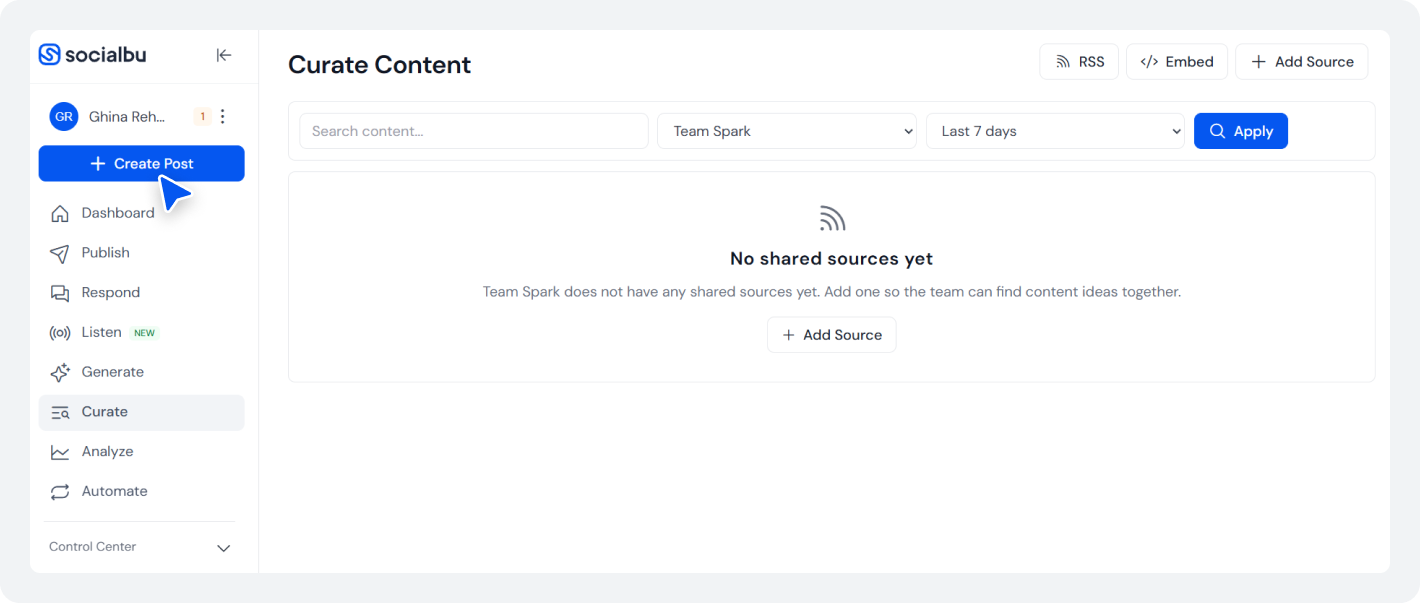
Step 1: Log in to your SocialBu account and click on ‘Create Post’. Write your caption, upload your images or videos, and customize the post for each platform.
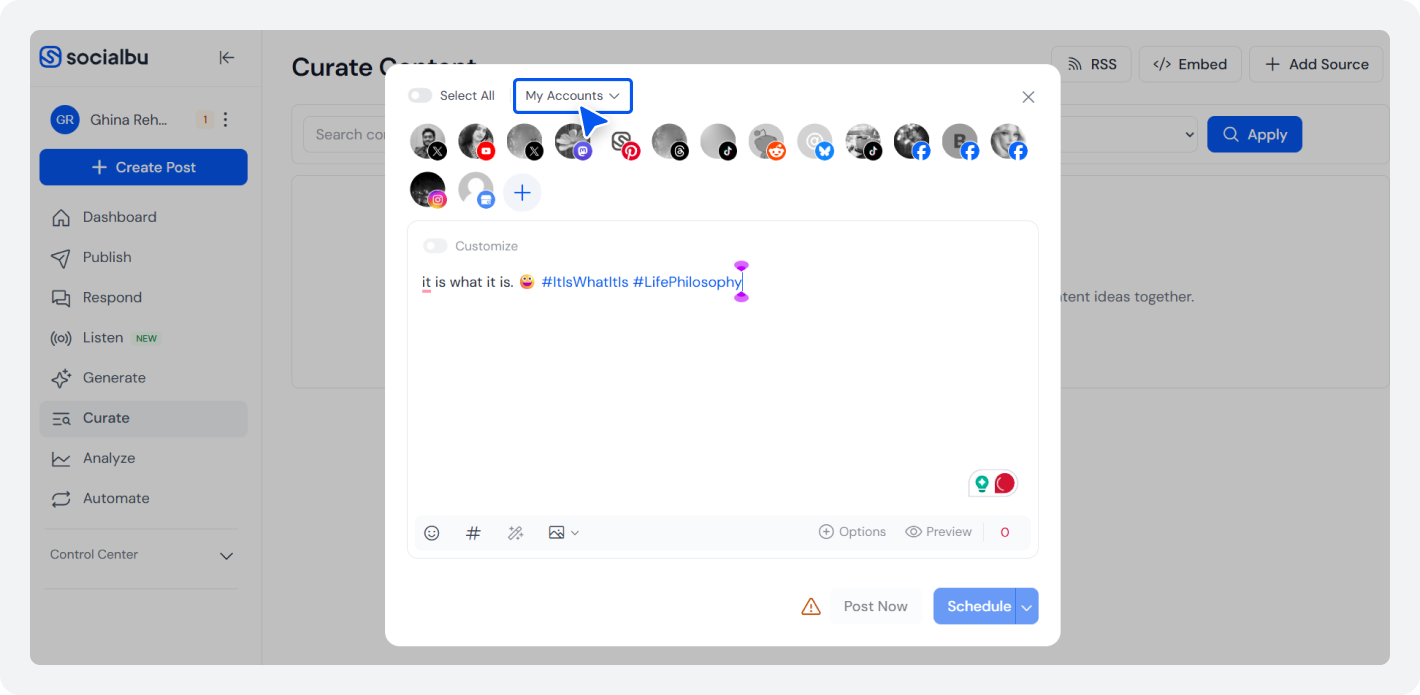
Step 2: Select your social accounts by clicking on ‘My Accounts’. Choose the profiles or pages where you want the content to be published.
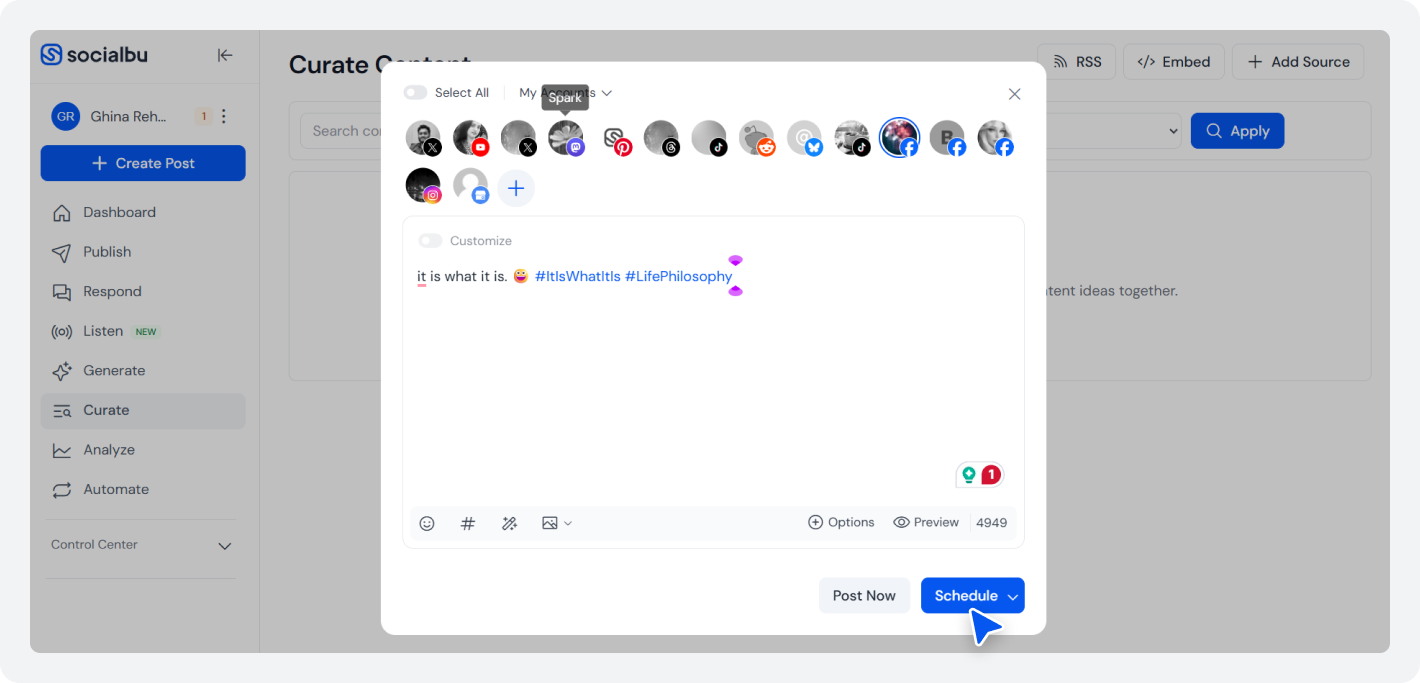
Step 3: After adding the content, hashtags, and emojis, schedule the post. Click on ‘Schedule Post’.
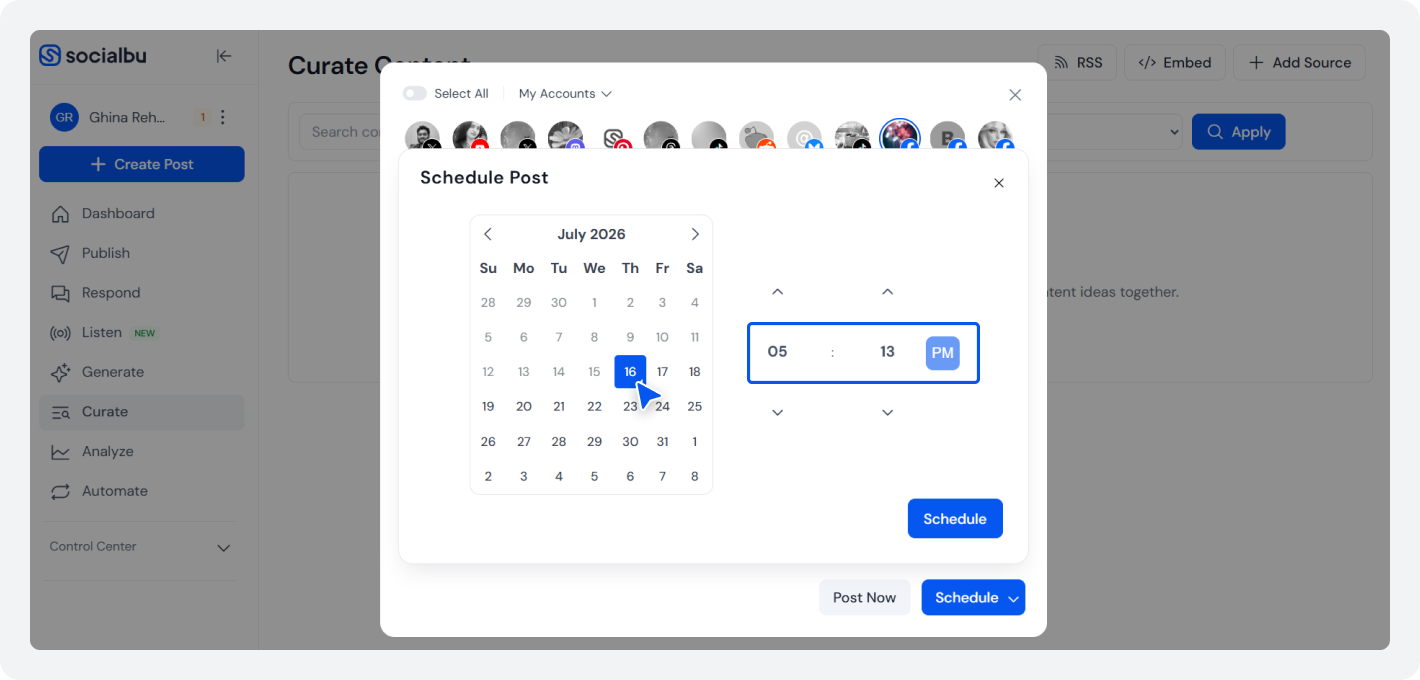
Step 4: Pick a specific date and time or add the post to your content queue. Click on ‘Schedule’. At the scheduled time, SocialBu sends the post through the platform’s official APIs. So it is published using the platform’s approved system.
Monitor engagement and analytics to see what worked and use those insights to improve future posts.
If you’re curious about how scheduling works in practice, our guide, How to use SocialBu walks through the complete process.What Really Impacts Social Media Performance?
What actually influences performance is everything that happens before and after publishing.
- Your content quality. Your posting time. Your audience engagement. Your consistency. Your relevance.
Those are the factors algorithms evaluate. Scheduling is simply the delivery method.
Reach Grows with Strategy, Not Scheduling.
With SocialBu, you can stay consistent, publish at the right time, monitor performance, and spend less time worrying about how your posts are published.
Final Thoughts
After looking at platform documentation, industry research, and how modern scheduling tools actually work, the answer is clear: scheduling your social media posts does not automatically reduce organic reach.
What actually influences performance is everything that happens before and after publishing. Scheduling is simply the delivery method.
With a platform like SocialBu, you can schedule content across multiple social networks, stay consistent, monitor engagement, and manage conversations from one place.
The real question isn’t whether you should schedule your posts. It’s whether you’re using the time scheduling saves to create better content, engage with your audience, and build stronger relationships over time.
FAQs
Q: Does scheduling posts hurt reach?
No. Approved scheduling tools do not reduce organic reach. Social media platforms rank content based on audience engagement, content quality, and relevance not whether a post was scheduled.
Q: Do social media algorithms penalize third-party scheduling tools?
No. Major platforms support approved scheduling tools through official APIs. There is no evidence that using them lowers reach.
Q: Does Instagram Treat Scheduled Posts Differently Than Posts Made In-App?
No. Instagram evaluates scheduled and manually published posts the same way. Performance depends on user engagement, not the publishing method.
Q: Does LinkedIn’s Native Scheduler Reduce Post Reach?
There is no official evidence that LinkedIn’s native scheduler reduces reach. Engagement after publishing has a much greater impact than scheduling itself
Q: Why Do People Believe Scheduling Tools Hurt Reach?
The myth comes from outdated automation tools and personal experiences where poor-performing scheduled posts were mistaken for an algorithm penalty.
Q: What Does Instagram’s Adam Mosseri Say About Scheduled Posts and Reach?
Adam Mosseri has explained that Instagram ranks posts based on user engagement, not whether they were scheduled or published manually.
Q: Do Scheduled Facebook Posts Perform Worse Than Manual Posts?
No. Facebook supports scheduled publishing through its own tools and APIs. Reach depends on content quality and audience response.
Q: Does Using an API-Based Scheduler Count as ‘Third-Party’ in the Algorithm’s Eyes?
API schedulers are third-party tools, but they publish through the platform’s official systems, making them an approved publishing method.
Q: What Actually Affects Organic Reach If Not the Scheduling Method?
Organic reach is influenced by content quality, timing, audience interest, watch time, shares, comments, saves, and overall engagement.
Q: Is There a Difference Between Browser-Based Auto-Posters and API Schedulers for Reach?
Yes. Approved API schedulers use official platform integrations, while older browser-based automation tools often violated platform policies.
Q: Can Scheduling Too Far in Advance Hurt Engagement?
Not directly. The real risk is publishing content that becomes outdated or less relevant by the time it goes live.
Q: How Can You Schedule Posts Without Losing Authenticity or Engagement?
Schedule your content, but stay active after it publishes. Reply to comments, engage with your audience, and update scheduled posts when needed.
Q: Do Scheduled TikTok or Pinterest Posts Get Deprioritized?
No. TikTok and Pinterest rank content based on user behavior and relevance, not whether it was scheduled.
Q: How Far in Advance Should You Schedule Posts?
Scheduling one to four weeks ahead is a good balance for most creators and businesses. It helps you stay consistent while leaving room for trends, news, and last-minute updates.
Q: Should You Edit Scheduled Posts Before They Go Live?
Yes. Review scheduled posts before publishing to make sure your captions, links, hashtags, and visuals are still accurate, relevant, and timely.
Q: When Should You Avoid Scheduling?
Avoid scheduling for breaking news, live events, trending topics, or urgent announcements. These situations often benefit from real-time publishing and engagement.
Q: Is It Better to Schedule Posts or Use a Content Queue?
Use scheduled posts for content with a specific publish date. Use a content queue for evergreen content that can be published automatically based on your posting schedule. Many marketers use both.