
If you’re managing social media for multiple clients, you already know how fast things can fall apart without the right tool. A missed approval here. A post going live on the wrong account there. A client asking for a monthly report that hasn’t been started yet.
We’ve been there. And honestly? That frustration is exactly why we built SocialBu: because we couldn’t find a social media management platform for agencies that combined automation depth, multi-client management, and a fair pricing model all in one place.
Over the past several months, we logged into, tested, and stress-tested 12 of the most widely used social media management tools for agencies.
We scheduled hundreds of posts, built approval chains, ran community management simulations, and pulled month-end reports. We noted what broke, what worked, and what nobody mentions in the marketing copy.
This guide is the result of all that. Not a recycled feature list; real hands-on findings.
Top Picks:
- SocialBu: Best Overall Social Media Management Tool for Agencies
- CoSchedule: Best for Marketing Teams Managing Broader Content Ops
- SmarterQueue: Best for Evergreen Content Recycling
- Agorapulse: Best for White-Label Reports
- Loomly: Best for Visual Content Agencies

Quick Comparison Table: Best Social Media Management Software for Agencies
Here’s how every social media tool in this guide stacks up across six criteria that matter most for agencies.
Tool | Approval Workflows | White-Label Reports | Unified Inbox | Best For |
SocialBu | Yes | Agency | Yes | Agencies (Best Overall) |
Planable | Best-in-class | Partial | Limited | Client Approvals |
Agorapulse | Yes | Yes | Advanced | White-Label Reports |
SocialPilot | Yes | Yes | Basic | Budget Agencies |
Sendible | Yes | Yes | Yes | Client Collaboration |
Vista Social | Yes | Higher tiers | Yes | AI Workflows |
Statusbrew | Yes | Yes | Advanced | Scaling Agencies |
CoSchedule | Limited | No | No | Marketing Teams |
SmarterQueue | No | No | No | Evergreen Recycling |
Loomly | Yes | Partial | No | Visual Content |
Metricool | Advanced only | Enterprise only | No | Analytics-First Teams |
Planoly | No | No | No | Visual Brands (IG/Pinterest) |
Tired of Juggling Multiple Tools?
SocialBu brings scheduling, automation, inbox, and reporting under one roof, at pricing that makes sense for agencies.
How We Evaluated These Tools
We didn’t just read documentation and watch demos. We actually used these tools the way agencies do. Here’s how our evaluation process worked:
- 12 platforms tested over several months of active use.
- Hundreds of posts scheduled across multiple client accounts and platforms.
- Approval chains built and stress-tested with simulated client review scenarios
- Community management simulated across 3 simultaneous client accounts (Facebook, Instagram, LinkedIn)
- Month-end reports pulled for 3 clients, timed from opening analytics to shareable PDF.
- Pricing models analysed, including 12-month projections at realistic time sizes of 3, 5, and 10 people.
- User reviews cross-referenced from Capterra and verified G2 reviews.
We scored each tool across six dimensions:
- Multi-client workspace management
- Automation depth
- Client approval workflows
- Unified inbox quality
- Analytics and reporting
- Pricing scalability
Where a tool excels or falls short in a way that matters for real agency work, we say so directly.
One more thing worth saying upfront: SocialBu is our product. We built it precisely because we experienced these pain points firsthand. That context doesn’t change our findings about competitors; it sharpens them. We’ve used those tools ourselves, and we know exactly where the gaps are.
 Also Read: For more on how to weigh “do everything” platforms against point solutions, see our piece on manual vs. automated posting.
What Every Agency-Grade Social Media Management Tool Must Have?
Before we get into individual reviews, let’s talk about what separates an agency social media management software from something built for individuals. Through our testing, these features consistently made or broke the tools at scale.
1. Network Compatibility
Your clients don’t all live on Instagram or Facebook. Some are B2B and need LinkedIn. Some are chasing Gen Z on TikTok while others are experimenting with Reddit, Threads, or Bluesky. A social media tool that forces you to use native apps for half your platforms isn’t actually saving you time; it’s just shifting the chaos.
At a minimum, a proper agency social media management platform should cover: Facebook, LinkedIn, Instagram, Twitter/X, TikTok, YouTube, Pinterest, Reddit, and Google Business Profile.
2. Client Approval Workflows
If you’re currently chasing clients on WhatsApp to get a “yes” on a post that was due three hours ago, you know exactly how painful this is.
A proper social media management system needs configurable approval chains: writers draft, internal managers review, and clients approve.
The entire process should have a full audit trail so there’s never ambiguity about who said what and when. Critically, clients should be able to approve without creating an account, as every extra step slows you down.
3. Collaboration Tools
As your agency grows, you can no longer do everything yourself. Role-based permissions mean writers can draft but not publish, managers can approve, and clients can only see their own workspace. This isn’t just about access control; it’s about accountability.
When everyone knows their lane, social media management for agencies at scale stops feeling chaotic.
4. Bulk Scheduling and Content Calendar
Scheduling posts individually across every client platform isn’t sustainable beyond a handful of accounts.
Bulk upload via CSV, recurring post queues, and a visual content calendar are non-negotiables for any social media planning tool you’re using at agency volume.
The best social media scheduling tools even handle the technical stuff on their own, such as aspect ratios, character limits, first-comment placement, etc, so you’re not manually adjusting every post for every platform.
5. Analytics and Branded Reporting
Clients expect monthly reports. Generating them manually from native platform analytics is a two-hour monthly session you can’t bill for.
The best social media tracking tools for agencies generate clean, branded reports in minutes, including follower growth, reach, engagement rates, and best-performing content, all in one exportable PDF.
White-label reporting (your brand, not the tool’s) is the gold standard. If you’re pitching yourself as a professional agency, sending a report with someone else’s logo on it undermines that.
6. Social Media Automation
The best social media automation tools go way beyond scheduling. RSS auto-publishing, keyword-triggered auto-replies, engagement-based rules; this is what lets a 3-person agency run like a 10-person team. If a tool’s “automation” is just scheduling recurring posts, it’s not really automation.
Look for tools that offer RSS feed integration, rule-based auto-replies, engagement threshold triggers, and webhook support for custom workflows.
7. Transparent, Scalable Pricing
Per-user pricing models quietly destroy agency margins as the team grows.
A tool that costs $49/user/month sounds reasonable for 3 people, but at 8 people, you’re suddenly paying $392/month more than you budgeted. Look for flat-tier pricing where adding a team member doesn’t change your bill.
True affordable social media management is possible, but only with the right model. Hang on, as we are going to cover this in detail in the hidden costs section below.
Read more: For more on what to look for in scheduling tools, see our guide to affordable social media management tools.11+ Best Social Media Management Tools for Agencies
Now that you have reviewed the features to look for when selecting a social media management tool for your agency, let us take you straight to the tools we have picked out for you.
1. SocialBu – Best Overall Social Media Management Tool for Agencies
We’ll be upfront: SocialBu is our product. We built it because we were frustrated with exactly the problem every agency faces: expensive platforms that give you enterprise features only at enterprise pricing, or affordable tools that force you to compromise on automation, inbox management, or monitoring,
After testing every competitor on this list ourselves, we can say with confidence that SocialBu has the best value-to-feature ratio for social media management for agencies in this market.
What We Found During Testing
The automation engine is genuinely deeper than anything else at this price point.
Setting up an RSS feed to automatically publish a client’s blog content across 4 platforms, with customised captions for each network, took us under 10 minutes. The same workflow on SocialBu required more manual steps; on Planable, it doesn’t exist at all.
The unified inbox is also a standout. We ran a community management simulation across 3 client accounts simultaneously and found the filtering and assignment tools significantly more useful than those on competing platforms at this tier.
1. Bulk Scheduling and Content Calendar
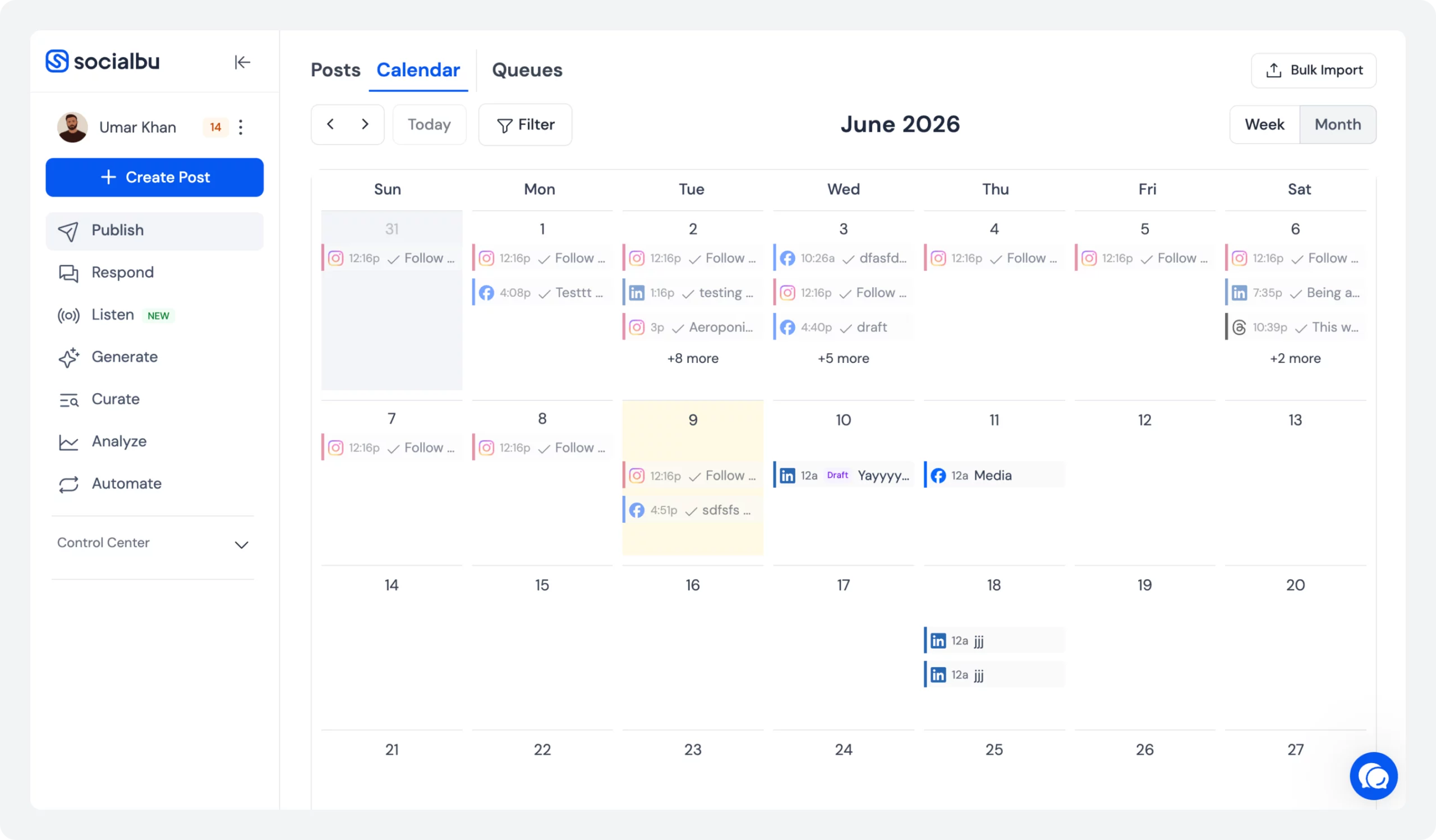
SocialBu’s content calendar is built for volume. You can bulk-upload an entire month’s worth of posts via CSV, then drag and drop them around the calendar to optimise timing. Recurring post queues automatically refill, so evergreen content never runs dry.
In our testing, the visual calendar view, toggling between day, week, and month per client workspace, gave us an at-a-glance picture that would have taken 20 minutes to reconstruct from a spreadsheet.
2. Client Approval Workflows
SocialBu solves approval chaos directly. You build your chain inside the platform: writers draft, internal managers review, then clients receive a clean review link; no account required on their end.
They can approve posts, leave inline comments, or reject with a note. Everything is logged with names and timestamps.
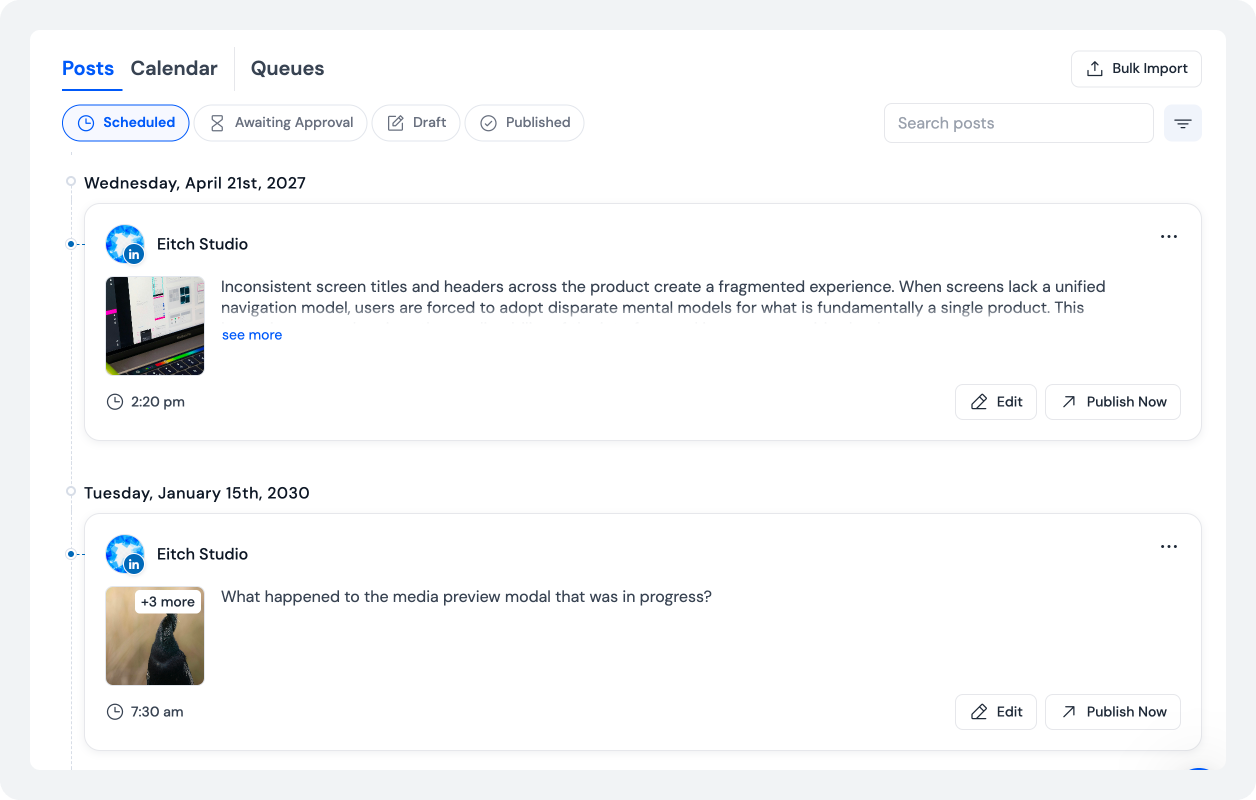
In our testing, the zero-friction client access (no sign-up required) was a significant improvement over tools that require clients to create their own login.
3. Unified Social Inbox
SocialBu’s unified inbox consolidates comments, DMs, mentions, and messages from all connected accounts into a single, filterable feed.
During our testing with 3 simultaneous client accounts, we handled all incoming engagements without leaving a single screen.
Conversations can be assigned to specific team members, creating accountability and preventing duplicate replies.
4. Social Media Monitoring and Brand Listening
SocialBu’s monitoring tools track brand mentions, keywords, and competitor activity across platforms in real time. You can configure keyword alerts per client, and SocialBu surfaces relevant conversations, whether your clients were tagged or not.
Most social media tools for agencies at this price skip monitoring entirely. SocialBu includes it as standard.
5. Analytics and Performance Reporting
SocialBu’s analytics dashboard covers follower growth, post reach, engagement rates, best-performing content, and platform-by-platform breakdowns; all in one view.
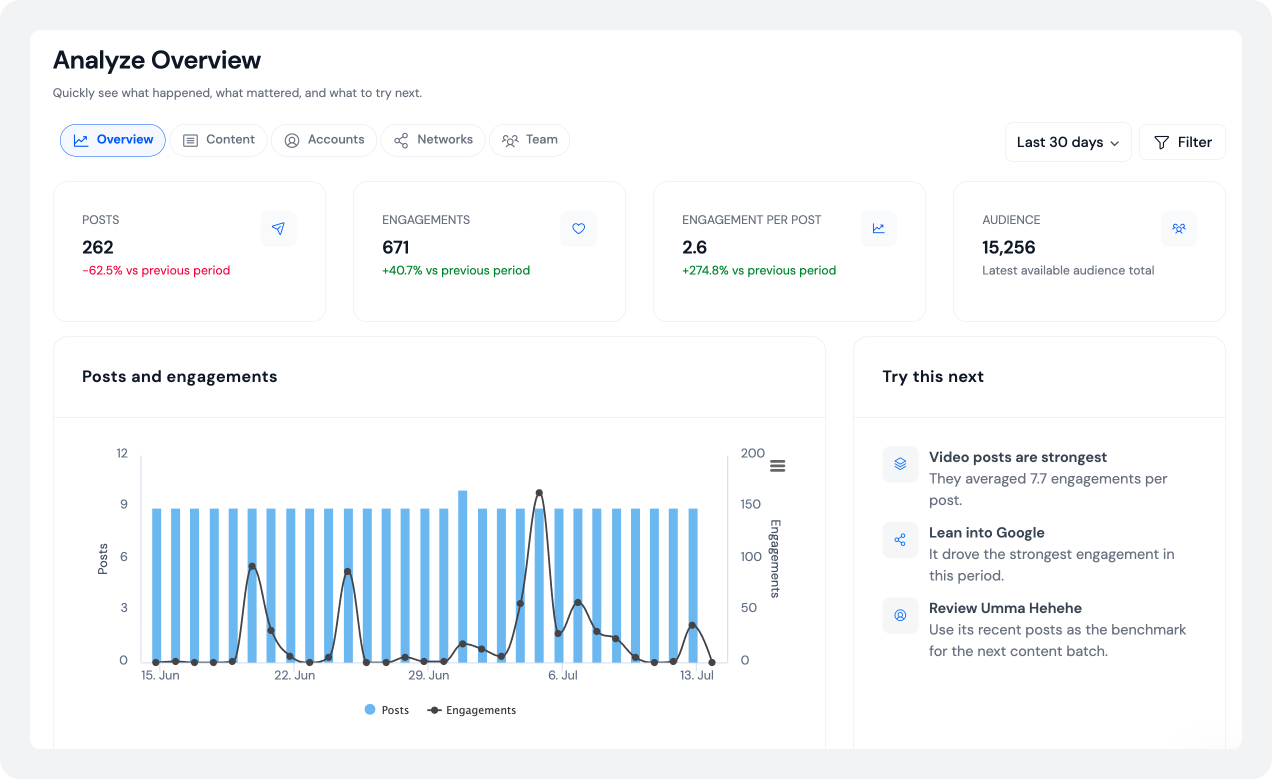
Reports export as PDFs and can be customised with client branding on the Supreme plan. In our month-end simulation for 3 clients, the time from opening analytics to having a shareable PDF ready was under 10 minutes per client.
6. The Automation Engine: SocialBu’s Biggest Differentiator
This is where SocialBu genuinely separates itself from every other platform at this price. Most social media scheduling tools stop at scheduling. SocialBu’s automation engine is a different category entirely. Here’s all it offers:
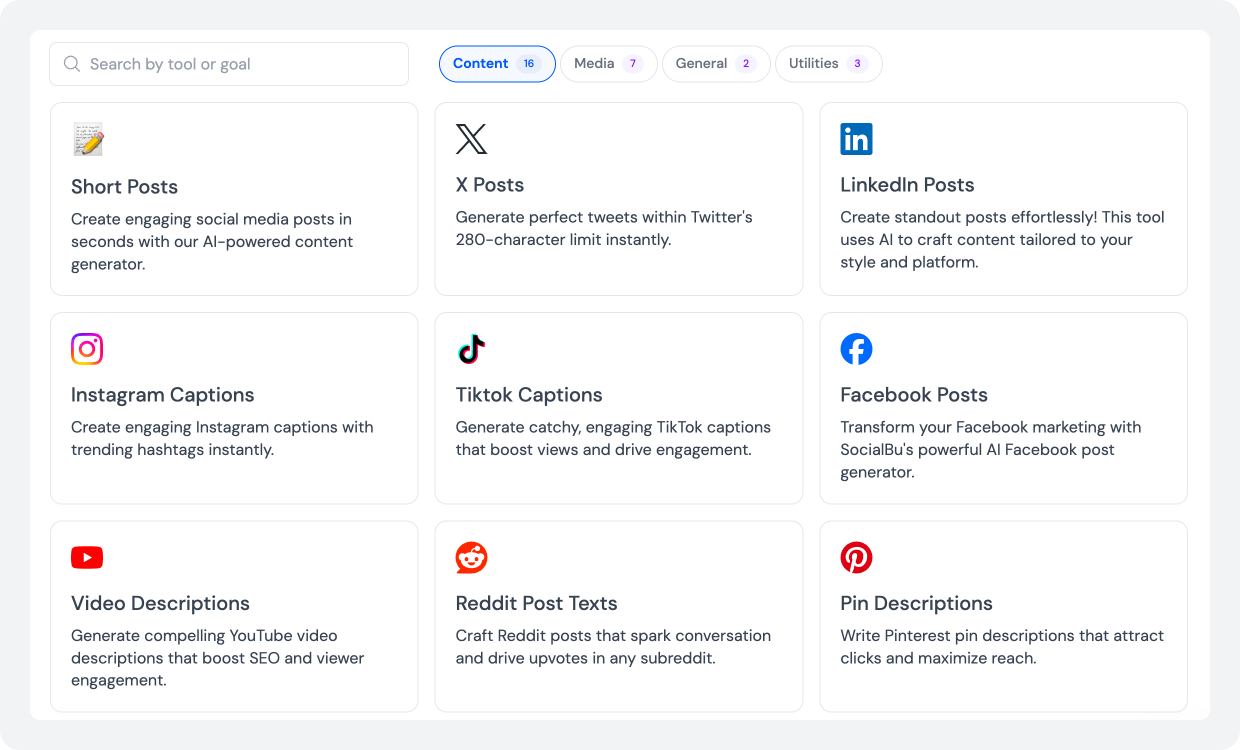
- RSS Auto-Publishing: Connect any client’s blog RSS feed, and SocialBu automatically publishes new posts to their social channels, formatted correctly for each platform. Set it once; it runs itself.
- Keyword-Triggered Auto Replies: Set rules like “If someone comments with [X keyword], send [Y reply]. “ Invaluable for e-commerce clients managing high comment volumes on promotions.
- Engagement-Based Automation: Trigger follow-up actions when a post exceeds a certain engagement threshold.
- Webhook Integrations: Connect SocialBu with external tools to build custom agency workflows.
- Recurring Post Queues & Content Recycling: Evergreen content recycles on a defined cadence without manual input.
Planable has no automation engine. SocialPilot has basic RSS. SocialBu’s automation depth is the most compelling differentiator for agencies that want to scale without proportionally increasing headcount.
7. AI Content Generation
SocialBu’s AI content generator sits directly inside the compose window. In our workflow tests, we used it to generate platform-optimised captions for a product announcement across Instagram, LinkedIn, and Twitter/X.
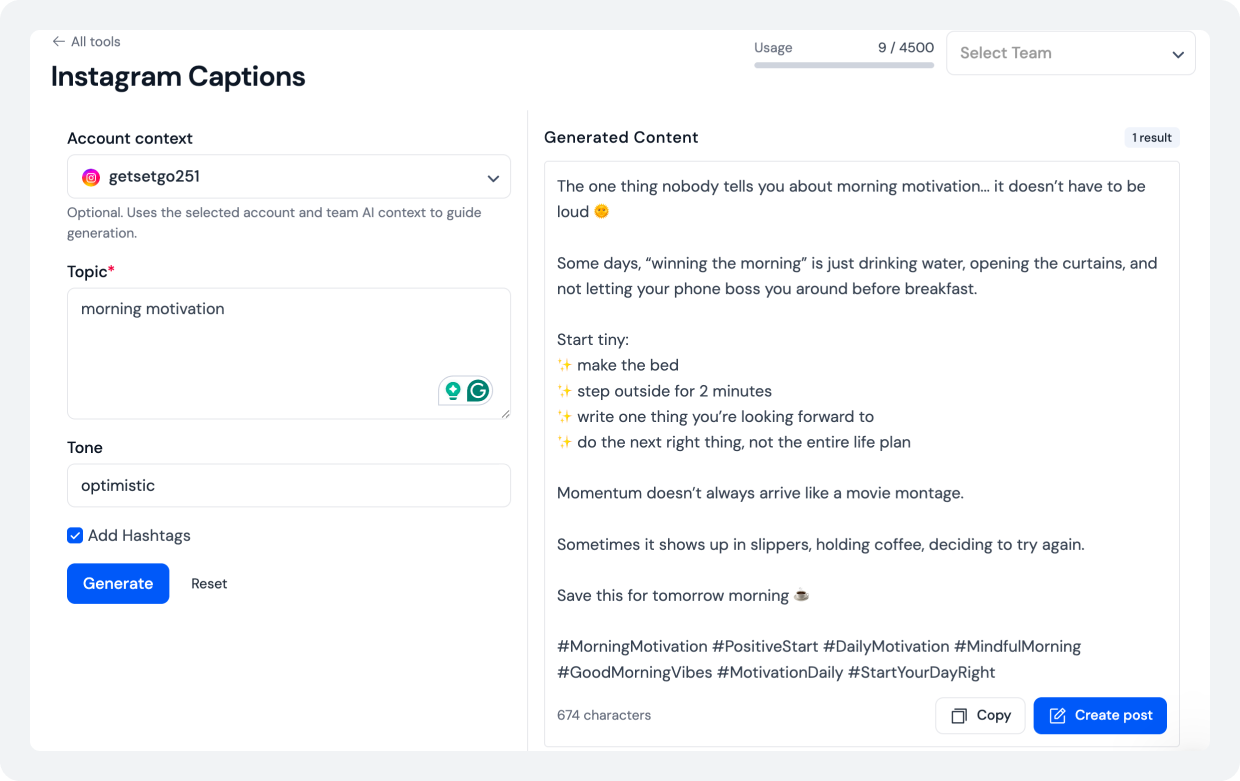
The variations were genuinely different in tone across platforms, not just the same text with a different line break.
8. Platform Support
SocialBu supports Facebook, Instagram, Twitter/X, LinkedIn, TikTok, YouTube, Pinterest, Reddit, Google Business Profile, Threads, Mastodon, and Bluesky.
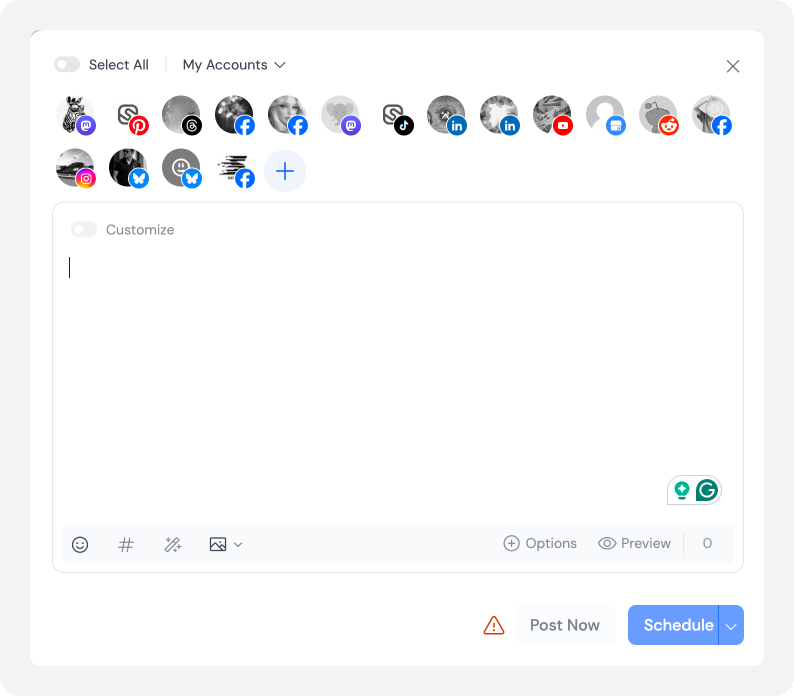
Planable doesn’t support Reddit or Mastodon. SocialPilot dropped Reddit support in 2024. Having all social media in one app, including platforms where audiences are actively moving, means you are not building workarounds for niche client requests.
Pricing Plans
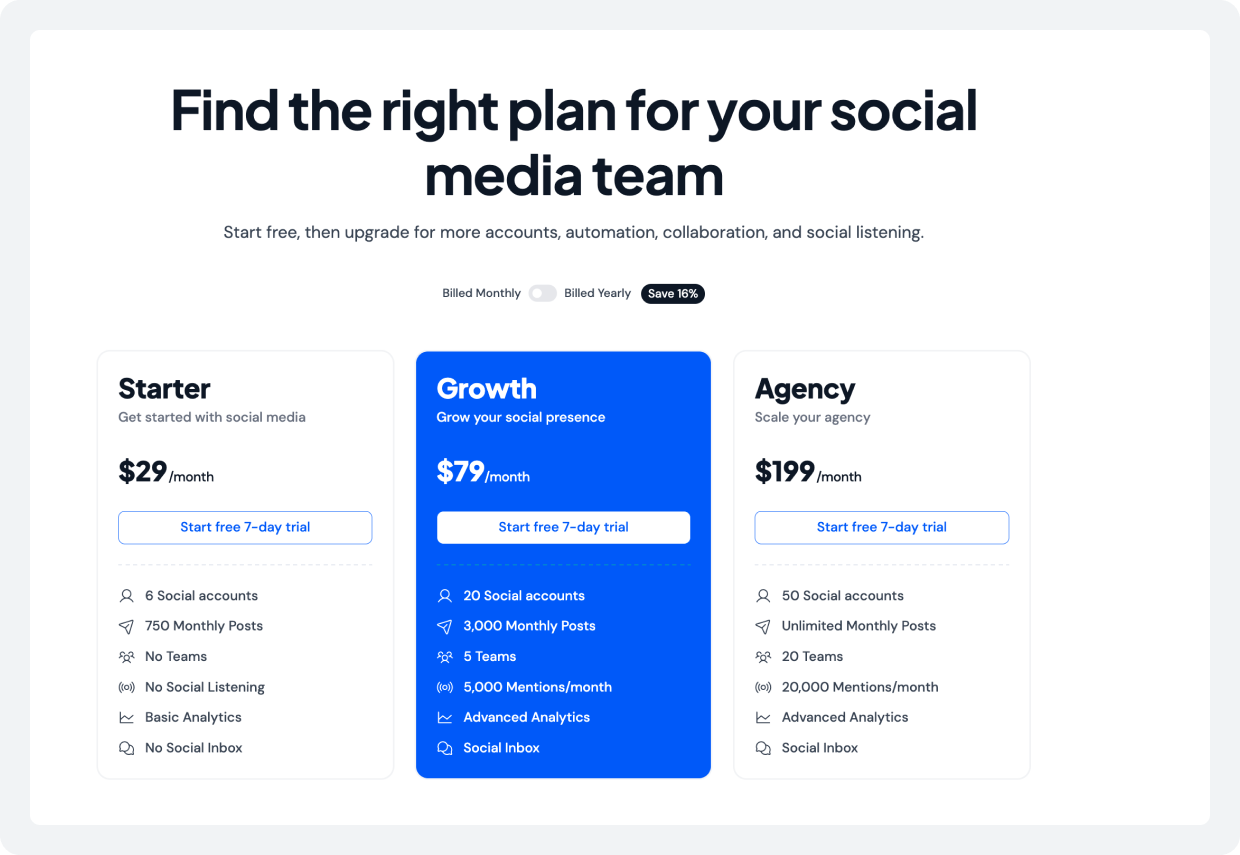
SocialBu’s pricing plans are flat-tier, which means your cost stays the same even when you add team members or grow your client base.
- Free: $0/month
- Starter: $29/month
- Growth: $79/month
- Agency: $199/month
- Custom/Enterprise: Contact sales
The Math Matters
Agorapulse at $99/user means a 5-person agency pays $495/month. SocialBu Agency covers unlimited users for $199/month; a saving of $3,552 per year. Sprout Social at $199+/user means that the same agency pays $995+/month; a saving of over $9,500 per year with SocialBu.
What Real Users Say About SocialBu
Here’s what real users say about SocialBu:
“It helps me every day to plan social media posts for multiple accounts and shorten my time with these tasks at my job.“ – Viviana Ș, Capterra
“Overall, my experience with SocialBu has been largely positive. The platform’s responsive customer support has been a standout feature, ensuring that any issues I encounter are promptly addressed.” – Dr. Oliver J., Capterra
“I’ve only been with SocialBu for a week, but seriously, I was only on it for 10 minutes when I knew it was the right place for me.. and believe me, I’ve tried lots of them! Within an hour I’d built my queues and left my old social media scheduling platform.” – Allie M., Capterra
What We Love | What Could Be Better |
The deepest automation engine at this price | White-label reports require the Supreme Plan |
Flat-tier pricing | Navigation can be slightly unintuitive at first |
12 platforms including Reddit, Bluesky, Mastodon | Some social account reconnection issues reported |
Unified inbox for community management | Learning curve for advanced automation features |
AI content generation built into Compose | Approval UI can be more polished |
RSS auto-publishing saves hours per week | |
Real-time social monitoring |
Our Verdict
SocialBu is the best social media management tool for agencies that need automation depth, multi-platform coverage, and a pricing model that stays fair as they scale.
If you’re managing more than 5 clients or have more than 2 team members, SocialBu’s Growth or Agency plan delivers more value per dollar than anything else in this space.
Managing 5+ Accounts & Drowning In Approvals?
SocialBu’s Super plan brings it all together: automation, inbox, approvals, analytics, for $59/month.
2. Vista Social – Best for AI-Powered Workflows
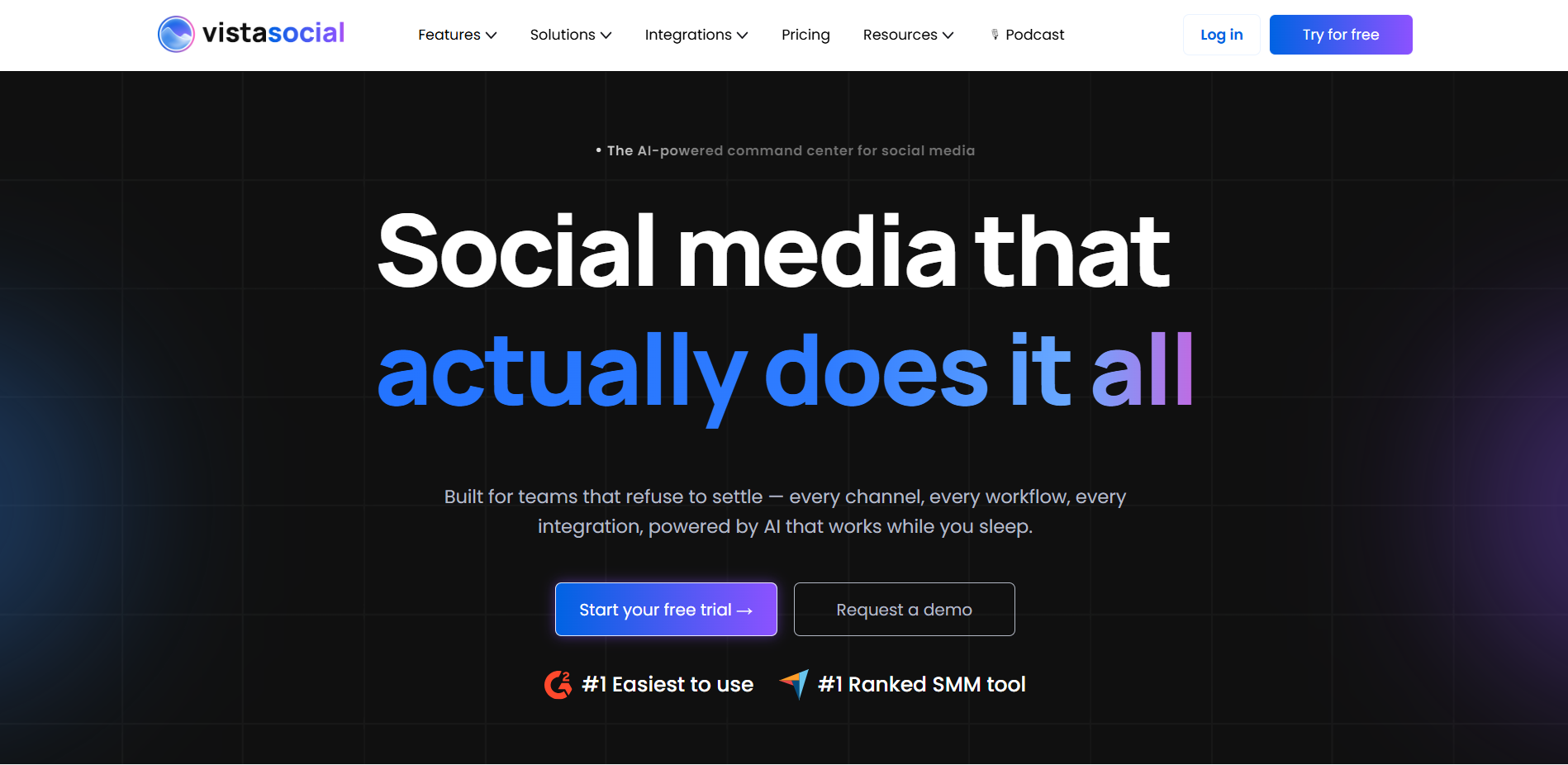
Vista Social surprised us. It has one of the highest user ratings we encountered in this comparison, and that’s deserved; the platform has invested heavily in AI content tools and modern UX in ways that older platforms haven’t.
According to Social Media Examiner, 60% of marketers now use AI tools daily; Vista Social is ahead of the curve here.
Key Features
- AI content generation: AI writing tools that produce platform-specific copy, not just generic text with emojis added, making it genuinely useful for content teams under pressure.
- Competitive entry price: At $15/month, it’s one of the most accessible social media management apps with AI capabilities built in.
- Strong unified inbox: Comment management across platforms with assignment and tagging, solid for multi-client community management.
- Modern, clean UI: One of the most polished interfaces in this price tier. Onboarding is fast and the calendar is intuitive.
- Approval workflows: Client review and approval flows with role-based access control.
- Review management: Monitor and respond to Google and Facebook reviews directly from the platform; an underrated agency use case.
Where the Gap Exists
Where it shows its limits for agencies is in the depth of automation and monitoring. The rule-based automation and social listening capabilities that other advanced tools offer are lacking in this one. Also, white-label reporting is gated to higher tiers.
Pricing
- Standard: $39/month
- Professional: $79/month
- Advanced: $149/month
- Scale: $379/month
- Enterprise: Custom pricing
What We Love | What Could be Better |
Excellent AI content generation tools | Low automation depth |
Very competitive entry price | White-label only on higher tiers |
Strong unified inbox for community management | Social monitoring less developed than category leaders |
Modern, clean user interface | Smaller platform ecosystem vs some competitors |
Review management across Google and Facebook |
3. Planable – Best for Client Approval Workflows

Planable is purpose-built with one thing agencies struggle with the most: the content review and approval loop. When we tested Planable’s approval workflow, we immediately understood why it ranks so highly among agencies where approvals are the primary bottleneck.
Key Features
- Four-mode approval system: None, Optional, Required, and Multi-level, is the most configurable of any tool we tested. Clients receive a clean review link and can approve or comment without creating an account, which removes a significant friction point in agency-client relationships.
- Workspace-per-client structure: Each client gets a fully isolated workspace with separate permissions, assets, and approval chains.
- Visually appealing content calendar: Pixel-perfect post previews across every platform, so what you see during planning is exactly what goes live.
- Internal comments & team-only drafts: Keep early drafts and internal discussions hidden from clients.
- Unlimited platforms: Planable supports scheduling across any network, which makes it unusually flexible for diverse client rosters.
- Real-time collaboration: Teams can work on the same draft simultaneously, with comments and change requests in context.
- Analytics & custom reporting: Consolidated reporting across channels for performance visibility, though not as deep as dedicated analytics tools.
Where the Gap Exists
The limitations became clear fast. There’s no automation engine, the social inbox is limited, and there’s no social monitoring.
And for growing agencies, the per-workspace pricing means every new client adds to your monthly bill. At 20 active clients, you’re paying $660/month, just for approvals and scheduling.
Pricing
- Basic: $39/workspace/month
- Pro: $59/workspace/month
- Enterprise: Custom pricing
What We Love | What Could Be Better |
Best client approval UX in the market | No automation engine whatsoever |
Beautiful visual content calendar | No social listening or monitoring |
Pixel-perfect platform post previews | Limited social inbox capability |
Zero-friction client access (no account needed) | Per-workspace pricing scales badly |
4. CoSchedule – Best for Marketing Teams Managing Broader Content Ops
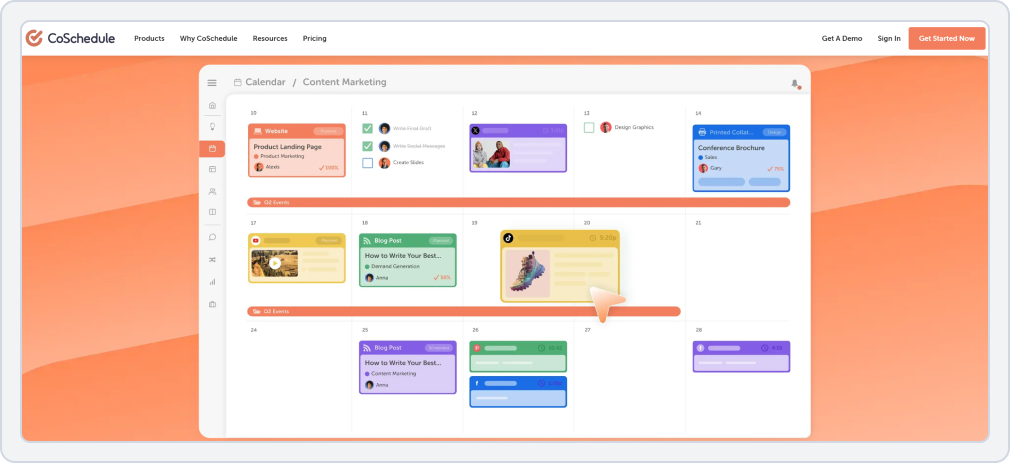
CoSchedule is the right tool for marketing teams that manage content across multiple channels beyond social: blogs, email campaigns, events, and editorial calendars. It functions more as a media content management system than a pure social media management application.
Key Features
- Excellent multi-channel marketing calendar: The calendar isn’t just for social; it unifies blog posts, email campaigns, events, and team tasks in a single view.
- Strong WordPress and email integrations: Direct connection to content publishing workflows, making it practical for content marketing agencies.
- Good team task management: Assign tasks, set deadlines, and track content production pipelines alongside social scheduling.
- Headline Analyser tool: Built-in tool to score and optimise blog posts and social copy headlines, useful for content teams.
Where the Gap Exists
As a social media management program for agencies, it’s limited: no unified inbox, limited client approval features, and no social monitoring.
Pricing
- Free Calendar: $0/month
- Social Calendar: $29/user/month
- Agency Calendar: $69/user/month
- Marketing Suite / Content Calendar: Custom
What We Love | What Could be Better |
Excellent multi-channel marketing calendar | No unified social inbox |
Strong WordPress and email integrations | Limited client approval features |
Good team task management | No social monitoring or listening |
Built-in headline analyzer | Not purpose-built for pure social agencies |
Read more: If you have used CoSchedule before and now want to try some other tool, our guide to CoSchedule alternatives might interest you.5. SmarterQueue – Best for Evergreen Content Recycling
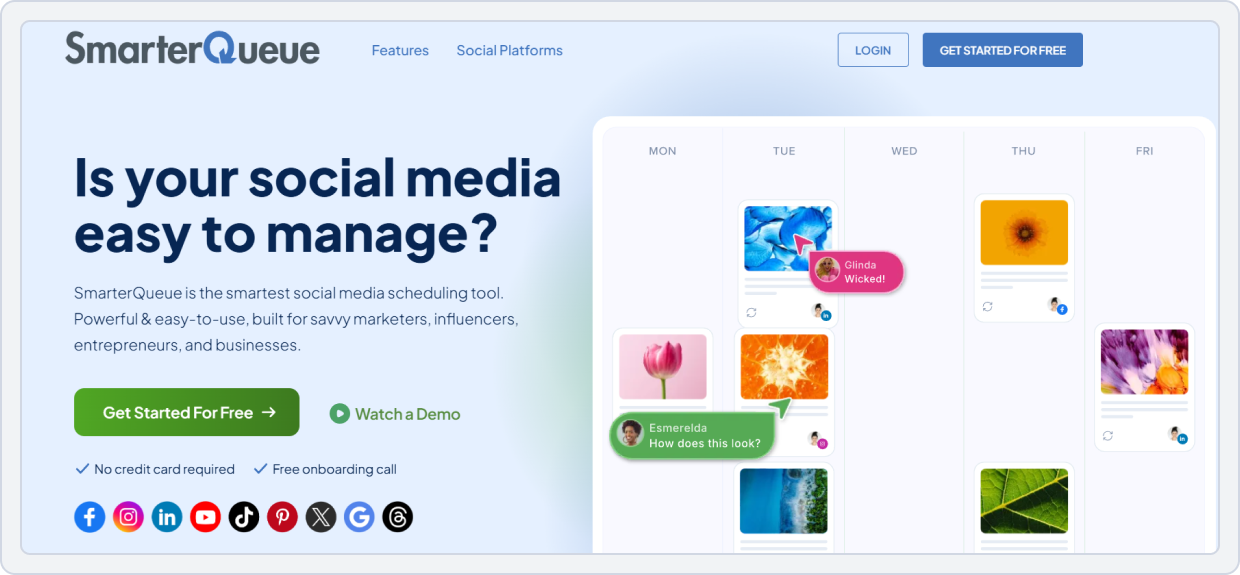
SmarterQueue’s category-based queue system is the best evergreen content-recycling tool on this list.
If a client has a large library of timeless educational posts, SmarterQueue’s system automatically recycles them in a customized rotation, ensuring evergreen content stays in circulation without manual effort.
Key Features
- Best-in-class evergreen content recycling: Category-based queues that automatically repurpose timeless content on a defined rotation schedule.
- Clever category-based queue system: Organize content by type (educational, promotional, testimonials) and let SmarterQueue balance the mix automatically.
- Affordable entry price: At $25/month, it’s accessible for freelancers managing a small roster for clients with content-heavy strategies.
- Visual analytics: Basic performance tracking by content category to understand what types of posts perform best over time.
Where the Gap Exists
Some of the significant limitations of SmarterQueue include the absence of an approval workflow, a unified inbox, social monitoring, and white-label reporting.
Pricing
- Pro: $25/month
- Team: $50/month
- Custom: Variable
What We Love | What Could be Better |
Best-in-class evergreen content recycling | No approval workflow |
Category-based queue system | No unified social inbox |
Affordable entry price | No white-label reporting |
Good for client-rich client accounts | No social monitoring or listening |
6. Agorapulse – Best for White-Label Reporting

Agorapulse is genuinely one of the most complete social media management platforms we tested. The inbox management is excellent, white-label branded reports are polished and professional, and the analytics suite is deep.
Key Features
Best-in-class white-label reporting: Polished, professional branded reports that are genuinely client-ready out of the box.
- Excellent advanced social inbox: The inbox management, with team assignment, labelling, and saved replies, is among the best in this category.
- Deep analytics with customisation: Platform-by-platform performance data with custom date ranges and exportable formats.
- Built-in UTM builder: Track campaign performance with link tagging directly inside the platform, unusual at this tier.
- Approval workflows: Clean internal and external approval flows with clear status tracking.
- Social listening: Brand mention tracking and keyword monitoring across platforms.
Where the Gap Exists
The problem is the pricing model. At $99 per user per month, a 5-person agency team pays at least $495/month. When we ran the cost comparison, a team of 5 switching from Agorapulse to SocialBu Agency saves $3,552 per year while retaining most core features.
Pricing
- Standard: $99/user/month
- Professional: $149/user/month
- Advanced: $199/user/month
- Custom: Tailored Pricing
What We Love | What Could Be Better |
Best-in-class white-label reporting | $99/user/month; punishing at scale |
Excellent advanced social inbox | Limited automation |
Deep analytics with customization | No Reddit, Bluesky, or Mastodon support |
Built-in UTM builder |
Read more: Find more tools like Agorapulse in this Agorapulse alternatives guide.7. Metricool – Best for Analytics-First Agency Teams
Metricool has built its reputation on one thing: data. Where other platforms treat reporting as an afterthought bolted onto scheduling features, Metricool flips the priority, giving agencies granular performance data, competitor benchmarking, and paid-plus-organic insights that make it a favorite among teams whose primary value proposition is
Key Features
- Excellent analytics depth and competitor tracking: The reporting suite is among the most detailed in this comparison, offering audience best-time analytics, competitor benchmarking, and cross-platform performance data.
- Best-time audience analysis: Platform-specific recommendations based on when your clients’ audiences are actually active, not generic industry averages.
- Ad analytics integration: Facebook Ads and Google Ads data pulled directly into the dashboard for unified paid + organic reporting.
- Strong free plan for individual use: The free tier is genuinely useful for freelancers or solo managers testing the platform.
- Website traffic integration: Connect Google Analytics data to see how social content drives website performance.
Where the Gap Exists
Approval workflows are gated to the Advanced plan, white-label reporting is Enterprise-only, and there’s no unified social inbox.
This makes Metricool a strong analytics layer but an incomplete agency social media management software on its own. Many analytics-focused agencies use Metricool for reporting and SocialBu for day-to-day operations simultaneously.
Pricing:
- Free: $0/month
- Starter: $25/month
- Advanced: $67/month
- Custom: Contact for price!
What We Love | What Could be Better |
Excellent analytics depth and competitor tracking | Approval workflows are only on the Advanced plan |
Best-time audience analysis per platform | White-label reports Enterprise-only |
Ad analytics integration | No unified social inbox |
Strong free plan for small teams | Per-brand pricing scales badly for agencies |
Website traffic integration |
Read more: Check out our guide to Metricool alternatives to discover some other cool tools like Metricool.8. Loomly – Best for Visual Content Agencies
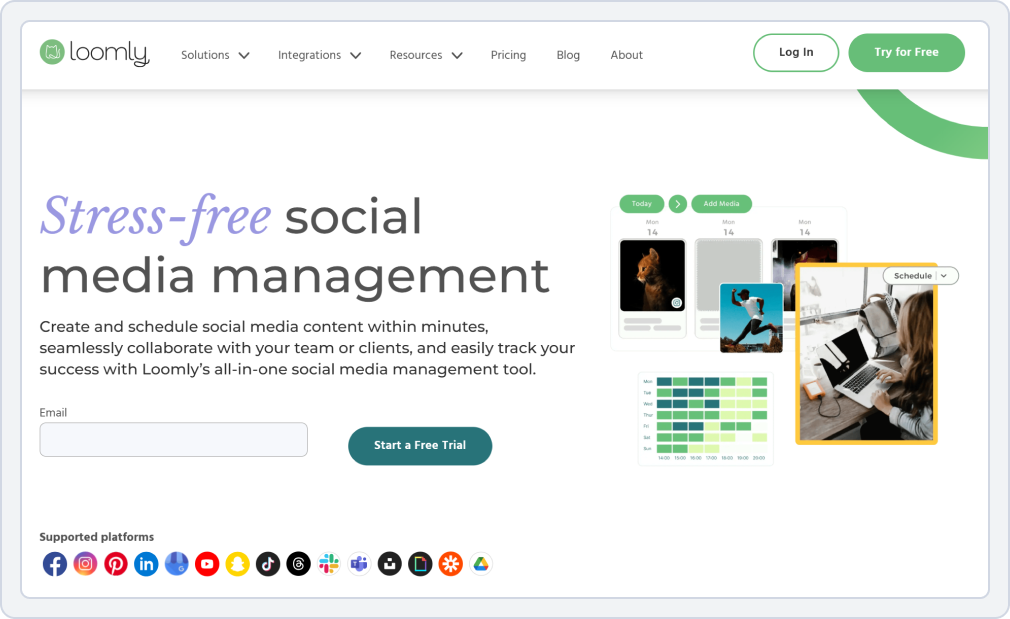
Loomly’s strength is in its visual content workflow. For agencies focused primarily on visual content creation, it’s a natural fit. The platform understands that how content looks before it publishes matters as much as how it looks after.
Key Features
- Visual Post Previews: See exactly how posts will render across each platform before publishing, with realistic previews for feeds, stories, and reels.
- Brand library management: Store brand assets, color palettes, and approved media centrally; invaluable for agencies managing multiple visual brands.
- Content ideas and suggestions: Built-in content inspiration based on holidays, trending topics, and engagement data to help teams fill content calendars.
- Clean approval workflows: Internal and external review flows with clear status labels and comment threads per post.
- Broad platform support: Covers 10+ networks, including TikTok, Pinterest, and Snapchat; good for lifestyle and creator-adjacent brands.
Where the Gap Exists
The real gap for Loomly is among agencies seeking in-depth automation, social inbox, monitoring, and listening features. Also, this tool offers limited automation beyond simple scheduling.
Pricing
- Free Plan: $0/month
- Starter Plan: $65/month
- Beyond Plan: $332/month
- Enterprise Plan: Custom Quote
What We Love | What Could be Better |
Excellent visual post previews | No unified social inbox |
Brand library management | No social monitoring or listening |
Content ideas and suggestions built in | Limited automation beyond scheduling |
Clean approval workflow | White-label reporting only partial |
Broad platform support |
For full-service agency operations that require monitoring, automation, and a unified inbox, a more comprehensive social media management tool is needed.
Read more: If Loomly has interested you as a tool but you want to check out some Loomly alternatives, our guide can be of help.9. Sendible – Best for Client-Facing Collaboration
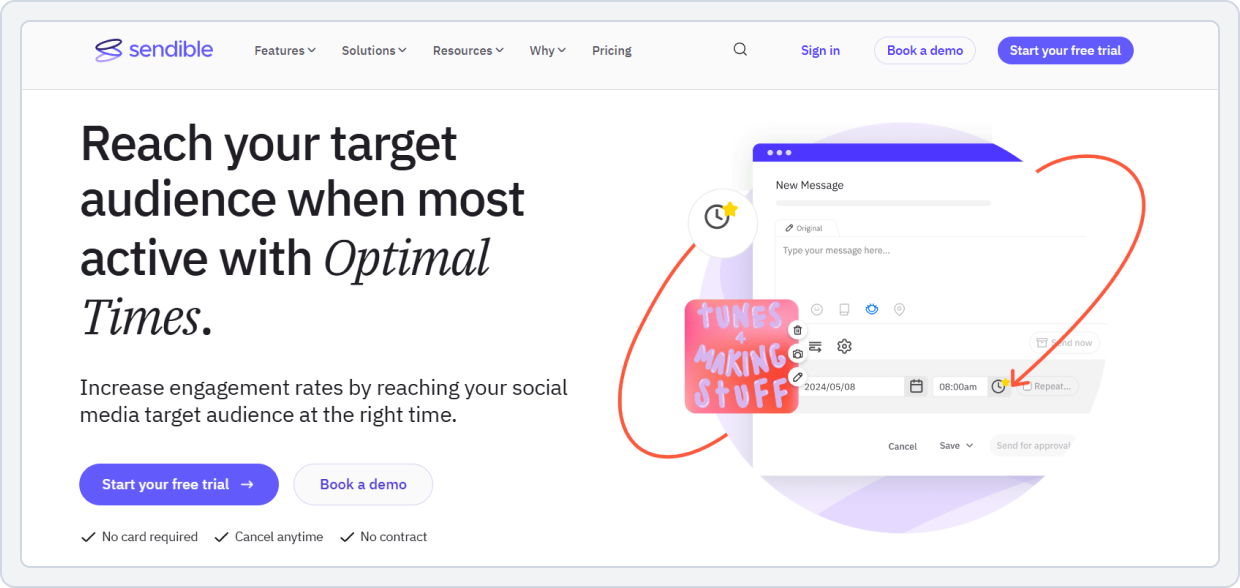
Sendible was designed specifically for agencies, and that shows in the details. It’s one of the oldest dedicated agency social media management platforms in this space, and it has the scars to prove it; years of iterating on the problems agencies actually face.
Key Features
- Purpose-built agency features: Client dashboards, approval workflows, white-label reports, and a clean multi-client interface designed from the ground up for agency workflows.
- White-label client dashboards: Clients can log into a fully branded version of the tool without seeing Sendible’s branding, a strong differentiator for agencies pitching themselves as premium providers.
- Canva Integration: Native Canva connection makes it practical for creative-heavy workflows where content design and scheduling need to stay in sync.
- Approval workflows included: Internal review and client sign-off flows are part of the core product rather than a paid add-on.
- Bulk scheduling and content calendar: Clean visual planning with queue management for high-volume scheduling.
- Google Analytics Integration: Connect social performance data to website traffic for fuller ROI reporting.
Where the Gap Exists
Where Sendible falls back is in automation depth and UI modernity. Compared to SocialBu’s automation engine, Sendible is fairly basic. The interface looks dated compared to most modern tools.
Pricing
- Core: $35/month
- Plus: $99/month
- Premium: $199/month
- Elite: $299/month
- Enterprise: $750/month
What We Love | What Could be Better |
Purpose-built for agency use | Limited automation depth |
White-label client dashboards | UI feels outdated |
Canva integration for creative teams | Pricing scales with profile count |
Approval workflows included out of the box | Less polished approval workflow |
Google Analytics Integration for ROI reporting |
Read also: Check out our Sendible alternatives guide for some interesting tools list.10. SocialPilot – Best Value for Growing Agencies

SocialPilot is a credible, affordable entry point for agencies building out their first social media management solution. White-label reporting is available on lower tiers than most competitors, the client management portal is clean, and bulk scheduling works well.
Key Features
- Clean client management portals: Clients get a dedicated portal to review content without navigating complex dashboards.
- Solid bulk scheduling: Upload up to 500 posts via CSV at once, one of the higher limits in this category.
- RSS feeds + social inbox: Basic but functional RSS auto-publishing and a social inbox for managing comments.
- Approval workflows: Team-based workflows with client sign-off capability included.
- Competitive pricing: At $25/month flat, it’s one of the most accessible, cheap social media management options with agency-grade features.
Where the Gap Exists
SocialPilot has RSS publishing, but the rules-based automation, keyword triggers, and engagement-based workflows that deeper SMM tools offer aren’t available.
There’s also no social monitoring or listening, and the inbox is more basic than platforms positioned above it in this guide.
If you want social monitoring and listening features, you can find some useful tools in our guide on SocialPilot alternatives.
Pricing
- Essentials Plan: $30/month
- Standard Plan: $50/month
- Premium Plan: $100/month
- Ultimate Plan: $200/month
What We Love | What Could Be Better |
Best-in-class white-label reporting | $99/user/month; punishing at scale |
Excellent advanced social inbox | Limited automation |
Deep analytics with customization | No Reddit, Bluesky, or Mastodon support |
Built-in UTM builder |
11. Statusbrew – Best for Scaling Multiple Clients
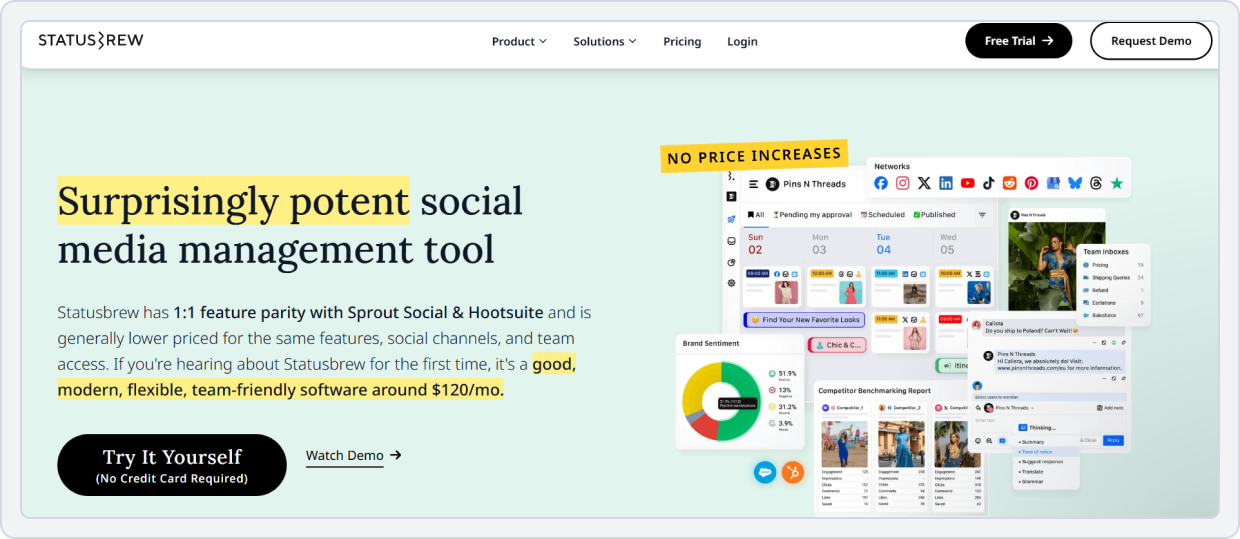
Statusbrew sits in the enterprise-adjacent tier and earns its price for agencies managing large volumes of client activity. It’s a genuine enterprise social media management solution with flat-tier pricing, a structural advantage over Sprout Social or Hootsuite as team size grows.
Key Features
- Advanced inbox with SLA tracking: Team assignment, custom tags, custom SLA rules; the most complete inbox management tool in this price bracket for high-volume community management.
- Comprehensive analytics suite: 250+ metrics available, customizable dashboards, and shareable client reports with white-label branding on higher tiers.
- Excellent team workflow management: Role-based access, approval flows, internal notes, and clear accountability structures built for growing agency teams.
- Social listening across platforms and web: Sentiment analysis, trend tracking, and competitor monitoring.
- AI brand voice assistant: Maintains brand consistency across channels, useful for agencies managing multiple clients with distinct tones.
- Scales well for large operations: Built for agencies with 30+ active client accounts where simpler tools start showing their limitations.
Where the Gap Exists
The $89/month entry price means it’s not in the budget tier, and pricing scales significantly for higher plans. For agencies with below-average client volume, the cost isn’t justified.
Pricing
- Lite: $89/month
- Standard: $179/month
- Premium: $299/month
- Enterprise: Custom Pricing
What We Love | What Could be Better |
Advanced inbox with SLA tracking | More expensive than other tools |
Excellent team workflow management | Overkill for smaller agencies |
Strong analysis suite | Complex setup for new teams |
Scales well for large operations | Some UX quirks in the interface |
AI brand voice assistant for consistency |
Also read: Check our guide on Statusbrew alternatives if you want to try some tools other than Statusbrew.12. Planoly – Best for Instagram & Pinterest-First Brands
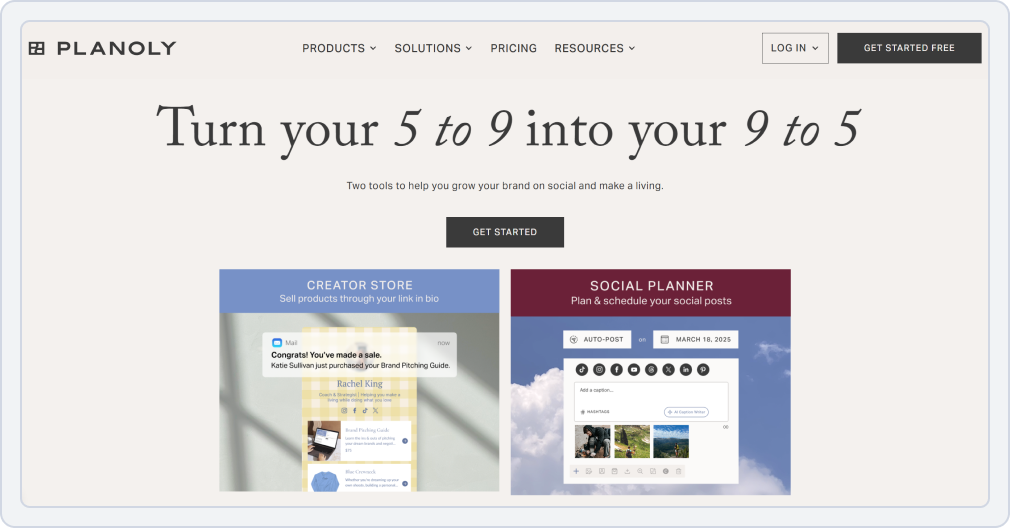
Planoly was one of the original Instagram grid planners, and it remains the cleanest tool for visually focused social media management on Instagram and Pinterest. The grid preview and drag-and-drop rearrangement tools are the best in this list for visual-first agencies.
Key Features
- Best Instagram grid planning and visual preview: Drag-and-drop your Instagram feed layout with a live grid preview, essential for brands where aesthetic cohesion is part of the value proposition.
- Excellent for Pinterest management: Rich Pin scheduling and Pinterest-specific analytics that most social media tools overlook.
- Clean, beginner-friendly UI: One of the fastest tools to onboard into, with a minimal learning curve even for non-technical team members.
- Affordable entry price: At $16/user/month, it’s accessible for freelancers or very small teams managing a focused visual brand.
Where the Gap Exists
Being a visual-first tool, this one lacks detailed features such as approval workflows, a unified inbox, and social monitoring. Moreover, Planoly’s analytics depth is very limited.
If you don’t really care about visuals much, you can find some tools that interest you in our Planoly alternatives guide.
Pricing
- Starter: $16/month
- Growth: $28/month
- Pro: $55/month
What We Love | What Could be Better |
Best Instagram grid planning and visual preview | No approval workflow and unified inbox |
Excellent for Pinterest management | No social monitoring |
Clean, beginner-friendly interface | Analytics very basic |
Affordable entry price | Per-user pricing adds up for growing teams |
How to Avoid Hidden Costs When Evaluating Agency-Grade SMM Tools?
Most agencies are surprised by the real cost of their social media management software six months in. The sticker price on the homepage rarely reflects what a growing team actually pays. Here’s what to watch for and how to protect your margins.
The Per-User Trap – Where Growing Agencies Bleed Money
Per-user pricing is the most common model at the enterprise end of the market, and the most dangerous for growing agencies. It sounds reasonable at first. In practice, it functions as a tax on your own success.
Every time you hire a new account manager, bring on a junior copywriter, or onboard a part-time community manager, your platform bill goes up. Immediately and permanently.
At Agorapulse’s $99/user/month, a team of five pays $495/month. When that team grows to eight, a perfectly normal trajectory for an agency landing three new retainers in a good quarter, you’re at $792/month.
Per-Workspace Pricing – The New Business Penalty
Per-workspace pricing shifts the cost variable from team headcount to client count. Planable charges $33/workspace. That feels manageable at 5 clients ($165/month). At 20 clients, it’s $660/month, and you’re getting nothing additional for that increase.
The Flat-Tier Advantage
Flat-tier pricing charges a fixed monthly fee regardless of team size or client count. SocialBu’s Agency plan at $199/month covers unlimited users.
A team of 3 and a team of 30 both pay $199/month. The operational math becomes straightforward: your social media software is a fixed line item, full stop.
Tools | Pricing Model | 3-Person Team | 10-Person Team | Annual Cost |
SocialBu Agency | Flat tier | $199/mo | $199/mo | $2,388/yr |
Agorapulse | Per user ($99) | $297/mo | $990/mo | $11,880/yr |
Sprout Social | Per user ($199+) | $597/mo | $1,990/mo | $23,880/yr |
Planable | Per workspace ($33) | $495/mo | $495/mo | $5,940/yr |
Hootsuite | Per user (varies) | $330/mo+ | $1,100/mo+ | $13,200+/yr |
Other Hidden Costs No One Talks About
- Feature gating: A tool may be priced affordably at entry, but gates the features your agency actually needs; approval workflows, white-label reports, and social monitoring are behind significantly more expensive plans.
- Overage charges: Some platforms charge extra when you exceed a profile or post limit. Always check the profile cap against your realistic client roster 12 months out.
- Add-on fees: Several platforms treat additional profiles, inbox seats, or reporting credits as optional add-ons. What looked like a $79/month platform becomes $140/month after add-ons.
- Annual vs. monthly billing: Most platforms offer a 15-20% discount for annual billing. Always compare on the same basis.
Our Recommendation
Before committing to any platform, build a 12-month cost projection based on your realistic team size and client count at the end of the year, not today. Apply the platform’s pricing model to that projection. The tool that looks cheapest today may not look cheapest when your agency is actually growing.
Tired of Seeing Your Platform Bill Grow?
SocialBu’s flat-tier pricing means unlimited users at $199/month. No surprises, no growth penalties.
How Agencies Actually Use SocialBu: A Workflow Walkthrough
This is what day-to-day social media management for agencies looks like inside SocialBu. It’s not a feature list, it’s a real-workflow that our users run every month.
- Set Up Isolated Client Workspaces: Each client gets their own workspace with connected social accounts, their own brand setting, and assigned team members with appropriate role permissions. Writers can draft only. Managers can approve internally. Clients get a review link. No SocialBu account required on client’s end.
- Configure Client-Specific Automation Rules: Connect each client’s blog RSS feed for auto-publishing. Set up keyword auto-replies for DMs on high-traffic promotional posts. Configure engagement alerts for when a post hits performance thresholds. Most of this is set-and-forget. Once configured, it runs without manual input.
- Bulk-schedule Monthly Content: Content writers upload the month’s posts via CSV bulk upload or directly through the calendar UI. The AI caption generator adapts copy per platform. Posts are queued, previewed, and submitted for review.
- Internal Review, Then Client Approval: The account manager reviews drafts internally. Once cleared, SocialBu sends the client a review link. They approve, reject, or comment; all logged with timestamps. No more approval of archeology through email chains.
- Manage All Engagement via Unified Inbox: The community management team handles all incoming comments. DMs, mentions from the unified inbox. Auto-reply rules handle common queries. Complex conversations are assigned to senior team members.
- Track Performance via Analytics: Mid-month check-ins review performance per client. At month end, generate branded PDF reports in under 10 minutes per client. Share directly. No spreadsheet reformatting required.
- Monitor Brand Mentions in Real Time: SocialBu surfaces relevant brand mentions, keyword alerts, and significant conversations for each client as they happen. PR opportunities and potential issues get flagged before they escalate.
4 Questions to Finalize Your Shortlist
Still deciding between a few tools? Run through these four questions before you commit. They cut through the feature comparisons and get to what actually matters for how your agency operates.
1. How many clients will you have in 12 months, not just today?
Most people evaluate tools based on their current client count. The smarter move is to project forward.
If you have 5 clients but expect 15 by year-end, the per-workspace pricing of Planable ($33 × 15 = $495/month) or per-brand pricing of Metricool starts to look very different from SocialBu’s flat-tier at $199/month. Build a 12-month cost projection before signing up for anything.
2. What does your team look like and how fast is it growing?
Per-user pricing tools like Agorapulse ($99/users) and Sprout Social ($199+/user) can be justified for a 2-person team with premium retainers.
The moment you add a 3rd or 4th team member, the match changes. If you’re hiring, flat-tier pricing is almost always the better structural choice for affordable social media management.
3. What’s your biggest operational bottleneck right now?
Be honest about where time is actually going. If your answer is “approvals,” Planable is worth serious consideration. However, if your answer is “I’m spending 3 hours a month building client reports,” SocialBu or Metricool’s analytics will pay for themselves fast.
If your answer is “I’m doing the same manual tasks for every client every week,” SocialBu’s automation engine is the answer. Match the tool to the actual pain, not the longest feature list.
4. Do you need the tool for everything or are you okay with multiple tools?
Some agencies run Planable for approvals and SocialBu for everything else. Some use Metricool for analytics and SocialBu for day-to-day operations. That’s a legitimate approach, just price it correctly.
If you’re combining tools, make sure the combined cost and context-switching overhead still make sense against just using one all-in-one social media management solution.
Final Verdict
After months of hands-on testing across 12 platforms, our answer is clear: SocialBu leads for most agencies in delivering automation depth, a genuine unified inbox, real-time social monitoring, 12 platform support, and flat-tier pricing that doesn’t become a financial liability as you grow.
But the best social media management software for agencies depends on your specific workflow. Here’s the quick summary:
Quick Summary:
Best overall → SocialBu | Best approvals → Planable | Best white-label → Agorapulse | Best analytics → Metricool | Best visual planning → Planoly | Best enterprise scale → Statusbrew | Best value entry → SocialPilot
Every tool in this list does something well, and we’ve been honest about that throughout. The question isn’t which SMM tool has the longest feature list.
It’s which one fits how your agency actually operates, at a price that stays manageable as you win more clients and build your team. Model the 12-month cost. Match the tool to your real bottleneck. Then commit.
Stop Managing Social Media In Chaos.
Join 18,000+ users; agencies, freelancers, and growing teams, who use SocialBu every day.
FAQs
What is the best social media management tool for agencies in 2026?
Based on our hands-on testing, SocialBu is our pick for the best tool for agencies. It combines the strongest automation engine, multi-client management, unified inbox, and social monitoring at the most agency-friendly flat-tier pricing. For agencies where client approvals are the absolute priority, Planable is the best in that specific category.
How much do social media management tools cost for agencies?
Agency social media management software ranges from free (SocialBu Free) to $2,000+/month for large enterprise platforms.
Most agencies land between $29/month (SocialBu Starter) and $199/month (SocialBu Agency). Per-user tools like Agorapulse ($99/user) or Sprout Social ($199+/user) can cost $500–$2,000/month for a 5-person team.
Which tool has the best client approval workflows?
Planable has the most polished client approval UX; four configurable modes and zero-friction client access via a link. SocialBu also includes team and client approval features on its Super and Supreme plans.
For agencies where approvals are the single most critical workflow, Planable is the specialist choice. For agencies that need approvals plus automation and inbox, SocialBu is the better all-in-one.
Can one person manage social media for multiple clients with SocialBu?
Absolutely, this is one of SocialBu’s strongest use cases. Isolated client workspaces, unified inbox, content calendar, automation rules, and analytics all give a solo operator the operational structure of a small team. Many single-person agencies use SocialBu to manage 10–20+ clients efficiently thanks to RSS auto-publishing and automated posting.
What social media platforms does SocialBu support?
SocialBu supports 12 platforms: Facebook, Instagram, Twitter/X, LinkedIn, TikTok, YouTube, Pinterest, Reddit, Google Business Profile, Threads, Mastodon, and Bluesky. The support for Reddit, Bluesky, Mastodon, and Threads sets it apart from most competitors at this price point.
Does SocialBu offer white-label reporting?
Fully branded white-label reports are available on the Agency plan ($199/month). On lower tiers, reports can be exported as PDFs with significant customisation.
How do I switch from Hootsuite or Agorapulse to SocialBu?
Start a SocialBu free trial, connect your social accounts, create client workspaces mirroring your current structure, and use CSV bulk upload to recreate your scheduled content queue. Most agencies complete this transition within a week.