SKA may detect magnetic fields on distant exoplanets
Studying exoplanets has given astronomers insights into the characteristics that could help them find life beyond Earth. For years, astronomers thought an exoplanet's location in a...
The LISA (Laser Interferometer Space Antenna) observatory, now in development, will detect gravitational waves, the tiny ripples in space-time caused by orbiting masses. Now two st...
In a historic breakthrough for observational astronomy, researchers at the Center for Astrophysics | Harvard & Smithsonian have successfully isolated and confirmed the first di...
New research led by the University of Michigan is helping set the stage for future observatories to characterize rocky planets outside our solar system, planets that could prove li...
Finding an Earth-like world beyond the solar system is the Holy Grail of exoplanet research, and the field has experienced incredible technological advancements in searching for an...
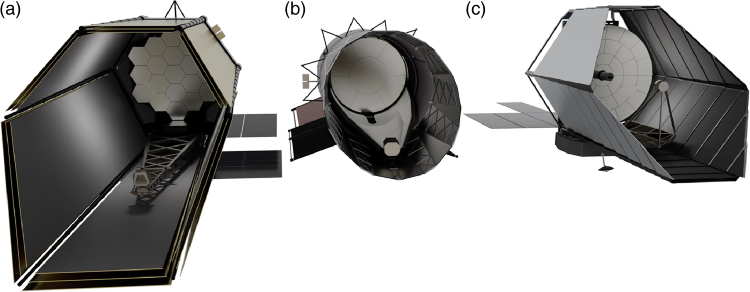
Get ready for the age of private space telescopes. The Lazuli Space Telescope will launch in a few years and part of its mission is to observe exoplanets. New research presents a l...
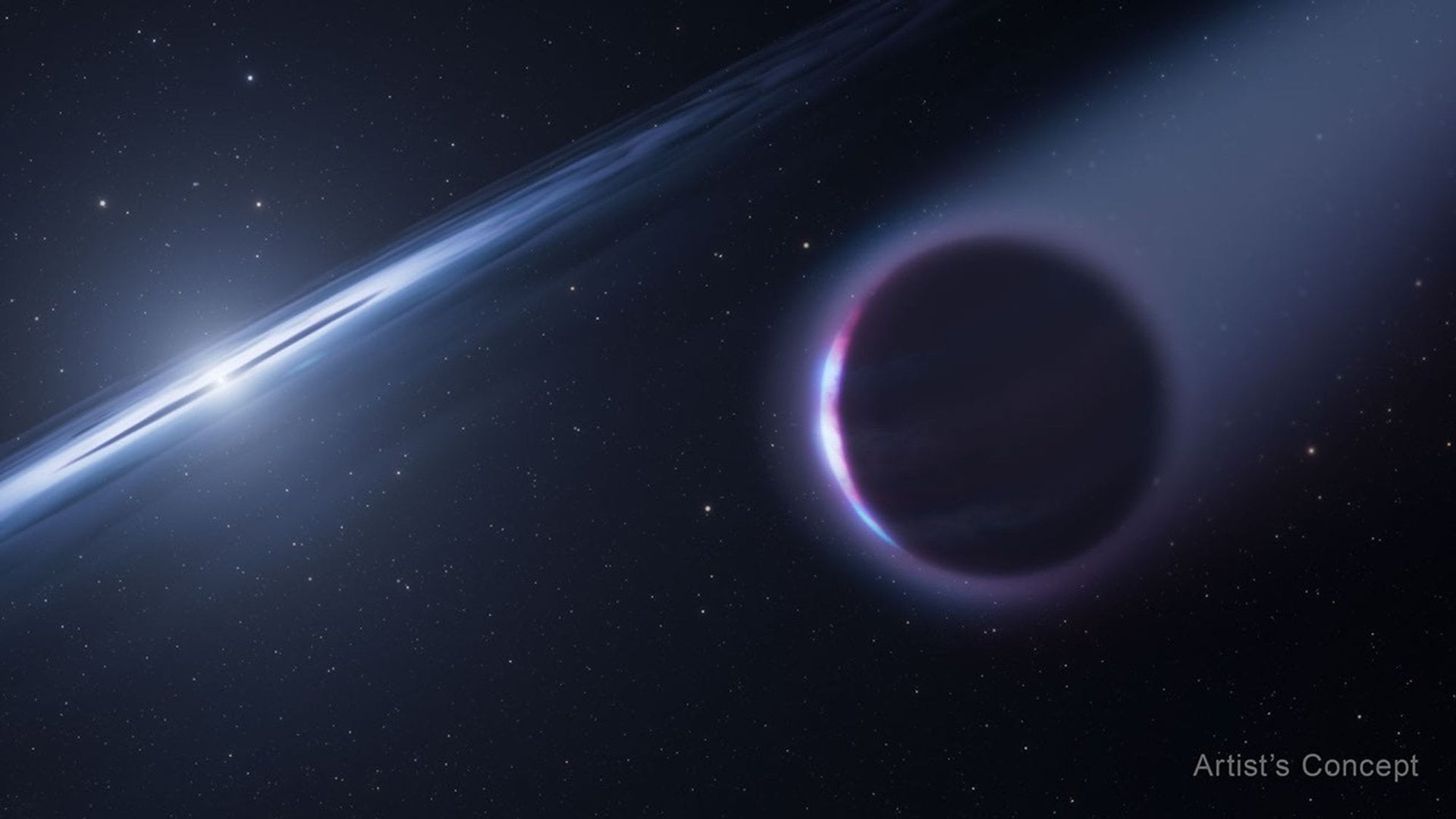
No, it’s not aliens, but a phenomenon caused by magnetic activity that astronomers have never before been able to pin on a specific planet.
Finding dim exoplanets hidden in the glare of their stars is an ongoing challenge in astronomy. Telescopes use coronagraphs to block out starlight, but even they have their limitat...
In the search for extraterrestrial life, it makes sense to first look for rocky planets with an atmosphere, like Earth. Without an atmosphere, a planet can't have surface water. Bu...
Astronomers used decades of archival data and new radial velocity measurements to search for exoplanets around a neaby binary star, 70 Oph AB. They didn't find any, which can seem...
Using advanced new simulations, a team of astronomers in the U.S. has developed a promising new theory for how giant, gaseous exoplanets migrate into stiflingly close orbits around...
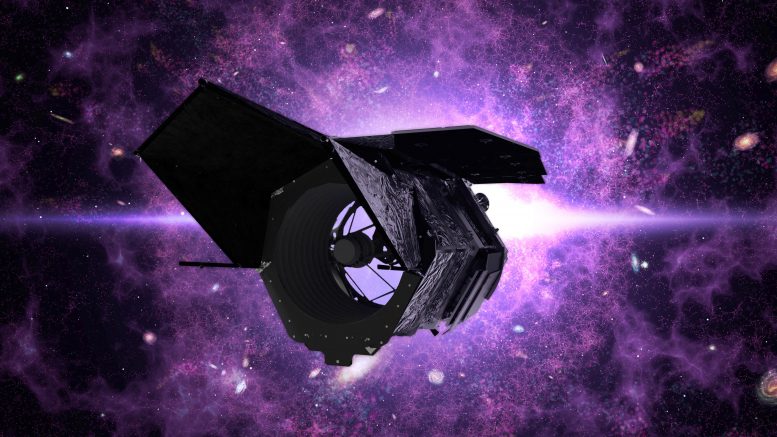
Now in space and undergoing commissioning, NASA’s Roman Space Telescope will test powerful new technology for directly studying exoplanets. A planet orbiting close to a distant sta...
Among Kepler and TESS's many surprising exoplanet discoveries are the ultra-short-period (USP) planets. These planets move very quickly and complete an orbit in less than 24 hours....
A future NASA telescope could spot atmospheric phenomena on planets orbiting other stars
Potential ‘Second generation’ planet detection around a dying stellar white dwarf opens a whole new chapter of exoplanetary science.
As a kid in the 1990s, I chose Saturn as my favorite planet because of its rings. They’re so perfectly circular and solid-looking, like a disk you might see slicing through a spher...
Finding an Earth-like world beyond the solar system is the holy grail of exoplanet research, and the field has seen remarkable technological advances in detecting and studying exop...
This summer, exoplanet science—the study of planets orbiting stars beyond our sun—took a big step forward. Reports of helium gas escaping from the atmosphere of LHS 1140b propelled...
Exoplanets continue to challenge our understanding of planetary formation, evolution, and whether they might be able to support life as we know it. Scientists often use planets in...
Typically, when we think of exoplanets, we think of neat spheres floating directly in front of their star, which acts as a giant spotlight. From our vantage point, they would look...
Until now, the alien white-hot worlds of exoplanets have been depicted as circular, but new research has revealed the true shape of their atmospheres to be a deformed sphere rather...
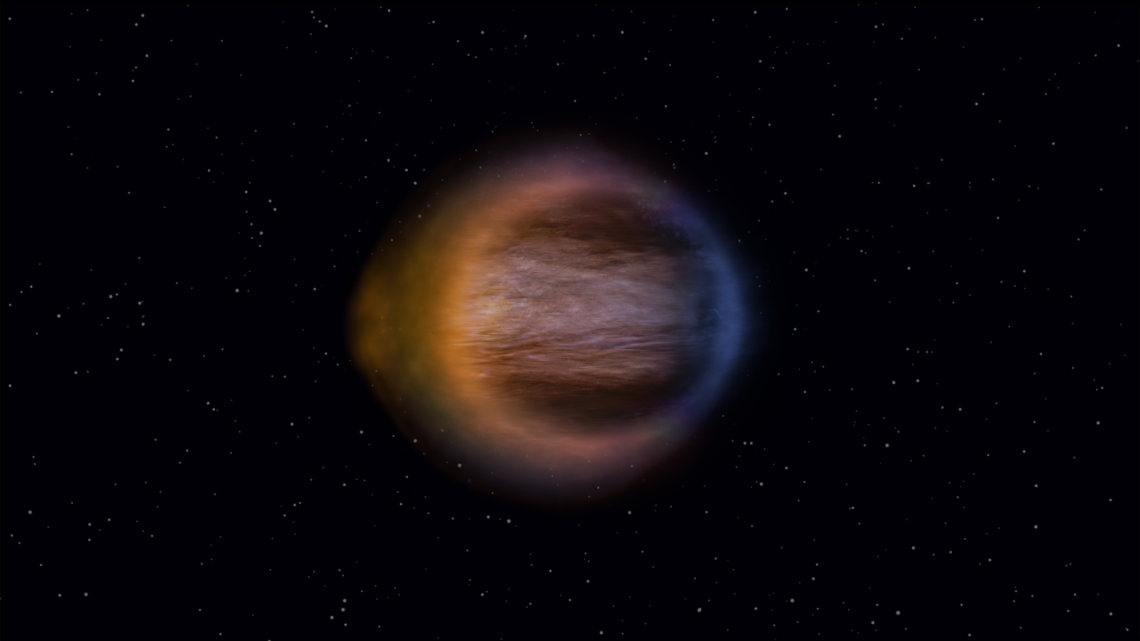
Using James Webb Space Telescope data, scientists mapped the uneven outline of exoplanet WASP-17b, revealing how extreme winds and temperature differences distort its shape.
NASA's SPHEREx (Spectro-Photometer for the History of the universe, Epoch of Reionization, and ices Explorer) space telescope is shedding light on brown dwarfs, celestial objects t...
New technique cuts through starlight to find giant exoplanet lost in JWST data.
Use SocialBu to discover ideas, generate post drafts, and schedule them across your social channels.