Latest updates for Astrobiology

Fresh curated links around Astrobiology are collected here so marketers can spot useful updates and turn timely ideas into posts faster.

Recent items include:

  • Electrical technique could help identify signs of life in space
  • Older Alien Worlds Might Still Be Stuck in the Slime Age
  • Sugar found in meteorites may have helped secure its own survival on early Earth

Post angles to try

Share the most useful takeaway for your audience.
Turn one article into a quick practical checklist.
Ask your audience how this shift affects their work.
Turn angles into scheduled posts

Fresh articles and ideas

Recent curated links from global sources. Generate one free draft from any story, then use SocialBu to schedule and refine your content calendar.

phys.org /2 weeks ago

Electrical technique could help identify signs of life in space

The truth is out there—but identifying signs of life in space involves an intense search for biosignatures within our solar system and beyond. However, developing sensitive yet com...
Read source
universetoday.com /3 weeks ago

Older Alien Worlds Might Still Be Stuck in the Slime Age

There’s an active debate in the astrobiology community of where to use our best telescopes to look for our best chance of seeing alien life. That debate has been going on for decad...

Read source
phys.org /3 weeks ago

Sugar found in meteorites may have helped secure its own survival on early Earth

Is there life elsewhere, or is Earth unique in the universe? This is one of humanity's great unanswered questions. One way to approach this mystery is to investigate how life began...

Read source
phys.org /1 month ago

Many space missions are searching for life beyond Earth, but are we prepared for the fallout if they succeed?

Microbes from space have fueled the plots of science fiction mainstays like "Project Hail Mary" and "The Andromeda Strain." But with more space missions launching each year, findin...

Read source
phys.org /4 weeks ago

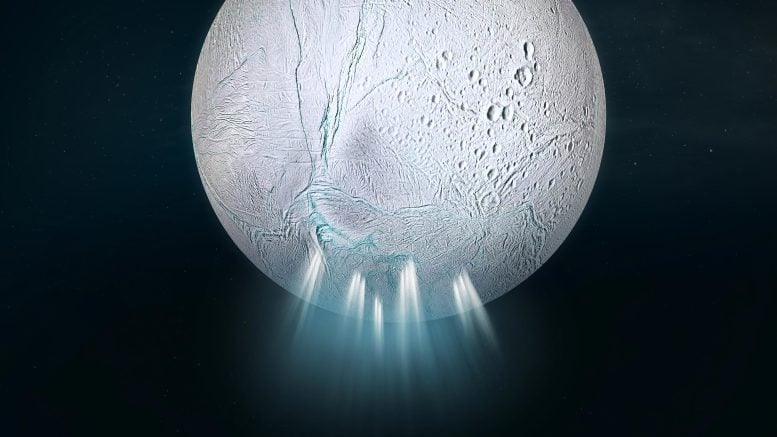
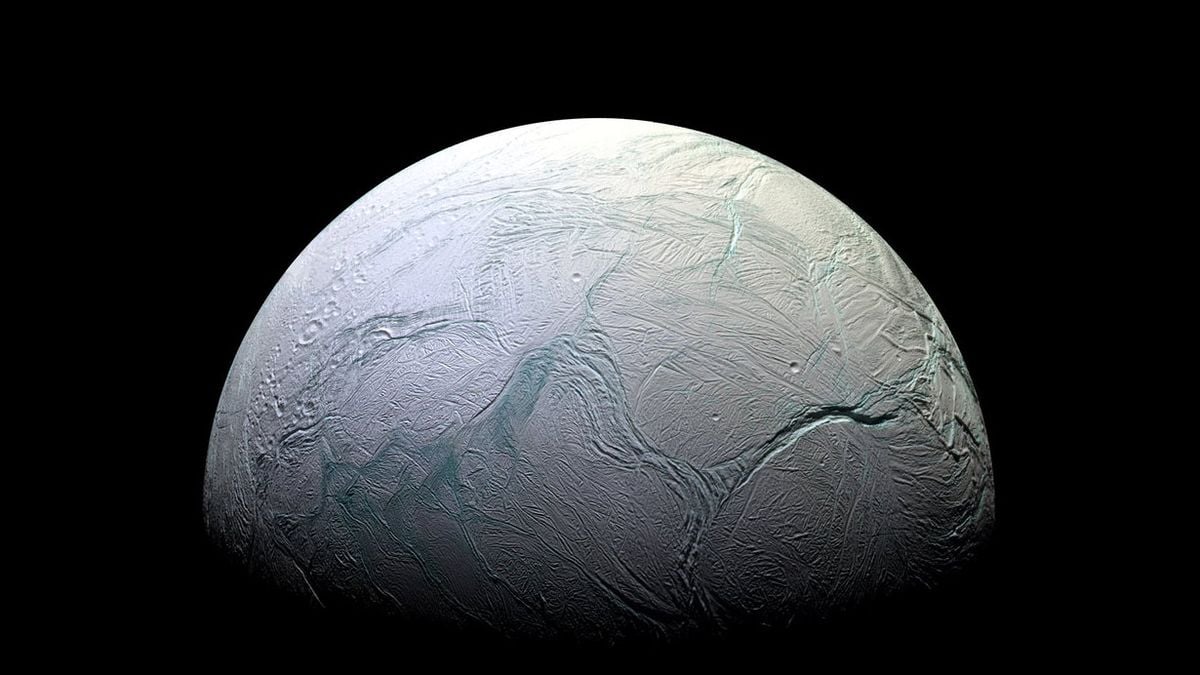
Great news from Saturn's moon Enceladus in the search for life in space

What are the chances of finding extraterrestrial life in our solar system? Frank Postberg, a professor of planetary science at Freie Universität Berlin, has published a study in Sc...

Read source
phys.org /1 month ago

Earth may have gained optimal conditions for life's chemistry 4.33 billion years ago

Conditions on early Earth may have become stable enough to sustain the chemistry associated with the origins of life around 4.33 billion years ago, according to new research co-led...

Read source
scitechdaily.com /3 weeks ago

Could Advanced Aliens Be Living Nearby? Scientists Say It’s Unlikely

Even planets billions of years older than Earth may host only microbes if photosynthesis supplies too little energy. Science fiction often imagines Earth’s galactic neighborhood te...

Read source
phys.org /4 weeks ago

Coolest lava world yet with signs of an atmosphere offers clues to early Earth

In the search for extraterrestrial life, it makes sense to first look for rocky planets with an atmosphere, like Earth. Without an atmosphere, a planet can't have surface water. Bu...

Read source
phys.org /1 month ago

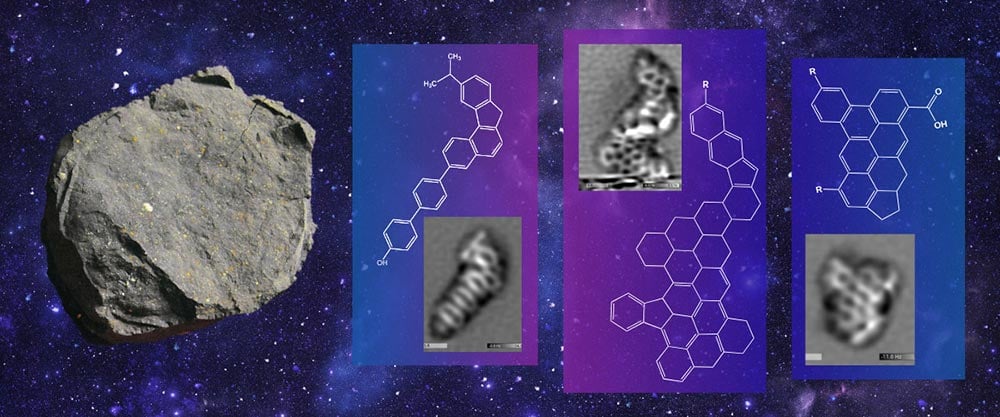
A glimpse of the solar system's origins: Striking details on the molecules inside a meteorite

Researchers at the National High Magnetic Field Laboratory and Brookhaven National Laboratory have teamed up to get a fresh look at the complex makeup of meteorites and glimpse int...

Read source
universetoday.com /1 month ago

Space Rocks Carry Hundreds of Thousands of Complex Organic Molecules—and We Just Photographed Them

Scientists have known for a while that meteorites contain the “building blocks” of life - complex organic molecules such as amino acids, simple sugars, or even the chemical rungs o...

Read source
scitechdaily.com /3 weeks ago

Great News From Enceladus: Saturn’s Icy Moon Just Became Even More Promising for Life

Two new studies suggest that Saturn’s moon Enceladus may be an even more compelling target in the search for extraterrestrial life. If scientists want to search an alien ocean for...

Read source
phys.org /1 month ago

Tiny salt crevices could act as miniature 'Greenhouses' for Martian microbes

We've been searching for life on Mars for a long time, but so far we've come up empty. The fundamental problem is a Catch-22 involving two of the key ingredients for life. Life as...

Read source
phys.org /1 month ago

Series of reactions reveals how complex carbon chemistry can begin in frigid space

Before there was Earth, there was chemistry. In the unimaginable cold, dark clouds where stars and planets are born, carbon molecules assemble into more complex forms—starting a ch...

Read source
universetoday.com /3 days ago

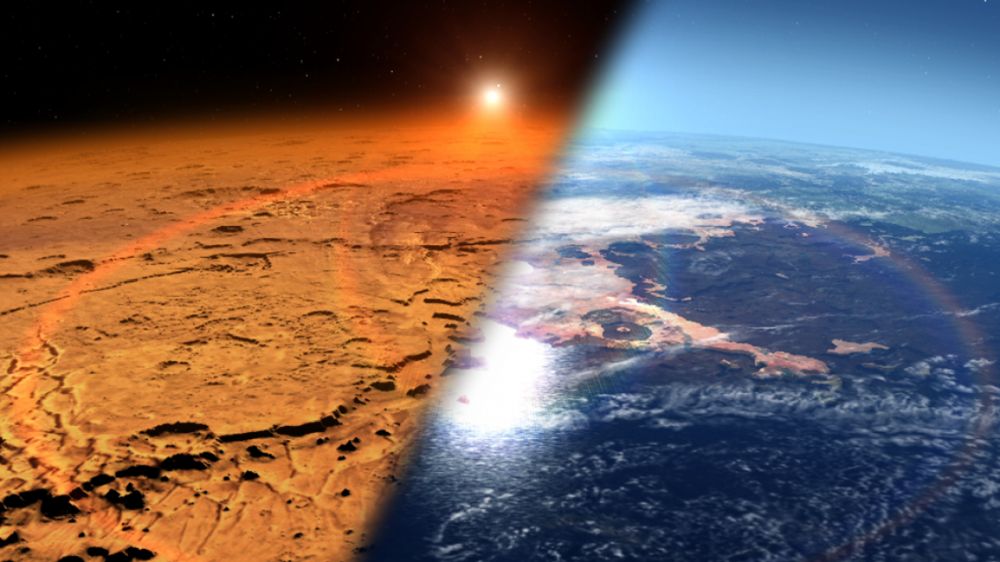
Scientists Use Ancient Rains to Map the Possible Origin Life on Mars

Billions of years ago, rain may have helped shape where the chemistry of life could begin on Mars. A new study maps how formaldehyde, an important prebiotic molecule, may have reac...

Read source
scitechdaily.com /1 month ago

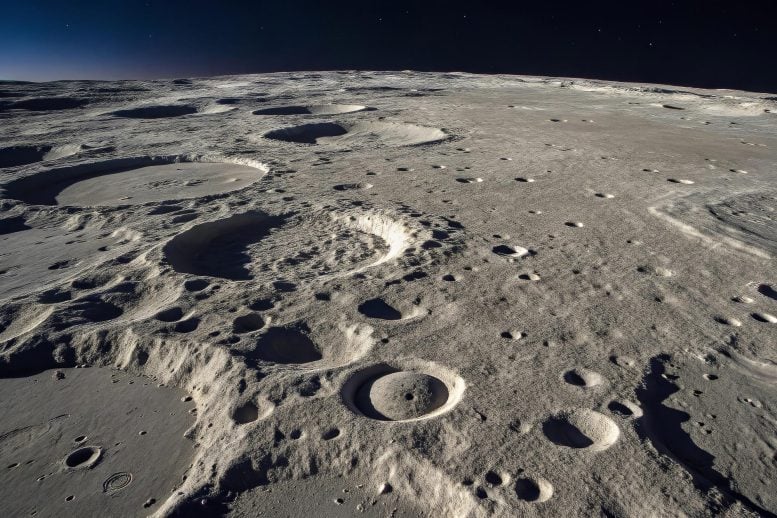
NASA Finds Earth Microbes Could Hide in the Moon’s Deep Shadows

Microbes carried to space by human explorers could survive in shaded areas near the moon’s south pole, according to researchers from NASA and the University of Maryland. Even on th...

Read source
scitechdaily.com /3 weeks ago

Scientists Pinpoint a Possible “Sweet Spot” for Life’s Origins 4.33 Billion Years Ago

By simulating a billion years of Earth’s history, researchers have identified a possible window for life’s earliest chemistry around 4.33 billion years ago. During its first few hu...

Read source
universetoday.com /3 weeks ago

Finding Life on Enceladus Could be Easier than We Thought, Says New Research

Planetary scientists from Freie Universität Berlin have published two new studies that indicate that a spacecraft could identify evidence of life much more easily than previously t...

Read source
phys.org /3 weeks ago

Suns set on hunt for giant planets in nearby binary system

New research led by the University of Michigan is helping set the stage for future observatories to characterize rocky planets outside our solar system, planets that could prove li...

Read source
phys.org /1 month ago

Scientists simulate cosmic crashes to test whether icy moons gain or lose their ability to sustain life

Many of the moons orbiting Saturn, Uranus and Neptune likely conceal oceans of liquid water beneath miles of icy shell. Because life as we know it needs water, these buried oceans...

Read source
reactormag.com /1 week ago

I Am No Longer Pessimistic About the Survival of Complex Life on Earth, Thanks to Science

Great news, everyone! New evidence points towards complex life being very robust. The post I Am No Longer Pessimistic About the Survival of Complex Life on Earth, Thanks to Science...

Read source
phys.org /1 month ago

Peptides can form well-defined structures in harsh, Venus-like conditions

When exploring solar system bodies for signs of past or present life, scientists have mainly focused on planets that have (or had) a liquid surface similar to Earth's. However, mou...

Read source
theguardian.com /4 weeks ago

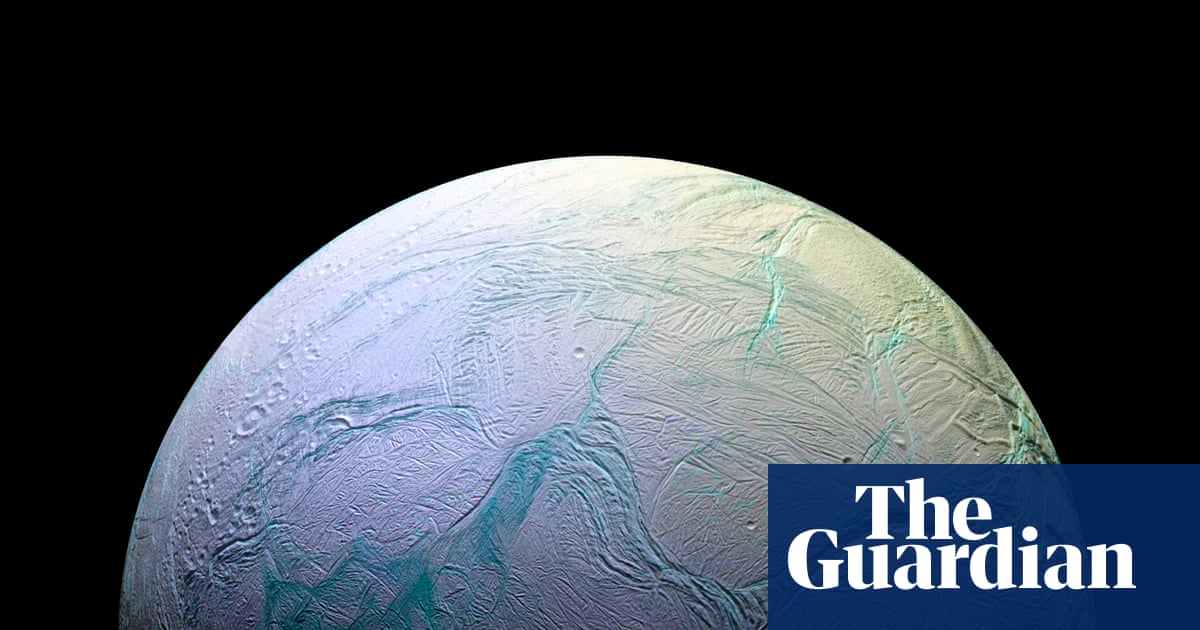
Earth microbes survive simulated conditions of Saturn moon’s ocean

Experiment suggests organisms could live in harsh environment under Enceladus’s icy crust, strengthening possibility moon could support lifeFrom the moment scientists spotted plume...

Read source
universetoday.com /1 month ago

Tiny Salt Crevices Could Act As Miniature "Greenhouses" For Martian Microbes

We’ve been searching for life on Mars for a long time now, but so far we’ve come up empty. The fundamental problem is a Catch-22 of two of the key ingredients for life. Life as we...

Read source
phys.org /3 weeks ago

Following ancient rain toward life-related chemistry clues on Mars

The Mars we know today is a cold, dry world of dust and rocks. However, around 3.8–3.6 billion years ago, it may have looked very different. Geological and mineral evidence suggest...

Read source

Turn fresh research into a full content calendar

Use SocialBu to discover ideas, generate post drafts, and schedule them across your social channels.

Sources covering Astrobiology

feeds.feedburner.com

Recent coverage from public sources
Public source

phys.org

Recent coverage from public sources
Public source

theguardian.com

Recent coverage from public sources
Public source

tor.com

Recent coverage from public sources
Public source

universetoday.com

Recent coverage from public sources
Public source