ninjaone.com /1 month ago

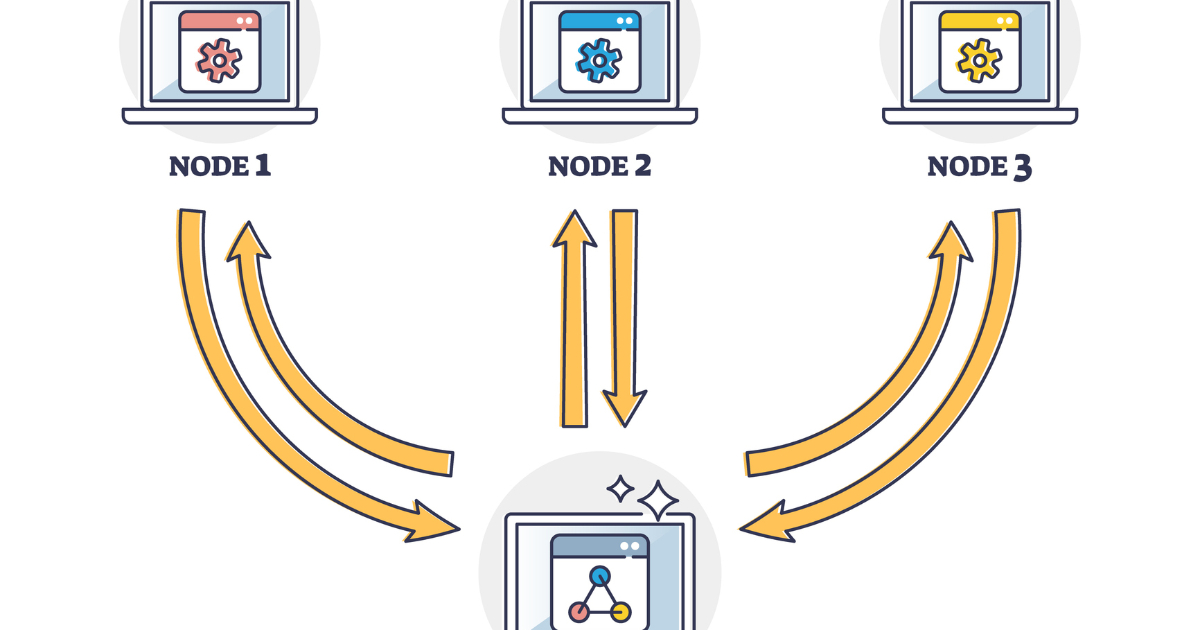
What Distributed Systems Are and How They Work

Distributed systems are used across cloud platforms and large-scale applications, among others. Instead of relying on one computer or service, distributed systems divide work acros...

Read source
dzone.com /1 week ago

Designing for Hot Keys: When Distributed Systems Stop Distributing

Distributed systems usually spread data by hashing keys across nodes so no one node carries all the load. A hot key breaks that assumption. It is a key whose access volume greatly...

Read source
infoq.com /1 month ago

Article: Distributed Spring Batch Without a Message Broker

Distributed Spring Batch partitioning already needs a shared, persistent job repository. This article makes that database the whole coordination plane and drops the message broker,...

Read source
dzone.com /1 month ago

How to Contain Partial Failures in Distributed Systems

Distributed systems rarely fail as a single unit. More often, one dependency slows down, one shard becomes unavailable, one region loses capacity, or one pool saturates while neigh...

Read source
blog.frankel.ch /4 weeks ago

Security Baked Into the JVM: DirtyChai scales vertically, JGDMS scales horizontally

Nobody runs a SecurityManager in production. The usual reason given is that it does not survive a load test, and every guarantee in this series was bought with a check: a constrain...

Read source
dev.to /3 weeks ago

The Local Loop Is the Architecture

We spent a decade teaching systems to cross a network. We are about to spend the next one teaching them not to. An agent is not a service with a prompt bolted on. It is a runtime...

Read source
javacodegeeks.com /1 month ago

Beyond CAP: Why the 1999 Fox and Brewer Paper Stil

Have you ever looked at a system design document and winced at the rigid demand for strict consistency? We have all been there. Engineers love neat little rules. For years, the CAP...

Read source
martinfowler.com /5 days ago

Deterministic Simulation Testing

Distributed systems are hard to test because partial failures overlap with live traffic and the same fault can produce different execution traces on different runs. Unmes...

Read source
dzone.com /2 weeks ago

Event Sourcing in Distributed Systems: Architecture, Consistency, and Fault-Tolerant Projections

If you've worked with a relational database for any length of time, you know the drill: state lives in a row, and every UPDATE overwrites whatever was there before. It's simple, it...

Read source
javacodegeeks.com /1 month ago

Resilience by Design vs. Resilience by Library: BEAM vs. Go and Java

In distributed systems engineering, few architectural divides are as deep—or as philosophically opposed—as how different runtimes handle failure. When an unexpected error occurs, w...

Read source
sourcetrail.com /1 week ago

Mastering Multi-processing and Distributed Computing: A Comprehensive Guide

Confused between parallel and distributed computing? Discover which architecture fits your needs for speed, scalability, and reliability here. The post Mastering Multi-processing a...

Read source
javacodegeeks.com /1 week ago

Hybrid Logical Clocks: Time as the Hardest Dependency in a Distributed System

Every database needs to answer a simple question: which event came first? On one machine, a clock answers it. Across many machines, however, there is no single clock to ask. In thi...

Read source
dzone.com /1 month ago

Where Should a Transaction End? Designing Consistency Boundaries in Distributed Java Systems

Microservices do not eliminate transactions. They force architects to decide where a transaction should end. That decision is harder than it sounds. A business operation that was o...

Read source
bioengineer.org /2 weeks ago

Distributed Mutual Exclusion Review Reveals Performance Gains and Critical Security Vulnerabilities

A comprehensive review analyzes distributed mutual exclusion algorithms across mobile, vehicular, and aerial ad-hoc networks, synthesizing quantitative performance benchmarks while...

Read source
dzone.com /2 days ago

Crash-Proof Agents: Durable Execution for Long-Running AI Systems

Your Agent Is a Distributed System Wearing a Trench Coat Sometime this week, TrendForce reported that server CPU lead times stretched from 16-20 weeks to roughly 25-30 weeks, and t...

Read source
dzone.com /1 month ago

Beyond HTTP Handoffs: Build Durable Agent-to-Agent Services With Temporal Nexus

Agent systems are increasingly decomposed into specialized services: a planning agent delegates research, a research agent invokes retrieval and synthesis, and a compliance agent v...

Read source
javacodegeeks.com /1 month ago

Protocol Buffers, Schema Evolution, and the Quiet Discipline IDLs Impose on Distributed Teams

Comparing how protobuf, Avro, and Cap’n Proto solve the same backward-compatibility problem Nobody deploys a distributed system all at once. The protobuf team says it plainly in th...

Read source
dzone.com /1 month ago

Beyond Batch: Engineering Enterprise Systems for Real-Time Decisioning

The Batch Processing Problem Batch processing isn't inherently a disadvantage. It becomes a problem when the business needs a decision now, but the architecture was designed to mak...

Read source
dev.to /2 weeks ago

NATS JetStream vs Apache Kafka vs Apache Pulsar: Latency SLAs, Throughput & Multi-Tenancy

NATS JetStream vs Apache Kafka vs Apache Pulsar: Latency SLAs, Throughput & Multi-Tenancy Executive Summary & Decision Matrix All three systems are durable, re...

Read source
blog.joshsoftware.com /2 weeks ago

From One to Five: How We Solved a Real-Time Trading System’s Scaling Crisis

Originally appeared on Josh Software.A story of race conditions, Docker containers, RabbitMQ queues, and the architecture decisions that kept our risk management platform alive und...

Read source
tomtunguz.com /1 month ago

Thinking in Systems, Shipping in Loops

AI has removed the typing from software engineering & left the system design. DHH told Rails World that writing code by hand is no longer economically productive ; Artemis engi...

Read source
medium.com /1 month ago

Why Flat JSON Agent Memory Fails: Building a Copy-on-Write Multi-Agent Memory Mesh on FalkorDB

Replacing flat context bloat with sub-millisecond linear algebra graphs, air-gapped sandboxes, and deterministic Graph-PACC compaction (<…Continue reading on Medium »

Read source
javacodegeeks.com /1 week ago

TLA+ Explained: How Amazon Proves Distributed Designs Correct Before Writing Code

You have probably read about Raft, Paxos and the FLP impossibility result. However, there is a quieter question behind all of them: how do you know your own design is correct befor...

Read source
dzone.com /3 weeks ago

Applying Microservices Lessons to Multi-Agent AI Systems

Imagine asking an AI assistant why a production API became slow after a deployment. One agent examines metrics. Another searches logs. A third inspects deployment history. A coordi...

Read source

Turn fresh research into a full content calendar

Use SocialBu to discover ideas, generate post drafts, and schedule them across your social channels.