Hidden X-ray phase revealed in likely neutron star merger
An international team of astronomers, including researchers from the Department of Physics and the Hong Kong Institute for Astronomy and Astrophysics (HKIAA) at The University of H...
Professor Erin Kara of MIT's Kavli Institute for Astrophysics and Space Research is helping advance our understanding of the most extreme objects in the Universe by analyzing X-ray...
Investigating a scientific question is often a complex process. As an astrophysicist studying some of the most energetic phenomena in the universe, I know that finding answers requ...
Astrophysicists from The University of Hong Kong (HKU), working with a research team led by Beijing Normal University (BNU), have developed a more physically realistic approach to...
Magnetic fields exist in many stars, including the sun. Yet they remain too poorly understood to be reliably included in stellar evolution models, limiting their accuracy. Now, a n...
A new survey of the sky, from the largest structures in the universe to the dust and magnetic fields in our own Milky Way, is now fully underway. After two years of calibration, ad...
A new study led by researchers at the Konkoly Observatory of the HUN-REN Research Centre for Astronomy and Earth Sciences (HUN-REN CSFK) in Budapest has revealed what makes a dista...
An undergraduate astrophysics student at UC Berkeley has found three unusual galaxies—cataloged as Shapiro Dwarf Galaxies I, II and III. Each galaxy is far from other galaxies and...
Astronomers are finally figuring out what powers mysterious gamma-ray bursts
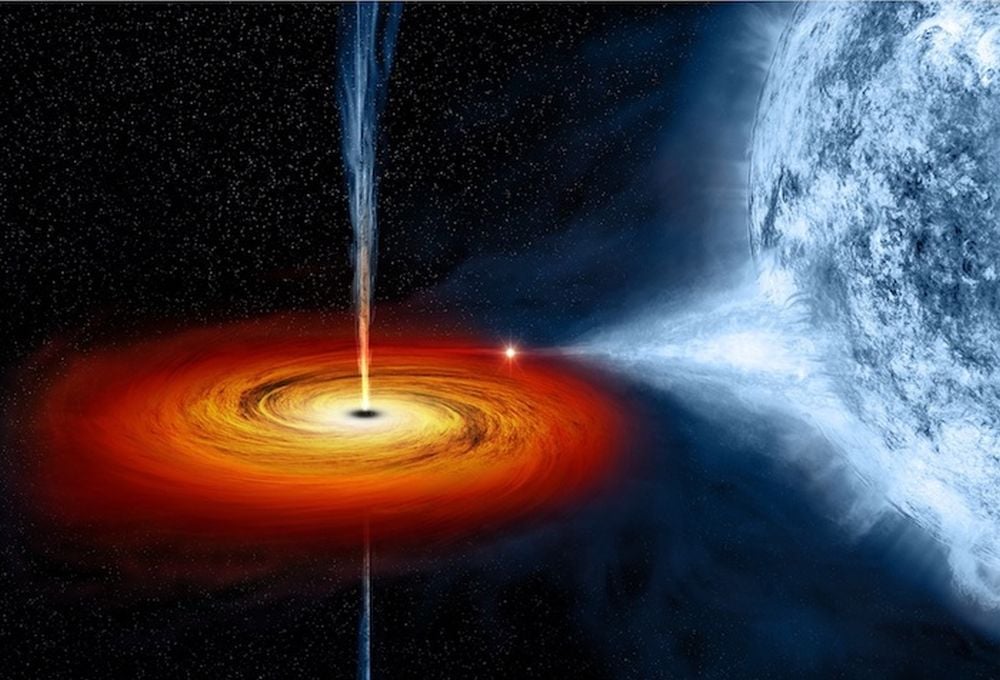
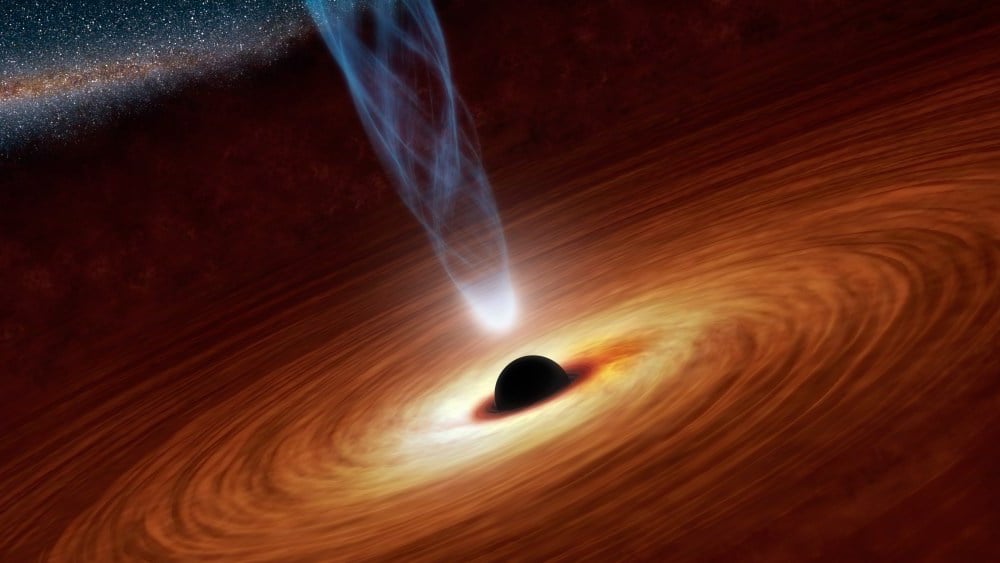
Astrophysical jets are enormously powerful and energetic phenomena. Black holes launch them from their poles and they can extend enormous distances into space, disrupting star form...
The James Webb Space Telescope (JWST) and Nancy Roman Space Telescope are revealing the universe's earliest chapters in detail. To help astronomers understand what they are seeing,...
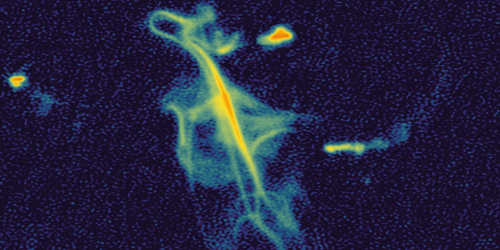
Low-frequency radio observations delineate filamentary structures at the heart of a cluster of galaxies.[Physics 19, 142] Published Mon Oct 26, 2026
Astronomers using Georgia State University's Center for High Angular Resolution Astronomy (CHARA) Array have found that nearby stars darken toward their edges more strongly at near...
An astronomer at UT Austin’s McDonald Observatory is set to help lead a NASA mission to study the dust between stars, which plays an important role in how stars and planets form.
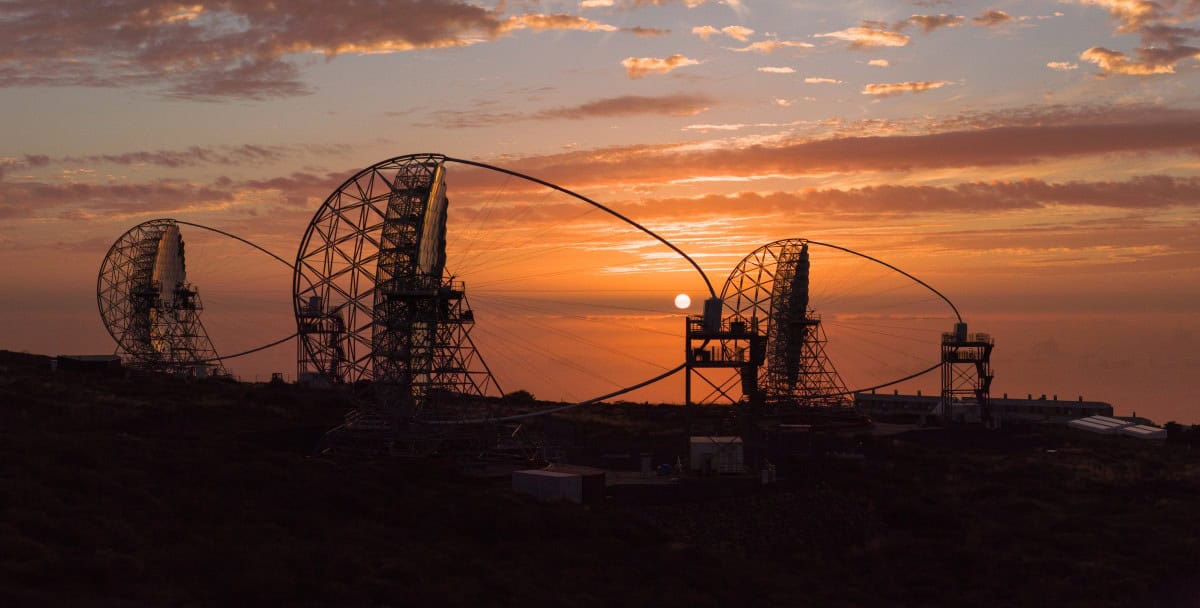
The Large-Sized Telescope will provide new insights into the early universe The post Officials celebrate completion of gamma-ray telescope array in La Palma appeared first on Physi...
Columnist Chanda Prescod-Weinstein says understanding neutrinos is one of the most pressing scientific issues in physics. She shares the latest neutrino discoveries that are exciti...
Author(s): Sophia ChenStars collapsing directly into black holes might explain the surprising number of merging black holes of about 10 solar masses.[Physics 19, s149] Published Tu...
A University of Missouri astronomer is leading a team of 130 researchers from 62 institutions—including NASA, the California Institute of Technology, Princeton University and Harva...
How do young stars reshape the clouds from which they are born? A new high-resolution 3D model developed by an international team led by Dr Brandt Gaches from the University of Dui...
New stellar models suggest red giants that gained mass from companion stars can show suppressed vibrations with weaker magnetic fields than previously thought, challenging interpre...
Euclid was launched into space in July 2023 to explore two of astronomy's biggest mysteries: dark matter and dark energy. The space telescope's first major data release covers some...
Use SocialBu to discover ideas, generate post drafts, and schedule them across your social channels.