universetoday.com /1 month ago

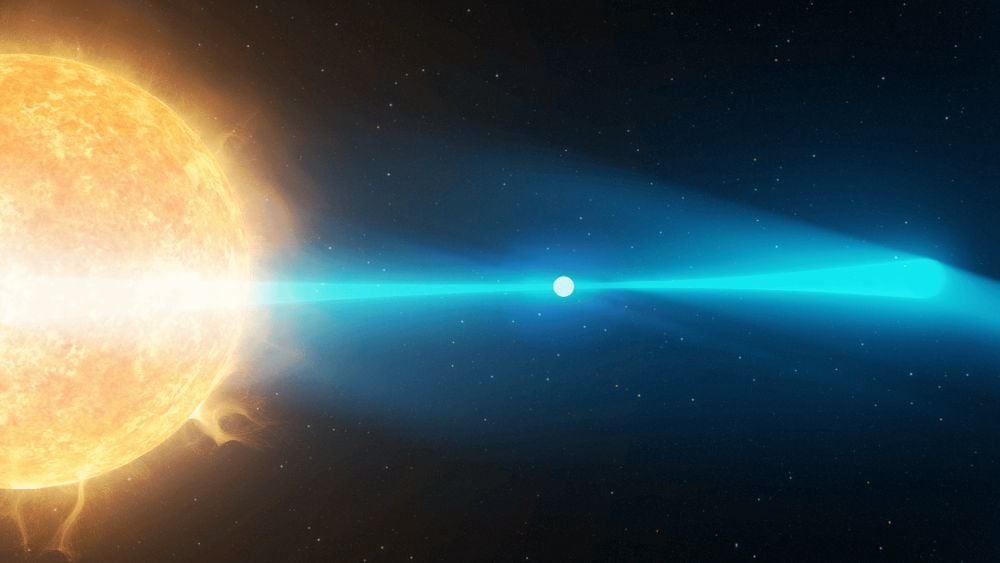
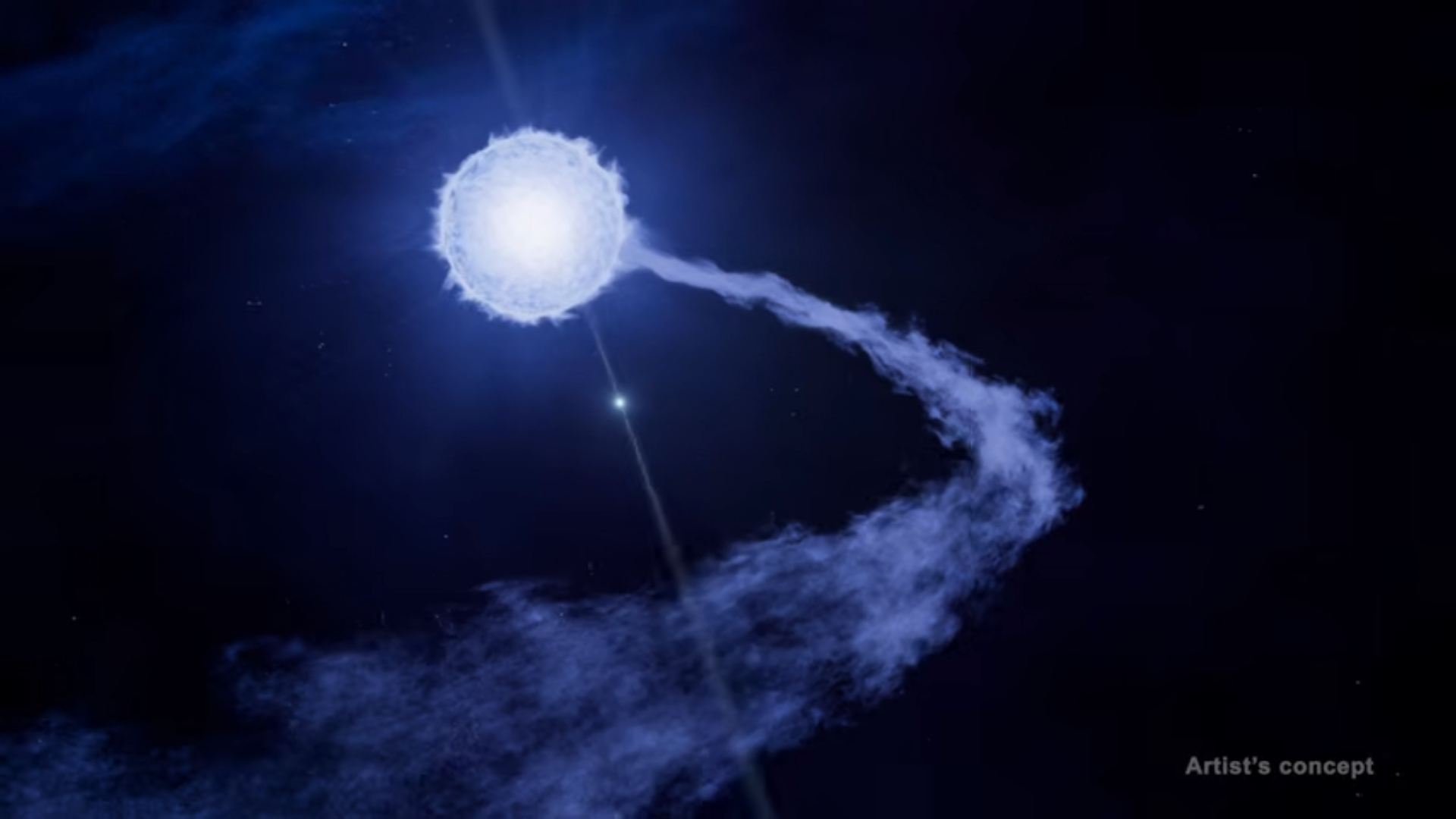
XRISM Makes First-Ever Detection of a Pulsar Feeding from a Companion's Stellar "Wind"

Using data from the Japan-led XRISM observatory, astronomers have directly observed a giant star’s stellar wind captured by its compact companion (triggering X-ray flares) for the...
Read source
link.aps.org /3 weeks ago

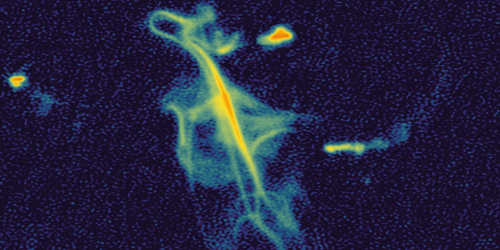
Snapshot: Galactic Clack Resurrects a Cosmic Note

Low-frequency radio observations delineate filamentary structures at the heart of a cluster of galaxies.[Physics 19, 142] Published Mon Oct 26, 2026

Read source
phys.org /1 month ago

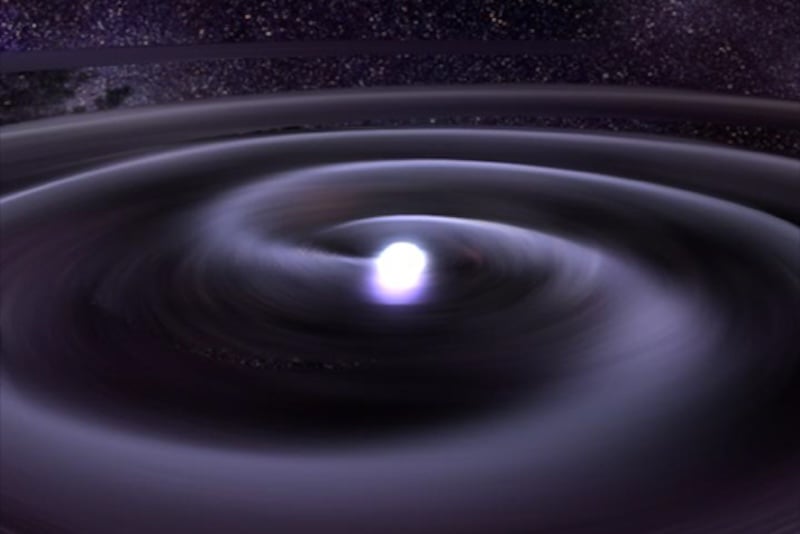
Hidden X-ray phase revealed in likely neutron star merger

An international team of astronomers, including researchers from the Department of Physics and the Hong Kong Institute for Astronomy and Astrophysics (HKIAA) at The University of H...

Read source
link.aps.org /1 week ago

Gravitational-Wave Observations Implicate Failed Supernovae

Author(s): Sophia ChenStars collapsing directly into black holes might explain the surprising number of merging black holes of about 10 solar masses.[Physics 19, s149] Published Tu...

Read source
phys.org /1 month ago

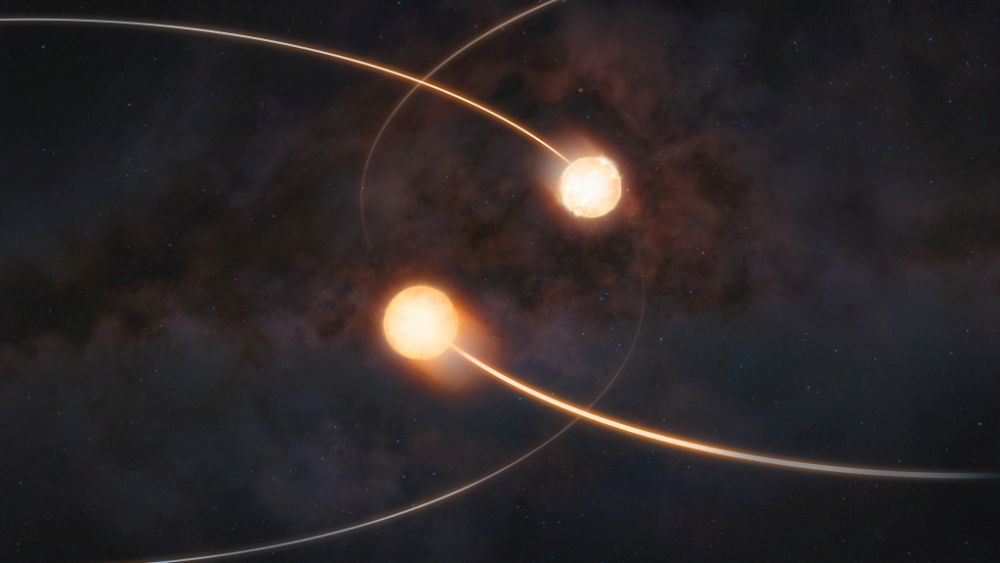
A pulsar's apparent slowdown reveals a rare stellar trio

Pulsars are rapidly rotating neutron stars, the extremely dense cores left behind when massive stars explode. Astrophysicists have recently observed a pulsar rotating over 300 time...

Read source
link.aps.org /3 weeks ago

Snapshot: New Company for Pluto?

The Rubin Observatory has spotted a distant object that could join Pluto in the Solar System’s exclusive family of dwarf planets.[Physics 19, 147] Published Fri Oct 30, 2026

Read source
phys.org /1 month ago

ALMA catches a dying star mid-transformation, with a ring from its last outburst

Astronomers have used radio observations from the Atacama Large Millimeter/submillimeter Array (ALMA) to catch a dying star in the middle of a dramatic transformation, and the data...

Read source
universetoday.com /5 days ago

This Rare Binary Star Emits Radio Pulses Every Few Minutes. Will It Eventually Explode?

Astronomers have found a Long Period Radio Transient about 5,000 light years away that's different from other LPTs. Other LPTs have a white dwarf and a red dwarf, but this one has...

Read source
phys.org /1 week ago

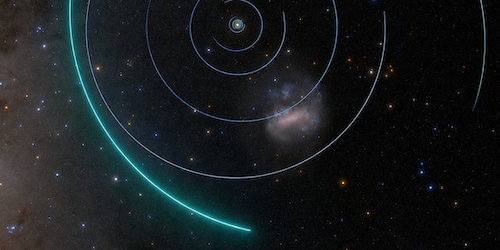
A likely supermassive neutron star might shed light on the mass gap between neutron stars and black holes

A team of astronomers recently identified a red giant star with an unseen binary companion after examining data from the Large Sky Area MultiObject Fiber Spectroscopic Telescope (L...

Read source
phys.org /1 week ago

X-ray observations uncover possible jet warning signs in black hole systems

Black hole jet ejections are powerful outbursts of high-energy photons and particles that provide insights into extreme astrophysical processes. However, predicting when they will...

Read source
universetoday.com /1 week ago

When Einstein's Gravitational Waves Meet Newton's Tides

A researcher at Freie Universität Berlin has developed a theoretical framework for searching high-precision measurements for possible relativistic traces in lunar tides.

Read source
blogs.egu.eu /1 month ago

GeoRoundup: the highlights of EGU Journals published during September!

Each month we feature specific Divisions of EGU and during the monthly GeoRoundup we put the journals that publish science from those Divisions at the top of the Highlights section...

Read source
universetoday.com /1 week ago

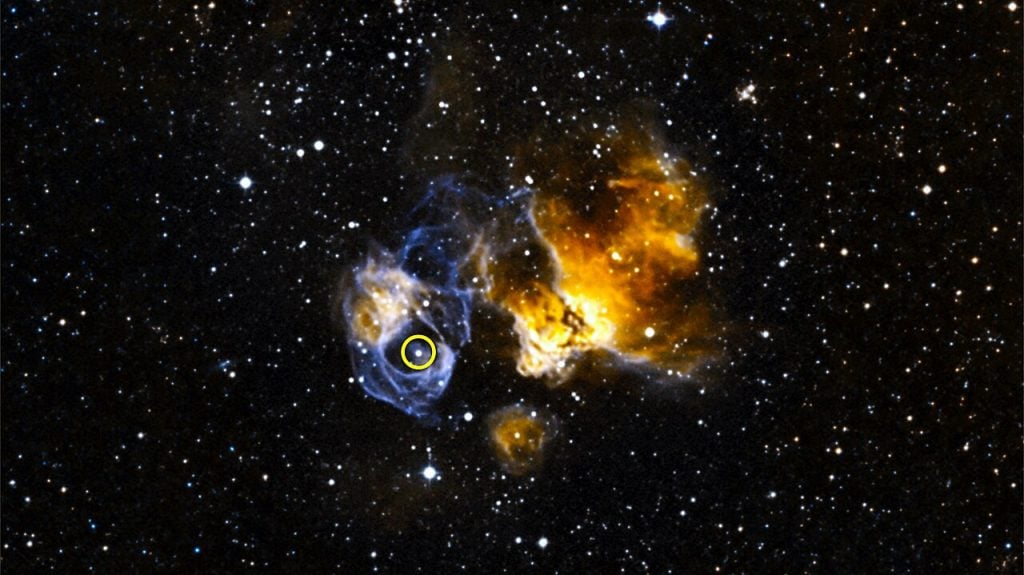
ALMA Reveals a Jet of Cool Gas from a Microquasar

There's a strange gamma-ray emitter in the Large Magellanic Cloud that has astronomers stumped about its source. It lies within the ashes left behind by a supernova that created a...

Read source
link.aps.org /1 week ago

The Surprising Origin of Uranus’ Moons and Rings

Author(s): Charles DayNew infrared observations tie the ice giant’s small moons and narrow rings to a past encounter with a visiting object from the Kuiper belt.[Physics 19, 152] P...

Read source
universetoday.com /3 days ago

Extremely Accurate Measurements of a Pair of Flaring Red Dwarfs

Astronomers used the Very Large Baseline Array of radio telescopes to measure a pair of active red dwarfs with extreme precision. One of the stars is an extreme type of red dwarf c...

Read source
link.aps.org /2 weeks ago

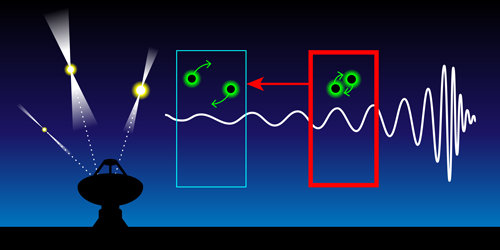
Using Pulsars to Probe Early Growth of Black Holes

Author(s): Sarah Burke-SpolaorResearchers have used radio observations of rapidly spinning neutron stars to search for signals from supermassive black hole pairs at the dawn of gal...

Read source
phys.org /1 week ago

A rare star system emits radio signals every 8 minutes

Scientists at the Curtin University node at the International Center for Radio Astronomy Research (ICRAR) have linked mysterious radio pulses to an unusual pairing of stars—a dea...

Read source

Turn fresh research into a full content calendar

Use SocialBu to discover ideas, generate post drafts, and schedule them across your social channels.