fightaging.org /2 weeks ago

Circular RNA Encoding Yamanaka Factors Enables Partial Reprogramming Without Pluripotency

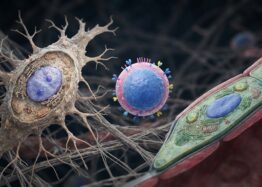
At the high level, exposing a cell to the Yamanaka factors first does nothing, then later rejuvenates epigenetic control over nuclear DNA structure and gene expression, and then la...

Read source
fightaging.org /1 month ago

Life Biosciences Reports Initial Results from the First Reprogramming Trial

Partial epigenetic reprogramming involves exposing cells to some or all of the Yamanaka factors for a long enough period of time to reset epigenetic decorations on nuclear DNA and...

Read source
lifespan.io /4 days ago

Partial Reprogramming’s Outcome Depends on Cell Type

A new preprint study of partial reprogramming in three human cell types has found that younger epigenetic ages and better function do not always go together [1]. Unanswered questio...

Read source
journals.plos.org /1 month ago

Epigenetic maintenance of PRC2-repressed chromatin requires RTT109 but not H3K56 acetylation

by Rochelle E. Yap, Felicia Ebot-Ojong, Abigail J. Ameri-Solanky, Zachary A. Lewis In animals, plants, and some fungi, Polycomb Repressive Complex 2 (PRC2) catalyzes trimethylatio...

Read source
journals.plos.org /1 month ago

The SynMuvA <i>lin-15A</i> licenses natural transdifferentiation by antagonizing identity safeguarding mecha...

by Sarah Frieda Becker, Marie-Charlotte Morin, Julien Lambert, Shashi Kumar Suman, Francesco Nicola Carelli, Alex Appert, Stéphane Roth, Sarah Hoff-Yoessle, Jessica D. Medina-Sanch...

Read source
fightaging.org /2 weeks ago

Inhibiting the H3K9me3 Epigenetic Modification Reduces Pathology in Mouse Models of Alzheimer's Disease

Nuclear DNA structure determines which genes are transcribed into RNA. The molecules making up the machineries of transcription move around the nucleus to interact with every seque...

Read source
nanowerk.com /1 month ago

A single temporary stimulus can redirect cell fate without permanent gene control

A new computational framework that identifies minimal temporary gene-control interventions to steer cells toward desired states while preserving cellular plasticity.

Read source
fightaging.org /1 month ago

KHL Foundation Reports the Likely First Human Partial Epigenetic Reprogramming Treatments

The first human application of partial epigenetic reprogramming of aged tissues, using adeno-associated viral (AAV) vectors, was not in fact the first patient dosed in the recently...

Read source
asianscientist.com /1 week ago

New Computational Tool Identifies Molecular Circuits That Make Cell Changes Permanent

The tool identifies key feedback loops behind irreversible cellular changes and proposes strategies to reset or reverse them.

Read source
bioengineer.org /1 week ago

Drosophila Chromatin Protein Regulates Telomeric Repeats and Heterochromatic Genes

In a newly reported investigation of epigenetic regulation in Drosophila ovaries, researchers have demonstrated that the chromatin factor Enhancer of variegation 3–9, commonly abbr...

Read source
scitechdaily.com /1 month ago

Human Sperm Is Rewriting DNA Earlier Than We Realized

Some of the genetic differences that make every child unique may arise in a father’s sperm years earlier than scientists thought. Researchers have discovered that some genetic resh...

Read source
bioengineer.org /4 weeks ago

Partial Cell Reprogramming Shields Aging Mouse Brains from Ischemic Stroke Damage

Cyclic induction of the Yamanaka reprogramming factors for four weeks before stroke reduced ischemic brain damage, preserved neurons and myelin, and improved forelimb motor scores...

Read source
fightaging.org /3 weeks ago

Cancer Can Emerge from Epigenetic Change Rather than DNA Mutation

Researchers here provide a demonstration that a form of liver cancer can emerge from change in the epigenetic control over gene expression in the absence of mutation of nuclear DNA...

Read source
bioengineer.org /1 day ago

Marsupial IGF2R Locus Architecture Reveals Convergent Evolution of Genomic Imprinting Mechanisms

Comparative genomic and epigenetic profiling reveals that marsupials independently evolved a distinct intragenic regulatory hub to control allele-specific expression of the develop...

Read source
journals.plos.org /1 month ago

The histone methyltransferase complex subunit RBBP5 serves as a central epigenetic regulator of proteostasis dynamics

by Syeda Kubra, Michelle Sun, William Dion, Yu Bian, Ahmet Catak, Hannah Luong, Haokun Wang, Yinghong Pan, Jia-Jun Liu, Aishwarya Ponna, Lijun Liu, Ian Sipula, Jian-Hua Luo, Michae...

Read source
qchron.com /2 weeks ago

Creative Bioarray Launches Revolutionary Epigenetic Induction of Cell Growth Service

Creative Bioarray proudly announces the launch of its groundbreaking epigenetic induction of cell growth service, which allows researchers and institutions to successfully immortal...

Read source
genengnews.com /2 weeks ago

How Epigenomics Is Transforming Drug Discovery and Development

In this GEN eBook readers will discover how epigenomic insights are improving every stage of the drug discovery pipeline, from target identification and validation to mechanism-of-...

Read source
bioengineer.org /1 week ago

Biobank Lymphoblastoid Cell Reprogramming Opens New Pathways for Human Disease Modeling

A comprehensive review examines fifteen years of reprogramming lymphoblastoid cell lines into induced pluripotent stem cells, tracing methodological advances, biobank scalability,...

Read source
bioengineer.org /1 month ago

AML epigenetic therapies face network-driven resistance, review finds

A comprehensive review finds that AML cells commonly overcome epigenetic drugs through compensatory chromatin and transcriptional adaptation, favoring biomarker-selected combinatio...

Read source
bioengineer.org /2 weeks ago

Topoisomerase TOP2A Keeps Stem Cells Young by Guarding Lamin B1 and Heterochromatin

A new study in Aging Cell shows that the DNA-remodeling enzyme TOP2A sustains Lamin B1 expression to preserve heterochromatin, and that its loss drives senescence in human mesenchy...

Read source
fightaging.org /1 month ago

Suppression of Transposable Element Activity as an Approach to Therapy

Transposable elements are DNA sequences that can copy themselves. The remnants of ancient viral infections, they encode viral-like particles that act to insert DNA into the genome....

Read source
genengnews.com /1 month ago

DNA Typewriter, PEtracer Map Mouse Development Through Organogenesis

Two DNA-recording systems traced cellular family trees across mouse embryogenesis, offering new insight into how organs form and when developing cells commit to specific fates. The...

Read source
scitechdaily.com /3 weeks ago

Scientists Reverse 60 Years of Aging in Human Cells, Turning 80-Year-Old Cells Into 20-Year-Olds

Cells from an 80-year-old were reprogrammed to a molecular age below 20, and the slow-motion reset could help reveal how cellular rejuvenation works. What if scientists could turn...

Read source
fightaging.org /3 weeks ago

Splicing Factor SRSF1 Overexpression Produces a More Youthful Transcriptome and Slows Aging in Mice

Researchers are engaged in finding alternative ways to induce the desirable epigenetic rejuvenation produced by exposing cells to the Yamanaka factors, without the risk of losing c...

Read source

Turn fresh research into a full content calendar

Use SocialBu to discover ideas, generate post drafts, and schedule them across your social channels.