phys.org /1 month ago

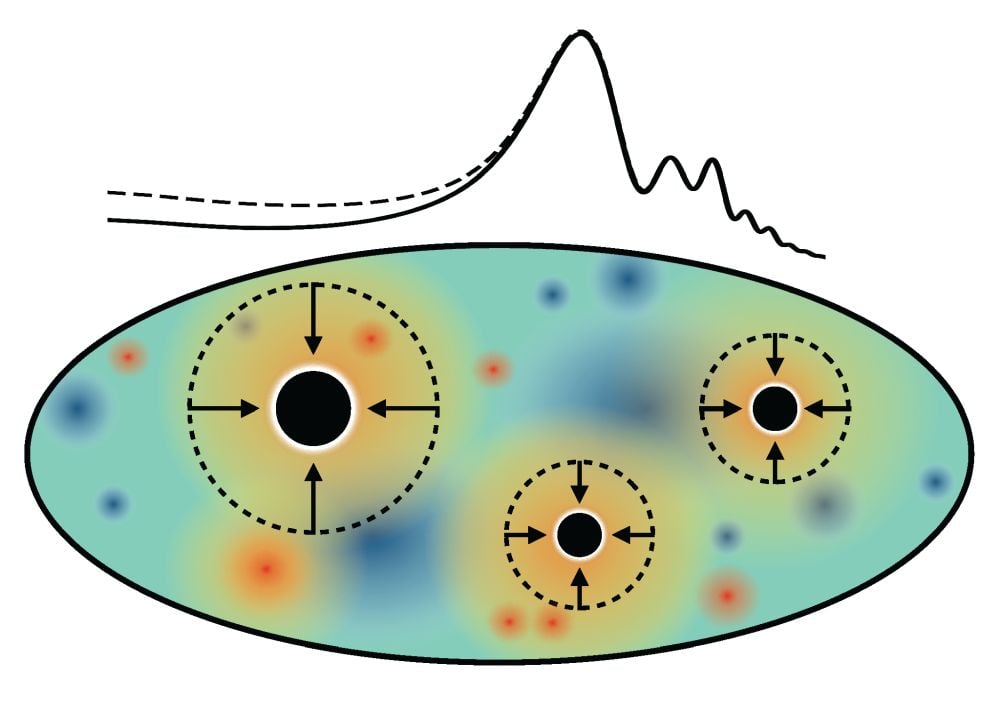
Gamma-ray search sets new limits on dark matter annihilation in the inner Milky Way

Dark matter could be a type of matter in the universe that does not emit, absorb or reflect detectable light and appears to interact very weakly with regular matter. Although physi...

Read source
phys.org /1 month ago

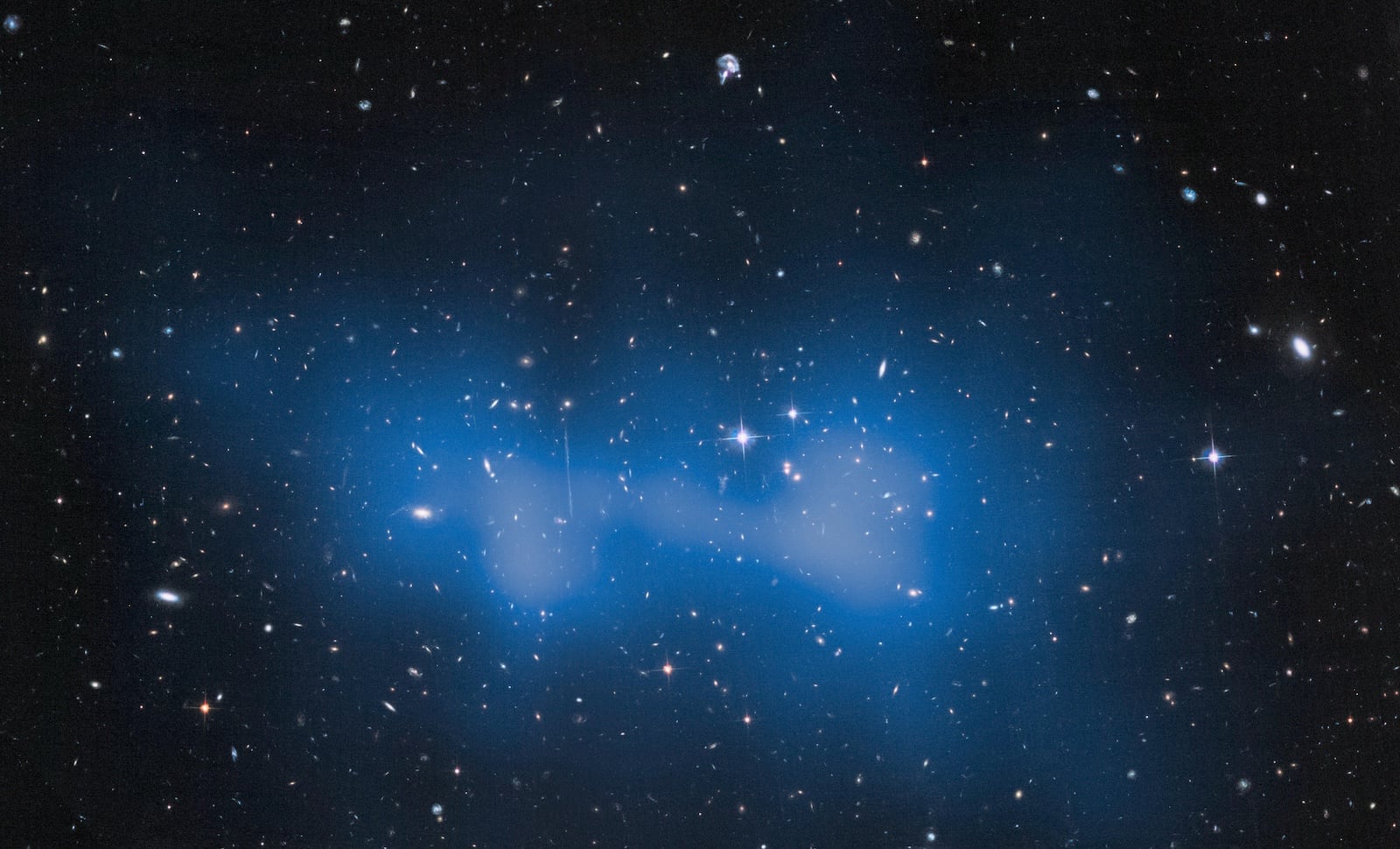
A distant supercluster of galaxies points to self-interacting dark matter

Seven billion light-years from Earth, there is an unexpected cluster of galaxies. It has two regions in the process of colliding with each other with a combined mass of more than t...

Read source
phys.org /5 days ago

The sun, Earth, Jupiter and white dwarfs: Potential traps for dark matter

Dark matter continues to evade direct detection. Its slower-moving particles might leave signals too faint for detectors to register, yet be more easily captured by planets and sta...

Read source
wired.com /1 week ago

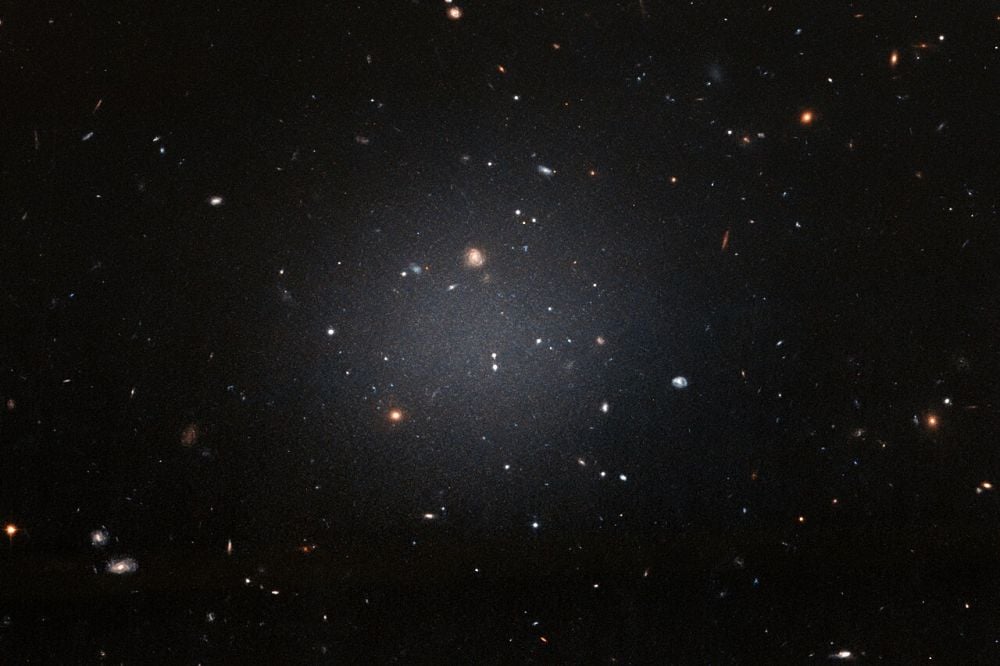
These ‘Ghostly’ Galaxies Have Lost Their Dark Matter

The galaxies’ dark matter was ejected during a collision, but ironically, its absence is some of the best evidence of the elusive substance yet.

Read source
universetoday.com /1 week ago

Astrophysicists Cross Another Dark Matter Candidate Off Their List: Stupendously Large Black Holes

Astrophysicists are leaving no stone unturned in their search for what dark matter is. Different particles have been proposed, like WIMPs and axions. Hypothetical rimordial black h...

Read source
phys.org /3 weeks ago

FAST and Arecibo point to possible dark galaxy with vast hydrogen reservoir

Astronomers have found a vast reservoir of hydrogen with something conspicuously missing: detectable starlight. The object, called AGC 322753, contains roughly 2 billion times the...

Read source
universetoday.com /1 month ago

A Distant Supercluster of Galaxies Points To Self-Interacting Dark Matter

The El Gordo supercluster is unusually large given its distance. How could such a large galaxy cluster form so quickly? The answer could be that dark matter is self-interacting in...

Read source
phys.org /2 days ago

Euclid's hunt for strong gravitational lenses is off to a strong start

If dark matter and dark energy were a part of our everyday lives, we would live in a perpetual state of dumbfoundedness. Imagine living in a world where 95% of the matter and energ...

Read source
backreaction.blogspot.com /1 month ago

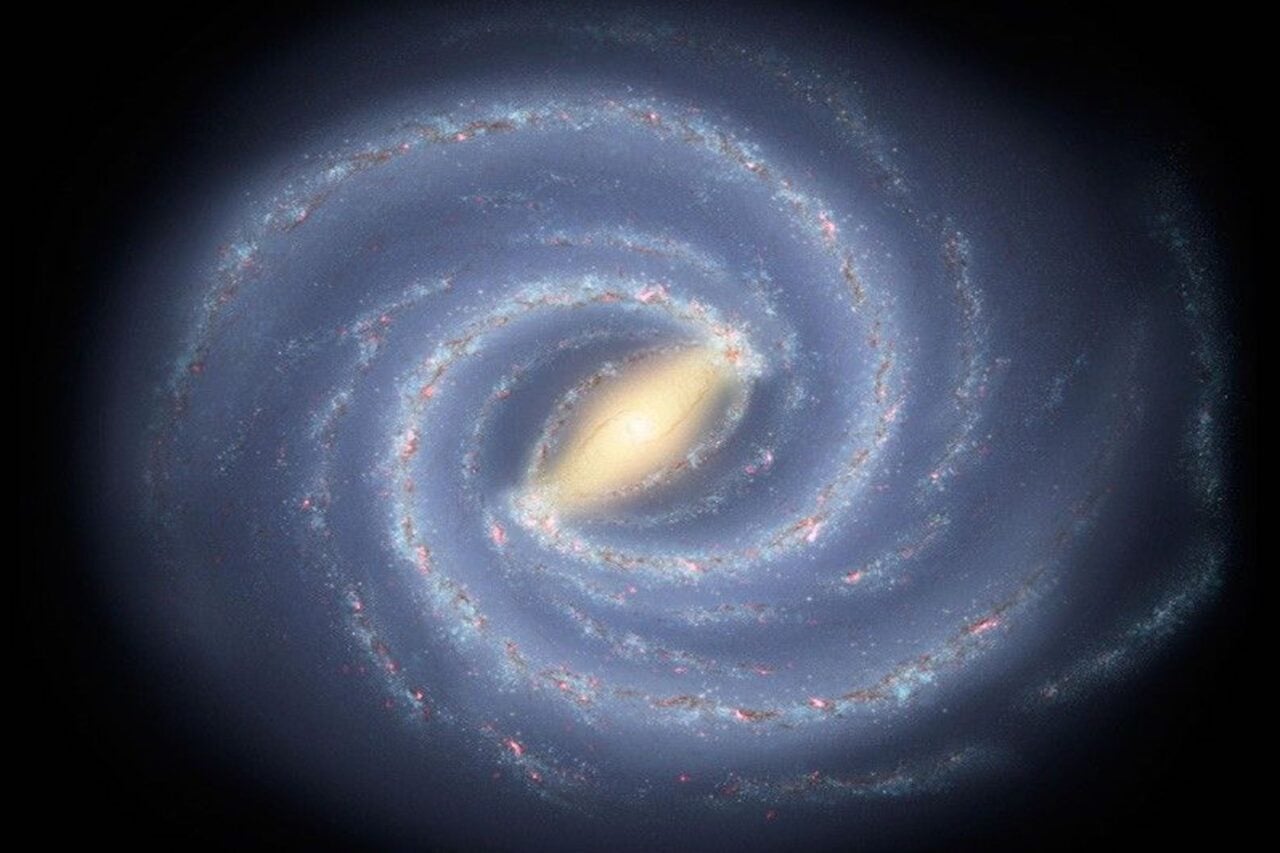
Plot Twist: New Milky Way Data Incompatible With Dark Matter AND Modified Gravity

For decades, astrophysicists have told us that the Milky Way sits inside a huge halo of dark matter. But new measurements of how the outer stars of our galaxy move don't seem to fi...

Read source
scitechdaily.com /1 week ago

A Universe Without Dark Matter? Radical New Model Challenges Modern Cosmology

An older universe could give unexpectedly mature early galaxies billions more years to grow, according to a model that also reproduces galaxy rotation without dark matter. To expla...

Read source
discovermagazine.com /1 week ago

Magnified Light From Distant Dragon Galaxy Reveals Supergiant Stars and Clues to Dark Matter

Learn how astronomers were able to spot magnified stars in "the Dragon," a faraway galaxy that could also provide insight into the nature of dark matter.

Read source
scitechdaily.com /1 month ago

Dark Matter May Behave Like Waves and a Distant Quasar Could Prove It

A distant quasar’s distorted images could hold clues to what dark matter is made of. Simulations of dark matter behaving like waves now offer a closer match to where those images a...

Read source
universetoday.com /2 weeks ago

The ELT Can Probe Ultra-Diffuse Galaxies and Their Dark Matter Mysteries

Ultra-Diffuse Galaxies are strange because they're as large as the Milky Way, but have far fewer stars. It's as if they're puffed up for some reason. Determining what's going on wi...

Read source
phys.org /1 week ago

'Stupendously large' primordial black holes ruled out as a dark matter source

Primordial black holes are hypothetical objects that could have formed directly from dense clumps of matter in the very early universe. If they exist, their dramatic origins would...

Read source
phys.org /5 days ago

DESI weighs the Milky Way more precisely than ever

To estimate the Milky Way's mass, astronomers need to track the movements of stars and smaller satellite galaxies under its gravitational pull. The faster these objects travel at a...

Read source
phys.org /1 month ago

Astrophysicists use wave simulations to open a new window on dark matter

Astrophysicists from The University of Hong Kong (HKU), working with a research team led by Beijing Normal University (BNU), have developed a more physically realistic approach to...

Read source
scitechdaily.com /1 month ago

A New Test Upends a Long-Held Assumption About Dark Matter

A new study puts very different dark matter theories through the same quantitative test of “naturalness.” Some of the most familiar assumptions about dark matter may depend less on...

Read source
phys.org /1 month ago

Lone, starless cloud may be a 'dark' galaxy

Astronomers using China's FAST radio telescope have discovered a compact cloud of hydrogen with no visible stars or galaxy around it. This could be one of the strongest candidates...

Read source
sciencealert.com /2 days ago

Physicists Propose a Hidden Periodic Table of Dark Matter

A whole goth universe.ScienceAlert stories are written, fact-checked, and edited by humans, never generated by AI. Don't miss a story, subscribe here.

Read source
scientificamerican.com /1 month ago

Vox’s Unexplainable and Scientific American explore the mystery of dark matter and the limits of science

What if the universe’s biggest mystery has no answer?

Read source
phys.org /6 days ago

Dark matter–hunting satellite Euclid reveals record number of cosmic 'magnifying glasses'

UBC researchers have helped uncover 15,000 new potential strong gravitational lenses—the largest collection of these cosmic tools that help astronomers investigate dark matter.

Read source
phys.org /2 days ago

Dark energy may originate from known laws of particle physics

For nearly three decades, scientists have struggled to explain one of the universe's most enduring mysteries: how a component known as dark energy is driving the accelerating expan...

Read source
gizmodo.com /1 month ago

Astronomers Spot Possible Signs of Antimatter Disappearing Beyond Our Galaxy

A recent finding could help trace the origins of mysterious gamma rays in the distant cosmos.

Read source
phys.org /1 week ago

The ELT can probe ultra-diffuse galaxies and their dark matter mysteries

We've been waiting a long time for the Extremely Large Telescope's first light, scheduled for March 2029. Telescopes this large, powerful and costly always have multiple science go...

Read source

Turn fresh research into a full content calendar

Use SocialBu to discover ideas, generate post drafts, and schedule them across your social channels.