In 2026, social media management requires speed, strategy, and stamina. The growing discussion around manual vs automated posting reflects a bigger question: should brands rely on hands-on posting or smart automation tools?
It is not that easy to choose one over the other. The two are used in a contemporary social media strategy. However, as the expectations of the platforms grow and the shortening of attention spans of users, automation is what is making social media management effective.
This is a guide that breaks down all that you ought to know concerning manual and automated postings in 2026. We are going to examine the actual expenses of manual posting, the unquestionable advantages of automation, and how to identify the balance that will be ideal to your brand.
Key Takeaways:
Here is the quick breakdown if you are short on time:
-
- Manual posting is highly personal and enables real-time interaction. However, it requires significant daily effort and becomes extremely difficult to scale as your audience grows.
- Automated posting saves hours every week. It ensures consistency, improves efficiency, and provides built-in analytics to help you make smarter marketing decisions.
- Marketing automation delivers proven time savings. Tools like automation platforms allow marketers to save substantial time (up to 74%), improving overall productivity.
- Automation platforms like SocialBu streamline social media workflows. They help creators and businesses maintain consistency, track performance, and scale effortlessly.

Social Media Automation vs Manual Posting
To compare the two methods, we should first of all find out what each method entails. The basic facts allow you to make a sound choice regarding the strategy that suits your workflow.
How Manual Posting Works?
Manual posting is exactly what it sounds like. You log into each social media platform individually, create your content on the spot, and hit publish in real time.
This method requires you to:
- Write platform-specific posts and pair them with relevant visuals
- Respond to comments and direct messages as they come in
- Monitor trending topics and news throughout the day
- Adjust your content strategy based on immediate feedback
- Handle all interactions through each platform’s native tools
Manual posting makes sense to solo creators or small brands just starting out. You open Instagram, make a caption, add some hashtags, and make a share. Simple enough.
But here is the catch. As your presence grows across multiple platforms, manual posting becomes a full-time job. Every platform has different optimal posting times, content formats, and audience expectations.
How Automated Posting Works?
Automated posting uses social media management tools to schedule, publish, and track your content across multiple platforms from a single dashboard.
The workflow looks like this:
- Plan your content in advance using a visual social media calendar
- Create posts in batches during dedicated content creation sessions
- Schedule everything to publish at optimal times
- Monitor performance through built-in analytics
- Adjust your strategy based on data-driven insights
See Automated Posting in Action
Plan, schedule, and publish across all your social platforms from one powerful dashboard. Save hours every week with SocialBu’s smart automation tools.

Difference Between Manual and Automated Posting
Here is a side-by-side comparison to help you visualize the key differences:
| Manual Posting | Automated Posting | |
|---|---|---|
| Time Investment | High daily effort | Set up and monitor |
| Consistency | Can vary | Highly reliable |
| Scalability | Limited | Easily scalable |
| Analytics | Manual tracking | Built-in tools |
| Engagement | Real-time, personal | Scheduled, efficient |
The difference becomes even more visible when you manage multiple accounts or work with a team. Manual posting creates bottlenecks. Automation creates systems.
Is Manual Posting Worth It in 2026?
Let’s be honest about what manual posting really costs you. While there are genuine benefits to the hands-on approach, the challenges often outweigh the advantages for growing brands.
1. Time and Effort It Demands
Posting manually wastes a lot of time. There’s no other way to put it.
Consider a typical day for someone managing social media manually:
- Morning: Log into Instagram, check notifications, respond to overnight comments, post the day’s first content
- Mid-morning: Switch to X (formerly Twitter), engage with trending topics, schedule nothing because you cannot
- Afternoon: Jump to LinkedIn for a professional update, then over to TikTok to see what is trending
- Evening: Back to Instagram for another post, Facebook for community engagement, and respond to DMs across all platforms
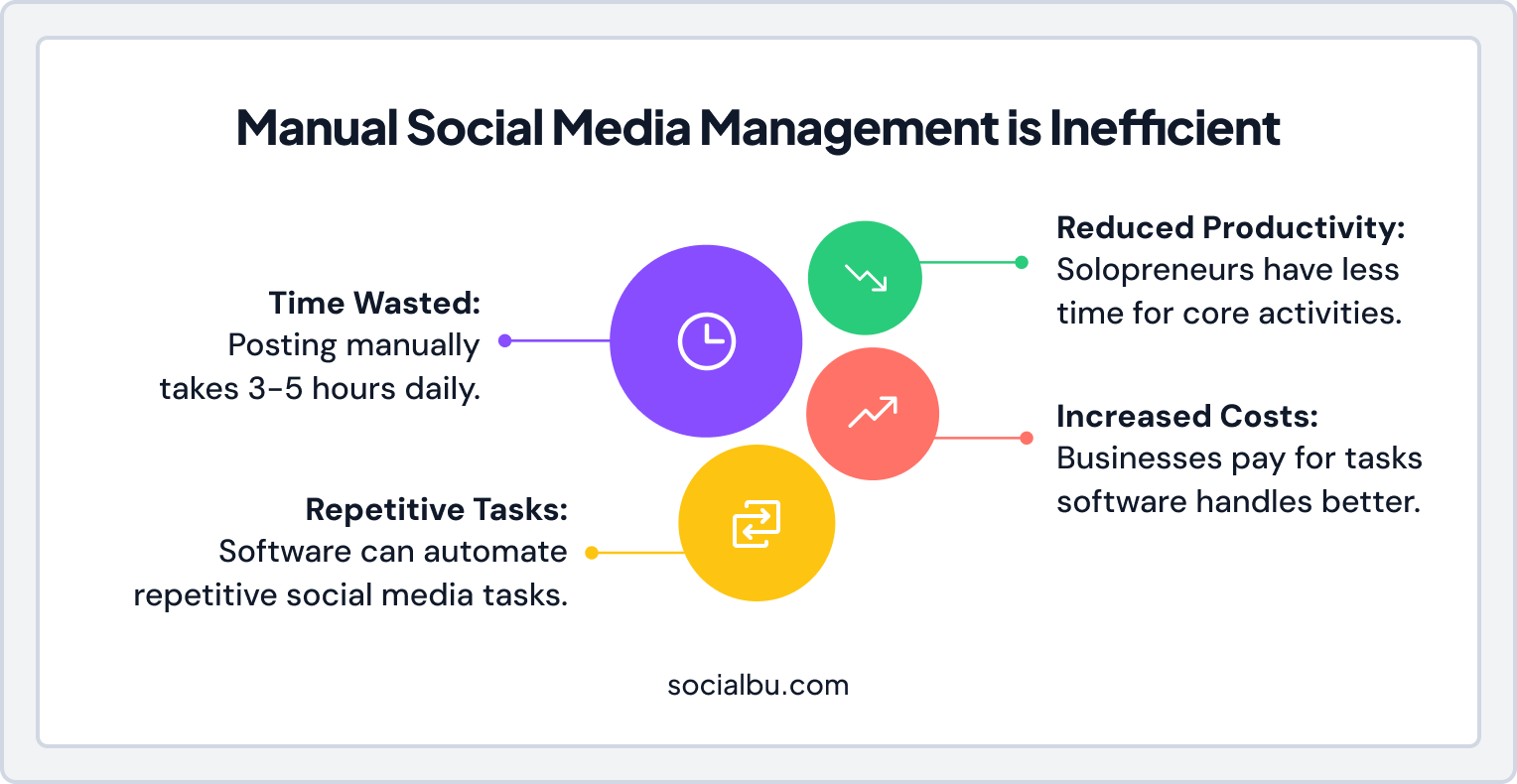
That is 3 to 5 hours daily just on posting and basic engagement. Multiply that by seven days a week, and you are looking at 21 to 35 hours weekly on tasks that could be automated.
For solopreneurs, this means less time creating content, building products, or serving clients. For businesses, it means paying someone to do repetitive tasks that software handles better.
2. Scalability Struggles as You Grow
Here is where manual posting really falls apart.
When you have 500 followers, responding to every comment personally feels manageable. When you hit 50,000 followers across five platforms, it becomes physically impossible.
The math simply does not work:
- More followers means more comments and DMs
- More platforms mean more logins and more content formats
- More content means more time creating, posting, and tracking
- More engagement means less time for everything else
Brands with manual posting only reach a growth limit. There are limits to the number of posts that you can make each day without either compromising quality or getting burned out.
We have also had creators leave whole platforms due to the lack of an audience, when in fact the audience existed, but they were unable to sustain the manual labor.
3. The Risk of Inconsistent Posting
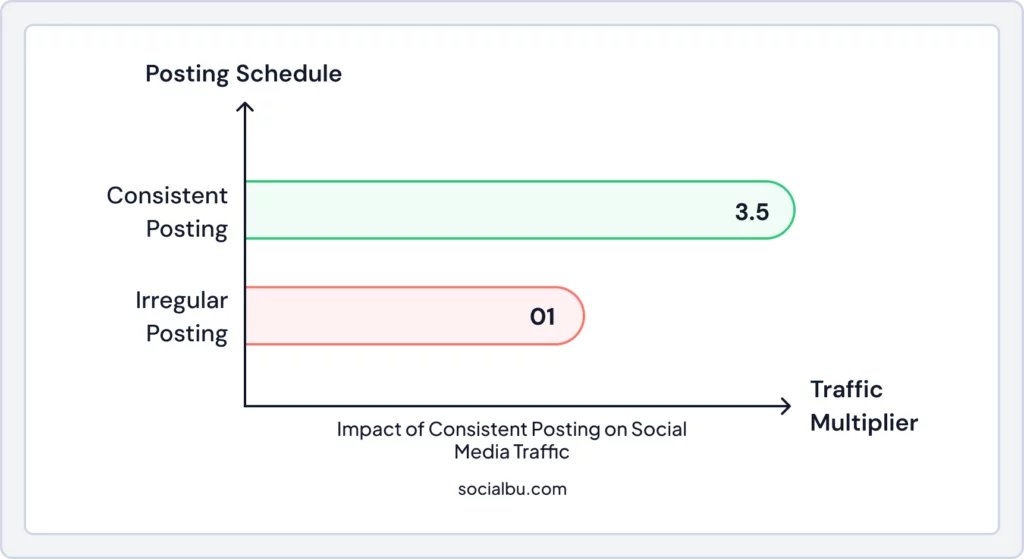
Consistency is everything in social media. The algorithms reward accounts that show up regularly. Miss a few days, and your social media reach takes a hit that can take weeks to recover.
Manual posting makes consistency incredibly difficult:
- Busy days lead to skipped posts
- Vacations mean content gaps unless you work during time off
- Illness or emergencies derail your entire schedule
- Creative blocks turn into extended silences
Recent stats show that accounts with regular schedules have up to 3.5 times more traffic than irregularly scheduled accounts. That consistency can barely be sustained in the long term when it is done manually.
When Manual Posting Still Makes Sense
Nevertheless, the manual posting cannot be totally disregarded. Some things certainly can only be handled by the human touch:
- Crisis Management: It requires a human making real-time decisions when something goes wrong. The automated posts in the case of a PR crisis appear to be tone deaf at best and catastrophic at worst.
- Live Events: It needs in-the-moment posting to match conferences, product launches, or breaking news. Spontaneity is not something you can make appointments about.
- High Touch Community Building: There are personal brands and influencers who work through one-on-one, real-time interaction with small communities. Automation may water down your brand, which is built on being accessible.
- Platform Testing: Manual posting. Before automating, you can explore a new platform by understanding the nature of the culture and audience.
The key is recognizing that these are exceptions, not the rule. For 90% of your content, automation handles it better.
Automated Posting vs Manual Posting: Which is Better for Your Goals?
The best strategy is not purely manual or purely automated. It is understanding when each approach serves you best.
When Manual Posting Makes Sense
Go manual when the situation demands genuine human judgment and real-time responsiveness:
Real Time Engagement
- Responding to comments with personalized messages
- Participating in Twitter/X conversations as they unfold
- Engaging with trending topics while they are still trending
- Handling customer service issues that require nuance
- Crisis Response
Addressing negative feedback or PR issues
- Pausing scheduled content during sensitive events
- Communicating urgent updates to your audience
- Managing brand reputation in real time
- Relationship Building
These activities require emotional intelligence that automation cannot replicate. A human can read the room. A scheduled post cannot.
When Automated Posting Works Best
Now lets look at how to automate everything that benefits from consistency and planning:
Content Distribution
- Regular posts following your content calendar
- Promotional content for products and services
- Educational content and value posts
- Curated content and industry news sharing
- Campaign Management
Posting at optimal times across time zones
- Maintaining presence during holidays and vacations
- Ensuring brand consistency across platforms
- Posting at optimal times across time zones
- Freeing up time for strategy and creation
When the job is routine, predictable, and does not require real-time decision-making, automate it.
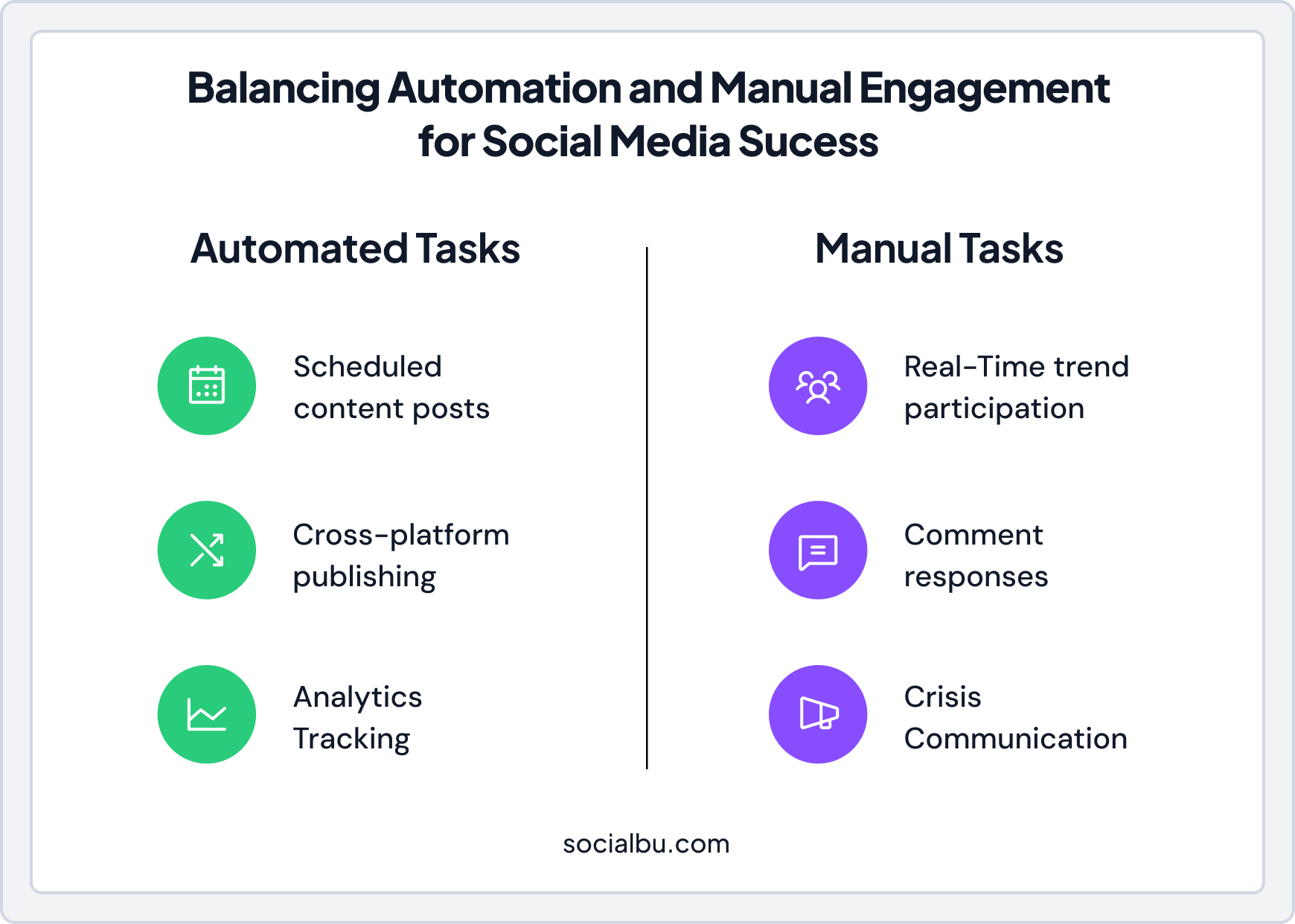
Combining Manual vs Automated Posting with a Hybrid Approach
The most effective social media plans are those that are strategic in order to combine the two approaches.
Rather than making the choice between the two, intelligent brands apply automation to the planning and consistency, and manual posting to the real-time engagement.
Timed posts would ensure that you are not missing out on any days when you do not have time to make content. Meanwhile, with manual posts, you can answer trends, engage with your audience, and introduce a personal touch.
Here is how the hybrid approach works:
Automate These Tasks:
- All scheduled content posts
- Cross-platform publishing
- Analytics and performance tracking
- Content calendar management
- Bulk scheduling and publishing
Handle These Manually:
- Comment responses (though you can use tools to centralize them)
- DM conversations
- Real-time trend participation
- Crisis communication
- Relationship-building outreach
Use Tools That Bridge Both:
- Unified inbox for managing engagement efficiently
- Notifications for important interactions
- Approval workflows for team collaboration
- Analytics to inform manual decisions
Social media scheduling tools like SocialBu make this hybrid approach seamless by combining scheduling, engagement, collaboration, and analytics into a single platform.
The goal is not to remove humans from social media. It is to remove humans from repetitive tasks so they can focus on the work that actually requires human creativity and judgment.
How SocialBu Automates Your Social Media Posting in 2026
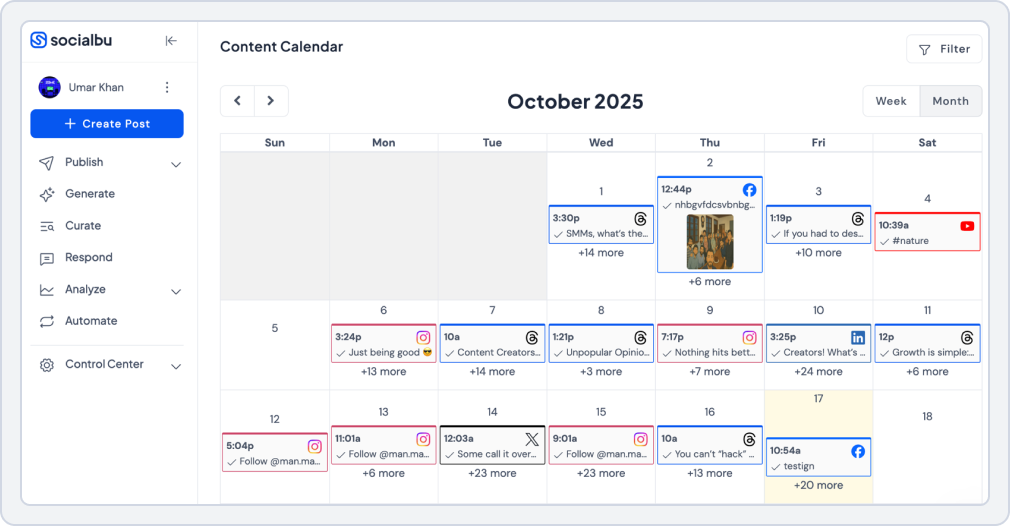
Let’s take a deeper look at how SocialBu specifically solves the challenges of social media management. If you are considering automation, understanding the practical workflow matters.
All-in-One Scheduling for Every Platform SocialBu connects all your social accounts into a single, unified dashboard. No more logging into five different apps throughout the day.
- Smart Scheduling: Schedule posts across Instagram, TikTok, Facebook, X, LinkedIn, and more from one place. Auto-post at optimal times or set your own publishing schedule with the visual content calendar.
- Team Collaboration: Invite team members, assign roles, set approval workflows, and manage multiple brands or clients without the chaos. Everyone stays aligned without endless back and forth.
- Analytics and Reporting: Track performance across all platforms in one view. See what content works, identify best posting times, and generate professional reports to prove your ROI.
- AI Assistant: Overcome creative blocks with AI-powered caption suggestions, content ideas, and hashtag recommendations. Create better content faster without staring at a blank screen.
Bulk scheduling takes this further. Upload multiple pieces of content at once, set your publishing rules, and schedule an entire week or month in one session.
Conclusion
Automation provides all of this while freeing you to focus on what actually requires human creativity: engaging authentically with your community, creating compelling content, and building genuine connections.
If you are still posting manually across multiple platforms, you are working harder than you need to. The hours you save with automation are hours you can reinvest into strategy, creativity, or simply stepping away from the screen.
The question is not whether to automate. It is how soon you start.
Take the first step toward smarter social media management. Try SocialBu today and see how automation transforms your workflow.
Upgrade from Manual Posting to Smarter Automation
Schedule, automate, and manage your content effortlessly with SocialBu — built for creators and businesses ready to scale.
FAQs
Q. Is it a more efficient method of posting manually or automatically?
A. In the debate of manual vs automated posting, automation delivers superior results for most users in 2026. It saves time, ensures consistency, and scales easily, while manual posting works best for real-time and crisis situations.
Q. Does electronic posting minimize engagement?
A. No, automation is not a decline in engagement in the right form. Constant updates at the best times usually enhance the level of engagement as opposed to sporadic manual posting.
Q. Why is automation applied by marketers when manual is more engaged?
A. In the context of manual vs automated posting, marketers choose automation for efficiency and scalability. Any small engagement difference per post is outweighed by long-term consistency and productivity gains.
Q. Will automated posting cause your account to be banned?
A. No, the official APIs are used by legitimate tools such as SocialBu, and they adhere to the platform guidelines. Bots that are spammy and fake engagement services are the only ones that run the risk of account bans.
Q. In what cases do you post manually and not automatically?
A. Post when crisis managing, when live, or when it comes to responding to a comment or DMs that need a more personal touch.
Q. Does automation impact the algorithm’s reach?
A. No, artificial intelligence is not able to tell between scheduled and manual posts. Automated posting can usually enhance the behavior of an algorithm.
Q. When should automated posting be used best?
A. Automate scheduled content, promotional campaigns, posts for evergreen, and any that do not need real-time context or real-time responses.
Q. Are you able to automate posts on every social media?
A. Yes, the majority of the large platforms are automatable. SocialBu is integrated with Instagram, TikTok, Facebook, X, LinkedIn, and Pinterest, among many others, in a single dashboard.
Q. But what is the appropriate automation tool?
A. Think about your platforms, budget, required features, usability, and scaling requirements. SocialBu provides the optimal solution for the majority of creators and businesses.
Q. Can my accounts be safely given to automation tools?
A. Of course, such reputable tools as SocialBu are based on secure OAuth protocols. Their systems do not even store your passwords, and you can cancel any access at any time in your account settings.
Q. Manual vs Automated Posting: Which Works Better in 2026?
A. When comparing manual vs automated posting, automation wins for consistency, scalability, and long-term growth. Manual posting still plays an important role for real-time engagement and brand authenticity, making a hybrid strategy the most effective approach.