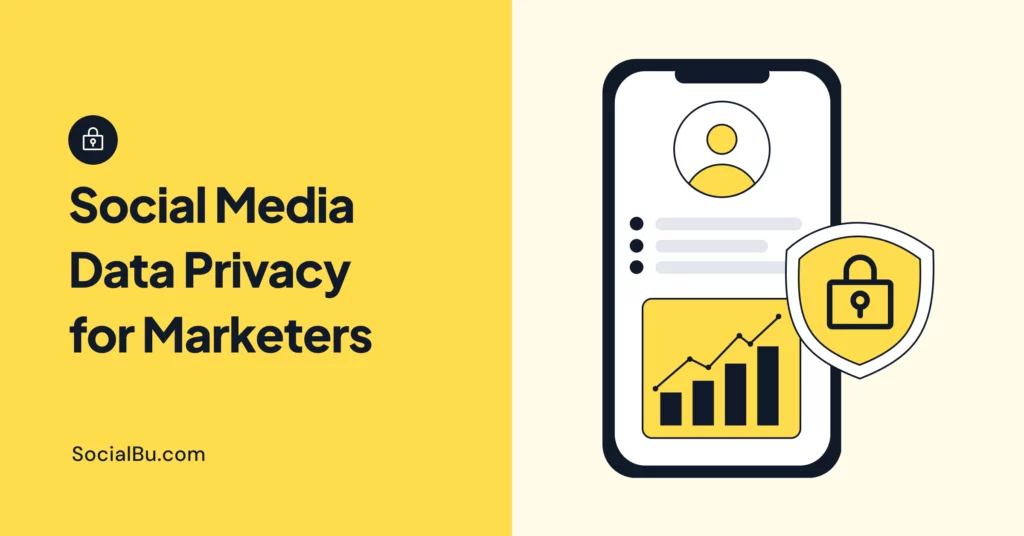
Social media data privacy for marketers means handling audience information responsibly through simple habits: limit access, minimize sharing, and regularly review tools connected to your accounts.
In 2026, brands handle audience data, ad metrics, email lists, and personal details daily. When that data is managed poorly, it negatively affects the trust and results. This guide covers the best practices to protect data without breaking privacy rules.
What Are The Risks of Oversharing in Social Media Data Privacy for Marketers?
Common privacy risks include:
- Posting screenshots with visible usernames or email addresses
- Using tracking pixels without clear disclosure
- Exporting or sharing raw audience data between teams or collaborators
On social media, oversharing happens easily. A post meant to celebrate a milestone or share behind-the-scenes content can accidentally expose private details about clients, colleagues, or even followers. Once you understand how exposed personal data can be, it becomes easier to apply the same care to how to protect audience data on social media.
This applies to marketers personally, too. Your own name, phone number, or address may already be listed on public data directories, and going through a whitepages opt-out to remove that information is a smart first step before advising clients on privacy.
The best approach isn’t to stay quiet. It’s to stay open, explain what you’re doing, and show that you take their trust seriously.
What Privacy Laws Apply to Social Media Marketing?
Social media privacy laws for businesses keep changing, but people still want control over their data.
What is GDPR?
The General Data Protection Regulation (GDPR) is the European Union’s data privacy law. It governs how businesses collect, process, and store personal data of EU residents.
GDPR social media marketing compliance applies to any company that serves EU users, regardless of where that company is based.
What is CCPA/CPRA?
The California Consumer Privacy Act (CCPA), amended by the California Privacy Rights Act (CPRA) in January 2023, gives California residents the right to know what data is collected about them, request its deletion, and opt out of its sale.
Regulations like Europe’s GDPR and California’s CCPA still set the tone for data privacy on social media platforms. As of 2026, IAPP’s tracker shows 19 enacted comprehensive U.S. state privacy laws, and the tracker was last updated on 13 April 2026.
For social media marketers, social media marketing privacy compliance translates into daily habits such as:
- Getting explicit permission before adding users to newsletters
- Disclosing how tracking or remarketing tools work
- Keeping records of user consent for audience data
You don’t need to know every legal detail, just remember that data privacy comes down to respect.
What Privacy Checklist Should Social Teams Follow?
You don’t need a complex system to protect social media data privacy. A few regular habits keep your audience data safe.
Here’s a privacy checklist for social teams:
- Review app permissions: Audit connected tools every few months. Remove integrations you no longer use.
- Limit third-party access: Use trusted analytics platforms instead of free tools that harvest unnecessary data.
- Anonymize audience data: Replace names or emails with ID codes when running performance reports.
- Be transparent in campaigns: If you retarget users or collect engagement data, tell them. Honesty builds credibility.
This social media data protection guide matters for your results, too. According to Usercentrics, 83% of consumers are more willing to shop on websites that openly discuss privacy practices, and 60% of users say they would spend more money with a brand they trust to handle personal data responsibly. Privacy compliance doesn’t slow campaigns down. It makes them better.
Managing your social media activity in one trusted platform can lower the number of tools that touch your audience data. For this, you can use SocialBu. It is a social media management tool that lets you create, curate, schedule, automate, and analyze social media content from one dashboard. That can reduce the number of tools that need access to your audience data.
How Can Marketers Protect Their Personal Digital Footprint?
To stay secure and follow how to stay compliant on social media:
- Use two-factor authentication everywhere possible
- Keep personal and work accounts separate
- Rotate strong, unique passwords regularly
- Check your profile visibility and limit who can view contact info or location tags
Social media managers are part of the data picture, too. Social media account security for marketers matters because work accounts often connect to ad tools, inboxes, and high-traffic pages.
Hackers often target marketing professionals because their accounts link to high-traffic pages and advertising budgets.
If your personal data is well-protected, your professional credibility follows naturally. It’s easier to advise others on privacy best practices when you live by those same rules.
How to Measure Results Without Crossing Privacy Lines?
It’s all about knowing how to use social media data without breaking trust. That means:
- Looking at aggregated metrics instead of individual identifiers
- Using privacy-safe analytics tools and social media privacy management tools that do not track users across platforms
- Collecting first-party data, where followers willingly share their info
Protecting privacy does not mean giving up useful insights. You can still measure performance with privacy-safe social media analytics. You just need to be smarter about how you measure them.
It is important to note that platforms like LinkedIn, Meta, and TikTok are facing increased pressure from regulators and laws to improve the protection of user privacy in their ad systems. Many of the changes they make are because they are required to, not because they choose to.
That is why it is smarter to build your measurement plan around first-party data, social media marketing, and privacy-safe analytics tools that you own and control. This is a better long-term data strategy.
Manage Social Media Data Safely in One Platform
SocialBu lets you create, schedule, and analyze content without spreading your audience data across multiple tools. One dashboard. Better control. Stronger privacy.
How to Build Trust Through Transparency in Social Media Data Privacy?
Transparency in social media data privacy means openly communicating how you collect, use, and protect audience information. Below are ways to show transparency through a social media privacy policy for brands:
- Publish short, readable privacy statements
- Add consent options for cookies or email lists
- Clarify sponsored post disclosures
- Regularly update audiences on data-related changes
People engage more deeply with brands that speak openly about their data ethics, social media privacy, and consent practices. Privacy can set your brand apart.
Transparency communicates confidence. It says we have nothing to hide. And that authenticity helps ethical marketers stand apart in a crowded feed.
Why Does Social Media Data Privacy Matter for Your Brand?
Social media data privacy for marketers should be part of every campaign plan, not a last-minute inclusion. Here’s what to include when preparing your next campaign to protect data and follow rules:
- Include a privacy review checklist in your prep
- Vet every third-party partner for security compliance
- Document how audience data is stored and for how long
Looking ahead, social media data privacy for marketers will shape campaign planning as much as content and design. The most effective professionals will be those who see data ethics as part of creative strategy. Social media privacy for agencies is becoming a competitive advantage.
Privacy-first marketing won’t just be a background task; it’ll be part of the brand voice. By making these privacy practices normal, you’ll future-proof your work and strengthen every connection you make online.
 Not sure if your social media data practices are putting you at risk? This Social Media Data Privacy guide covers everything.
Why Caring About Privacy Pays Off?
When you respect people’s data privacy, your results can improve too. Being a modern social media professional means understanding that every click, post, and campaign carries a trace of responsibility.
By treating privacy as a core part of your process and following social media data privacy for marketers practices, you protect both your audience and your work. In the long run, trust matters more than any single metric.
What to Do Next?
Social media data privacy for marketers separates trusted brands from those that lose audience confidence. When you treat privacy as a core part of your work, you protect both your audience and your professional reputation.
Your next steps depend on where you are:
Starting with privacy compliance:
- Download a social media privacy checklist for brands and audit your current tools
- Review your social media privacy policy for brands, or create one if you don’t have one
- Enable two-factor authentication on all accounts today
Already managing some privacy practices:
- Switch to privacy-safe social media analytics tools that rely on first-party data for social media marketing
- Document your user consent processes for GDPR social media marketing compliance and CCPA social media marketing compliance
- Train your team on how to protect audience data on social media
Leading privacy efforts for an agency or team:
- Implement social media privacy management tools across all client accounts
- Create standard operating procedures for how to stay compliant on social media
- Build privacy reviews into every campaign approval process
Start with one action this week: audit your connected apps. Privacy becomes habit through small, consistent steps, and your audience will notice the difference.
Frequently Asked Questions
Q. What is social media data privacy for marketers?
A. It is the responsible collection, storage, and use of personal information gathered through social media platforms.
Q. What privacy regulations apply to social media managers?
A. The two main laws to know are GDPR and CCPA/CPRA. They set rules for consent, transparency, and user rights.
Q. What is first-party data, and why does it matter?
A. First-party data social media marketing means data users share directly with your brand through sign-up forms, surveys, or direct engagement. It is considered the most reliable and privacy-safe data source for social media marketers because it is collected with clear consent.
Q. How can social media managers stay GDPR compliant?
A. Key steps for how to stay compliant on social media include getting explicit consent before adding anyone to a list, disclosing how tracking and remarketing tools work, keeping proper records of consent, and using analytics platforms that meet data protection standards.
Q. What are the main challenges in implementing social media data privacy best practices?
A. Implementing social media data privacy best practices has real challenges. These include managing data across different tools, staying updated on changing regulations, balancing analytics with privacy needs, and training teams properly.